












Functionalization of diazotetronic acid and application in a stereoselective modular synthesis of pulvinone, aspulvinones A–E, G, Q and their analogues
Literature Information
Publication Date
2018-08-10
DOI
10.1039/C8OB01511B
Impact Factor
3.876
Authors
Amarender Manchoju, Ritesh A. Annadate, Lise Desquien, Sunil V. Pansare
View Original
Abstract
A modular synthesis of aspulvinones A, B, C, D, E, G and the recently isolated aspulvinone Q was developed. The methodology features a highly stereoselective aldol condensation of diazotetronic acid with aldehydes to provide 5-arylidene diazotetronates. Subsequent catalytic intermolecular C–H insertion reactions of the arylidene tetronates with arenes provide a series of naturally occurring aspulvinones including aspulvinones C, D and Q which have not been synthesized before. Variation of the aldehyde and the arene components furnishes synthetic analogues of the aspulvinones.
Recommended Journals
Related Literature
A simple method for the containment and purification of filled open-ended single wall carbon nanotubes using C60 molecules
Lidong Shao, Tsung-Wu Lin, Gerard Tobias, Malcolm L. H. Green
2008-03-05
Communication
DOI: 10.1039/B800881G
Chiral dinuclear vanadium(v) catalysts for oxidative coupling of 2-naphthols‡
Shinobu Takizawa, Tomomi Katayama, Chiaki Kameyama, Kiyotaka Onitsuka, Takeyuki Suzuki, Takeshi Yanagida, Tomoji Kawai, Hiroaki Sasai
2008-02-14
Communication
DOI: 10.1039/B717068H
A homospin iron(ii) single chain magnet‡
Szymon W. Przybylak, Floriana Tuna, Simon J. Teat, Richard E. P. Winpenny
2008-02-22
Communication
DOI: 10.1039/B717277J
Sulfate ion encapsulation in caged supramolecular structures assembled by second-sphere coordination
Jianjun Liang, Jin Yang, Chuandong Jia, Hongrui Zhang, Ning Tang, Christoph Janiak
2008-02-11
Communication
DOI: 10.1039/B719019K
A unique heterobimetallic benzyl calciate—an organometallic mixed-metal species involving a heavy alkaline-earth metal
Marites A. Guino-o, Charles F. Campana, Karin Ruhlandt-Senge
2008-02-05
Communication
DOI: 10.1039/B715701K
Improved 3D DOSY-TOCSY experiment for mixture analysis
Stéphane Viel, Stefano Caldarelli
2008-03-31
Communication
DOI: 10.1039/B802789G
Layer-by-layer assembly of single-charged ions with a rigid polyampholyte
Suobo Zhang, Zhaohui Su
2008-03-14
Communication
DOI: 10.1039/B801784K
Isolation and X-ray structural characterization of tetraisopropylpyrene cation radical
Moloy Banerjee, Vijay S. Vyas, Sergey V. Lindeman, Rajendra Rathore
2008-02-28
Communication
DOI: 10.1039/B800168E
Fully reversible guest exchange in tetraphosphonate cavitand complexes probed by fluorescence spectroscopy
Elisa Biavardi, Gionata Battistini, Marco Montalti, Roger M. Yebeutchou, Luca Prodi, Enrico Dalcanale
2008-03-05
Communication
DOI: 10.1039/B801729H
You might also like
Compound Q&A
What is the market or research trend for N-(4-Methoxybenzyl)-2-pyridinamine (CAS: 52818-63-0)?
N-(4-Methoxybenzyl)-2-pyridinamine (CAS: 52818-63-0) is increasingly being used ...
52818-63-0N-(4-Methoxybenzyl)-...
Compound Q&A
What precautions should be taken when handling Ethyl 4-(2-chlorophenyl)-1,3-thiazole-2-carboxylate (CAS: 1050507-06-6)?
When handling Ethyl 4-(2-chlorophenyl)-1,3-thiazole-2-carboxylate, appropriate p...
1050507-06-6Ethyl 4-(2-chlorophe...
Compound Q&A
What regulatory guidelines apply to diethyldiselane (CAS: 628-39-7)?
Diethyldiselane (CAS: 628-39-7) is classified under the Globally Harmonized Syst...
628-39-7Diethyldiselane
Compound Q&A
What is the market or research trend for oxocopper (CAS: 12053-18-8)?
The market for oxocopper (CAS: 12053-18-8) is primarily driven by its use in cat...
12053-18-8oxocopper; oxo-(oxoc...
Compound Q&A
What is the market or research trend for 5-{[(2-Methyl-2-propanyl)oxy]carbonyl}-5-azaspiro[2.4]heptane-7-carboxylic acid?
The market for 5-{[(2-Methyl-2-propanyl)oxy]carbonyl}-5-azaspiro[2.4]heptane-7-c...
1268519-54-55-{[(2-Methyl-2-prop...
Compound Q&A
What is 2-(1-Pyrrolidinyl)-4-pyridinamine (CAS: 35981-63-6)?
2-(1-Pyrrolidinyl)-4-pyridinamine is a chemical compound with the CAS number 359...
35981-63-62-(1-Pyrrolidinyl)-4...
Compound Q&A
What are the physical and chemical properties of 2-(3-Pyridinyl)-1-azabicyclo[2.2.2]octane (CAS: 91556-75-1)?
2-(3-Pyridinyl)-1-azabicyclo[2.2.2]octane (CAS: 91556-75-1) is a crystalline sol...
91556-75-12-(3-Pyridinyl)-1-az...
Compound Q&A
How is (S)-Alpha-allyl-proline hydrochloride (CAS: 129704-91-2) typically synthesized?
(S)-Alpha-allyl-proline hydrochloride is usually synthesized via a Wittig reacti...
129704-91-2(S)-Alpha-allyl-prol...
Compound Q&A
What is 3-Methyl-1,2-oxazole-5-carboxylic acid (CAS: 4857-42-5)?
3-Methyl-1,2-oxazole-5-carboxylic acid (CAS: 4857-42-5) is an organic compound w...
4857-42-53-Methyl-1,2-oxazole...
Compound Q&A
How is Lys-SMCC-DM1 (CAS: 1281816-04-3) typically synthesized?
Lys-SMCC-DM1 is synthesized via a multi-step process involving the coupling of S...
1281816-04-3Lys-SMCC-DM1
Source Journal
Organic & Biomolecular Chemistry

CiteScore:
3.4
Self-citation Rate:
10.3%
Articles per Year:
1041
Organic & Biomolecular Chemistry (OBC) publishes original and high impact research and reviews in organic chemistry. We welcome research that shows new or significantly improved protocols or methodologies in total synthesis, synthetic methodology or physical and theoretical organic chemistry as well as research that shows a significant advance in the organic chemistry or molecular design aspects of chemical biology, catalysis, supramolecular and macromolecular chemistry, theoretical chemistry, mechanism-oriented physical organic chemistry, medicinal chemistry or natural products. Articles published in the journal should report new work which makes a highly-significant impact in the field. Routine and incremental work is generally not suitable for publication in the journal. More details about key areas of our scope are below. In all cases authors should include in their article clear rationale for why their research has been carried out.
Recommended Compounds
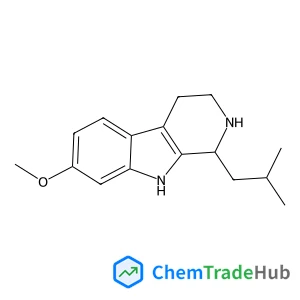
1-Isobutyl-7-methoxy-2,3,4,9-tetrahydro-1H-beta-carboline
CAS Number:
175975-76-5
Molecular Formula:
C16H22N2O
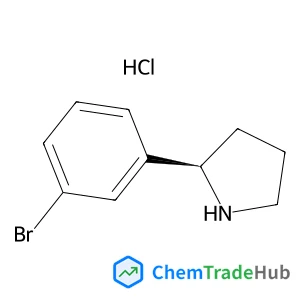
(2R)-2-(3-Bromophenyl)pyrrolidine hydrochloride (1:1)
CAS Number:
1391550-13-2
Molecular Formula:
C10H13BrClN
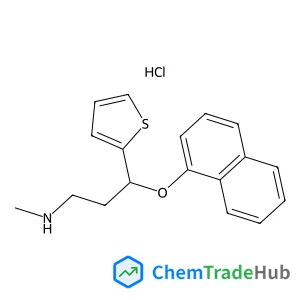
N-Methyl-3-(1-naphthyloxy)-3-(2-thienyl)-1-propanamine hydrochloride (1:1)
CAS Number:
1188266-11-6
Molecular Formula:
C18H20ClNOS
Recommended Suppliers




Disclaimer
This page provides academic journal information for reference and research purposes only. We are not affiliated with any journal publishers and do not handle publication submissions. For publication-related inquiries, please contact the respective journal publishers directly.
If you notice any inaccuracies in the information displayed, please contact us at support@chemtradehub.com. We will promptly review and address your concerns.