












![1-[6-(1H-Imidazol-1-yl)-3-pyridinyl]methanamine structure](https://static.chemtradehub.com/structs/914/914637-08-4-8825.webp "1-[6-(1H-Imidazol-1-yl)-3-pyridinyl]methanamine structure")
Preparation and characterization of pyrene modified uridine derivatives as potential electron donors in RNA
Literature Information
Publication Date
2018-09-27
DOI
10.1039/C8OB02246A
Impact Factor
3.876
Authors
Jennifer Frommer, Beatrice Karg, Klaus Weisz, Sabine Müller
View Original
Abstract
Charge transfer across double stranded DNA was observed for the first time about 20 years ago, and ever since it has been the subject of a large number of studies. RNA has been hardly investigated in this regard, which not least is due to the lack of suitably functionalized ribonucleotide building blocks to serve as electron sources upon incorporation into oligoribonucleotides. We have synthesized two uridine derivatives carrying pyrene or dimethylaminopyrene linked to C5 of the nucleobase. The key to successful synthesis was the adaptation of Suzuki–Miyaura conditions to the coupling of the pyrene moiety with the ribonucleoside. Final decoration of the pyrenylated nucleosides with standard 5′-O- and 2′-O-protecting groups and subsequent 3′-O-phosphitylation delivered the building blocks for incorporation into RNA. Spectroscopic analysis of the two pyrenylated uridines and of the accordingly modified oligonucleotides showed that in particular the dimethyaminopyrene functionalized nucleoside is a promising candidate as an electron source for RNA charge transport studies.
Related Literature
A unique heterobimetallic benzyl calciate—an organometallic mixed-metal species involving a heavy alkaline-earth metal
Marites A. Guino-o, Charles F. Campana, Karin Ruhlandt-Senge
2008-02-05
Communication
DOI: 10.1039/B715701K
Pressure effects and Mössbauer spectroscopic studies on a 3D mixed-valence iron spin-crossover complex with NiAs topology
Yue-Ling Bai, Jun Tao, Rong-Bin Huang, Lan-Sun Zheng, Shao-Liang Zheng, Kazuyoshi Oshida, Yasuaki Einaga
2008-02-11
Communication
DOI: 10.1039/B718456E
Asymmetric oxidation of sulfides under solvent-free or highly concentrated conditions
Kazuhiro Matsumoto, Tetsufumi Yamaguchi, Tsutomu Katsuki
2008-02-05
Communication
DOI: 10.1039/B719265G
Synthesis and properties of trifluoroethoxy-coated binuclear phthalocyanine
Hideyuki Yoshiyama, Norio Shibata, Takefumi Sato, Shuichi Nakamura, Takeshi Toru
2008-03-28
Communication
DOI: 10.1039/B800918J
Preparation of silyl substituted crotylzinc reagents and their highly diastereoselectiveaddition to carbonyl compounds
Matthew D. Helm, Peter Mayer, Paul Knochel
2008-03-19
Communication
DOI: 10.1039/B802157K
A DNAzyme cascade for the amplified detection of Pb2+ ions or l-histidine
Johann Elbaz, Bella Shlyahovsky, Itamar Willner
2008-01-31
Communication
DOI: 10.1039/B716774A
Role and substrate specificity of the Streptomyces coelicolor RedH enzyme in undecylprodiginine biosynthesis
Stuart W. Haynes, Paulina K. Sydor, Anna E. Stanley, Lijiang Song, Gregory L. Challis
2008-03-14
Communication
DOI: 10.1039/B801677A
Chiral dinuclear vanadium(v) catalysts for oxidative coupling of 2-naphthols‡
Shinobu Takizawa, Tomomi Katayama, Chiaki Kameyama, Kiyotaka Onitsuka, Takeyuki Suzuki, Takeshi Yanagida, Tomoji Kawai, Hiroaki Sasai
2008-02-14
Communication
DOI: 10.1039/B717068H
You might also like
Compound Q&A
What is the market or research trend for N-(4-Methoxybenzyl)-2-pyridinamine (CAS: 52818-63-0)?
N-(4-Methoxybenzyl)-2-pyridinamine (CAS: 52818-63-0) is increasingly being used ...
52818-63-0N-(4-Methoxybenzyl)-...
Compound Q&A
What precautions should be taken when handling Ethyl 4-(2-chlorophenyl)-1,3-thiazole-2-carboxylate (CAS: 1050507-06-6)?
When handling Ethyl 4-(2-chlorophenyl)-1,3-thiazole-2-carboxylate, appropriate p...
1050507-06-6Ethyl 4-(2-chlorophe...
Compound Q&A
What regulatory guidelines apply to diethyldiselane (CAS: 628-39-7)?
Diethyldiselane (CAS: 628-39-7) is classified under the Globally Harmonized Syst...
628-39-7Diethyldiselane
Compound Q&A
What is the market or research trend for oxocopper (CAS: 12053-18-8)?
The market for oxocopper (CAS: 12053-18-8) is primarily driven by its use in cat...
12053-18-8oxocopper; oxo-(oxoc...
Compound Q&A
What is the market or research trend for 5-{[(2-Methyl-2-propanyl)oxy]carbonyl}-5-azaspiro[2.4]heptane-7-carboxylic acid?
The market for 5-{[(2-Methyl-2-propanyl)oxy]carbonyl}-5-azaspiro[2.4]heptane-7-c...
1268519-54-55-{[(2-Methyl-2-prop...
Compound Q&A
What is 2-(1-Pyrrolidinyl)-4-pyridinamine (CAS: 35981-63-6)?
2-(1-Pyrrolidinyl)-4-pyridinamine is a chemical compound with the CAS number 359...
35981-63-62-(1-Pyrrolidinyl)-4...
Compound Q&A
What are the physical and chemical properties of 2-(3-Pyridinyl)-1-azabicyclo[2.2.2]octane (CAS: 91556-75-1)?
2-(3-Pyridinyl)-1-azabicyclo[2.2.2]octane (CAS: 91556-75-1) is a crystalline sol...
91556-75-12-(3-Pyridinyl)-1-az...
Compound Q&A
How is (S)-Alpha-allyl-proline hydrochloride (CAS: 129704-91-2) typically synthesized?
(S)-Alpha-allyl-proline hydrochloride is usually synthesized via a Wittig reacti...
129704-91-2(S)-Alpha-allyl-prol...
Compound Q&A
What is 3-Methyl-1,2-oxazole-5-carboxylic acid (CAS: 4857-42-5)?
3-Methyl-1,2-oxazole-5-carboxylic acid (CAS: 4857-42-5) is an organic compound w...
4857-42-53-Methyl-1,2-oxazole...
Compound Q&A
How is Lys-SMCC-DM1 (CAS: 1281816-04-3) typically synthesized?
Lys-SMCC-DM1 is synthesized via a multi-step process involving the coupling of S...
1281816-04-3Lys-SMCC-DM1
Source Journal
Organic & Biomolecular Chemistry

CiteScore:
3.4
Self-citation Rate:
10.3%
Articles per Year:
1041
Organic & Biomolecular Chemistry (OBC) publishes original and high impact research and reviews in organic chemistry. We welcome research that shows new or significantly improved protocols or methodologies in total synthesis, synthetic methodology or physical and theoretical organic chemistry as well as research that shows a significant advance in the organic chemistry or molecular design aspects of chemical biology, catalysis, supramolecular and macromolecular chemistry, theoretical chemistry, mechanism-oriented physical organic chemistry, medicinal chemistry or natural products. Articles published in the journal should report new work which makes a highly-significant impact in the field. Routine and incremental work is generally not suitable for publication in the journal. More details about key areas of our scope are below. In all cases authors should include in their article clear rationale for why their research has been carried out.
Recommended Compounds
![(2R,6S)-6-[(Benzyloxy)methyl]-4-{[(2-methyl-2-propanyl)oxy]carbonyl}-2-morpholinecarboxylic acid structure](https://static.chemtradehub.com/structs/109/1093085-91-6-3382.webp "(2R,6S)-6-[(Benzyloxy)methyl]-4-{[(2-methyl-2-propanyl)oxy]carbonyl}-2-morpholinecarboxylic acid structure")
(2R,6S)-6-[(Benzyloxy)methyl]-4-{[(2-methyl-2-propanyl)oxy]carbonyl}-2-morpholinecarboxylic acid
CAS Number:
1093085-91-6
Molecular Formula:
C18H25NO6
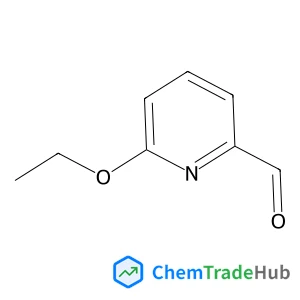
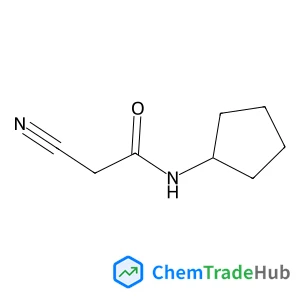
![1-{3-[4-Amino-3-(4-phenoxyphenyl)-1H-pyrazolo[3,4-d]pyrimidin-1-yl]-1-piperidinyl}-2,3-dihydroxy-1-propanone structure](https://static.chemtradehub.com/structs/122/1226872-27-0-e037.webp "1-{3-[4-Amino-3-(4-phenoxyphenyl)-1H-pyrazolo[3,4-d]pyrimidin-1-yl]-1-piperidinyl}-2,3-dihydroxy-1-propanone structure")
1-{3-[4-Amino-3-(4-phenoxyphenyl)-1H-pyrazolo[3,4-d]pyrimidin-1-yl]-1-piperidinyl}-2,3-dihydroxy-1-propanone
CAS Number:
1226872-27-0
Molecular Formula:
C25H26N6O4
Recommended Suppliers





Disclaimer
This page provides academic journal information for reference and research purposes only. We are not affiliated with any journal publishers and do not handle publication submissions. For publication-related inquiries, please contact the respective journal publishers directly.
If you notice any inaccuracies in the information displayed, please contact us at support@chemtradehub.com. We will promptly review and address your concerns.