












Unprecedentedly high active organocatalysts for the copolymerization of carbonyl sulfide and propylene oxide: steric hindrance effect of tertiary amines
Literature Information
Publication Date
2021-08-23
DOI
10.1039/D1PY01013A
Impact Factor
5.582
Authors
Jiraya Kiriratnikom, Xin-Chen Yue, Jia-Liang Yang, Ying Wang, Shuo-Hong Chen, Ke-Ke Zhang, Cheng-Jian Zhang, Munir Ullah Khan
View Original
Abstract
The copolymerization of carbonyl sulfide (COS) with epoxides has been developed to be a facile method to synthesize well-defined sulfur-containing polymers. This work describes the steric effect of tertiary amines on the copolymerization of COS with propylene oxide (PO) via a zwitterionic approach, using triethyl borane (TEB) accompanied by various tertiary amines. N,N-Dimethylcyclohexylamine accompanied by TEB (1/1) showed an exceedingly high turnover frequency of up to 69 800 h−1 and a copolymer selectivity of up to >99% for organocatalytic COS/PO copolymerization at 60 °C under solvent-free conditions. The obtained poly(propylene monothiocarbonate)s (PPMTC)s have fully alternating sequences, regioregularity of >99% tail-to-head (T–H) content, and high-number average molecular weights of up to 221.8 kg mol−1 and narrow dispersities (1.1–1.3) within 1 min. We disclosed that tertiary amines (pKa values range from 8.19 to 10.80) with less steric hindrance exhibited higher catalytic activity for COS/PO copolymerization.
Related Literature
An efficient two-photon fluorescent probe for measuring γ-glutamyltranspeptidase activity during the oxidative stress process in tumor cells and tissues
Peng Wang, Jing Zhang, Hong-Wen Liu, Xiao-Xiao Hu, Xia Yin, Xiao-Bing Zhang
2017-04-12
Paper
DOI: 10.1039/C7AN00229G
In vivo detection of drug-induced apoptosis in tumors using Raman spectroscopy
Oliver Jonas, Jeon Woong Kang, Surya P. Singh, Alex Lammers, Freddy T. Nguyen, Ramachandra R. Dasari, Peter T. C. So, Robert Langer
2018-07-30
Communication
DOI: 10.1039/C8AN00913A
Determination of the illegal adulteration of natural healthcare products with chemical drugs using surface-enhanced Raman scattering
Jiawei Wu, Lixia Zhang, Xiangfeng Bu, Peng Li, Bing Zhao, Yuan Tian
2018-09-18
Paper
DOI: 10.1039/C8AN01286E
A novel paper-based colorimetry device for the determination of the albumin to creatinine ratio
Sudkate Chaiyo, Kurt Kalcher, Amara Apilux, Orawon Chailapakul, Weena Siangproh
2018-10-09
Paper
DOI: 10.1039/C8AN01122B
Sensitive fluorescence detection of heparin based on self-assembly of mesoporous silica nanoparticle–gold nanoclusters with emission enhancement characteristics
Lin Ma, Mengyue Zhang, Aijun Yang, Qin Wang, Fei Qu, Fengli Qu, Rong-Mei Kong
2018-09-18
Paper
DOI: 10.1039/C8AN01556B
Real time plasmonic qPCR: how fast is ultra-fast? 30 cycles in 54 seconds
Philip J. R. Roche, Mohamed Najih, Seung S. Lee, Lenore K. Beitel, Matthew L. Carnevale, Andrew G. Kirk
2017-04-12
Paper
DOI: 10.1039/C7AN00304H
NIR two-photon fluorescent probe for biothiol detection and imaging of living cells in vivo
Xiang Xia, Ying Qian
2018-09-20
Paper
DOI: 10.1039/C8AN01605D
Multi-lumen capillary based trypsin micro-reactor for the rapid digestion of proteins
S. A. Currivan, W. Q. Chen, R. Wilson, E. Sanz Rodriguez, N. Upadhyay, D. Connolly
2018-09-10
Paper
DOI: 10.1039/C8AN01330F
Determination of the transfer function of an atmospheric pressure drift tube ion mobility spectrometer for nanoparticle measurements
David T. Buckley, Christopher J. Hogan, Jr.
2017-04-25
Paper
DOI: 10.1039/C7AN00328E
Raman spectroscopy in microsurgery: impact of operating microscope illumination sources on data quality and tissue classification
Joannie Desroches, Audrey Laurence, Michael Pinto, Marie-Andrée Tremblay, Kevin Petrecca, Frédéric Leblond
2016-10-31
Paper
DOI: 10.1039/C6AN02061E
You might also like
Compound Q&A
What is the market or research trend for N-(4-Methoxybenzyl)-2-pyridinamine (CAS: 52818-63-0)?
N-(4-Methoxybenzyl)-2-pyridinamine (CAS: 52818-63-0) is increasingly being used ...
52818-63-0N-(4-Methoxybenzyl)-...
Compound Q&A
What precautions should be taken when handling Ethyl 4-(2-chlorophenyl)-1,3-thiazole-2-carboxylate (CAS: 1050507-06-6)?
When handling Ethyl 4-(2-chlorophenyl)-1,3-thiazole-2-carboxylate, appropriate p...
1050507-06-6Ethyl 4-(2-chlorophe...
Compound Q&A
What regulatory guidelines apply to diethyldiselane (CAS: 628-39-7)?
Diethyldiselane (CAS: 628-39-7) is classified under the Globally Harmonized Syst...
628-39-7Diethyldiselane
Compound Q&A
What is the market or research trend for oxocopper (CAS: 12053-18-8)?
The market for oxocopper (CAS: 12053-18-8) is primarily driven by its use in cat...
12053-18-8oxocopper; oxo-(oxoc...
Compound Q&A
What is the market or research trend for 5-{[(2-Methyl-2-propanyl)oxy]carbonyl}-5-azaspiro[2.4]heptane-7-carboxylic acid?
The market for 5-{[(2-Methyl-2-propanyl)oxy]carbonyl}-5-azaspiro[2.4]heptane-7-c...
1268519-54-55-{[(2-Methyl-2-prop...
Compound Q&A
What is 2-(1-Pyrrolidinyl)-4-pyridinamine (CAS: 35981-63-6)?
2-(1-Pyrrolidinyl)-4-pyridinamine is a chemical compound with the CAS number 359...
35981-63-62-(1-Pyrrolidinyl)-4...
Compound Q&A
What are the physical and chemical properties of 2-(3-Pyridinyl)-1-azabicyclo[2.2.2]octane (CAS: 91556-75-1)?
2-(3-Pyridinyl)-1-azabicyclo[2.2.2]octane (CAS: 91556-75-1) is a crystalline sol...
91556-75-12-(3-Pyridinyl)-1-az...
Compound Q&A
How is (S)-Alpha-allyl-proline hydrochloride (CAS: 129704-91-2) typically synthesized?
(S)-Alpha-allyl-proline hydrochloride is usually synthesized via a Wittig reacti...
129704-91-2(S)-Alpha-allyl-prol...
Compound Q&A
What is 3-Methyl-1,2-oxazole-5-carboxylic acid (CAS: 4857-42-5)?
3-Methyl-1,2-oxazole-5-carboxylic acid (CAS: 4857-42-5) is an organic compound w...
4857-42-53-Methyl-1,2-oxazole...
Compound Q&A
How is Lys-SMCC-DM1 (CAS: 1281816-04-3) typically synthesized?
Lys-SMCC-DM1 is synthesized via a multi-step process involving the coupling of S...
1281816-04-3Lys-SMCC-DM1
Source Journal
Polymer Chemistry

CiteScore:
8.6
Self-citation Rate:
7.3%
Articles per Year:
457
Polymer Chemistry welcomes submissions in all areas of polymer science that have a strong focus on macromolecular chemistry. Manuscripts may cover a broad range of fields, yet no direct application focus is required.
Recommended Compounds
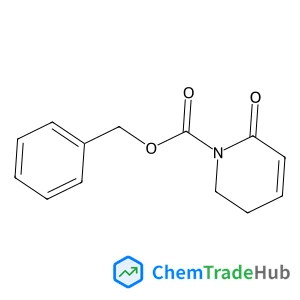
Benzyl 6-oxo-3,6-dihydro-1(2H)-pyridinecarboxylate
CAS Number:
725746-35-0
Molecular Formula:
C13H13NO3
Recommended Suppliers






Disclaimer
This page provides academic journal information for reference and research purposes only. We are not affiliated with any journal publishers and do not handle publication submissions. For publication-related inquiries, please contact the respective journal publishers directly.
If you notice any inaccuracies in the information displayed, please contact us at support@chemtradehub.com. We will promptly review and address your concerns.