













Real time plasmonic qPCR: how fast is ultra-fast? 30 cycles in 54 seconds
Literature Information
Publication Date
2017-04-12
DOI
10.1039/C7AN00304H
Impact Factor
4.616
Authors
Philip J. R. Roche, Mohamed Najih, Seung S. Lee, Lenore K. Beitel, Matthew L. Carnevale, Andrew G. Kirk
View Original
Abstract
Polymerase Chain Reaction (PCR) is a critical tool for biological research investigators but recently it also has been making a significant impact in clinical, veterinary and agricultural applications. Plasmonic PCR, which employs the very efficient heat transfer of optically irradiated metallic nanoparticles, is a simple and powerful methodology to drive PCR reactions. The scalability of next generation plasmonic PCR technology will introduce various forms of PCR applications ranging from small footprint portable point of care diagnostic devices to large footprint central laboratory multiplexing devices. In a significant advance, we have introduced a real time plasmonic PCR and explored the ability of ultra-fast cycling compatible with both label-free and fluorescence-based monitoring of amplicon production. Furthermore, plasmonic PCR has been substantially optimized to now deliver a 30 cycle PCR in 54 seconds, with a detectable product. The advances described here will have an immediate impact on the further development of the use of plasmonic PCR playing a critical role in rapid point of care diagnostics.
Related Literature
Tandem cathode for proton exchange membrane fuel cells
Samira Siahrostami, Mårten E. Björketun, Peter Strasser, Jeff Greeley, Jan Rossmeisl
2013-04-22
Paper
DOI: 10.1039/C3CP51479J
CVD formation of graphene on SiC surface in argon atmosphere
Małgorzata Wierzbowska, Adam Dominiak, Kamil Tokar
2013-04-03
Paper
DOI: 10.1039/C3CP44378G
An all-cotton-derived, arbitrarily foldable, high-rate, electrochemical supercapacitor
Jiangli Xue, Yang Zhao, Huhu Cheng, Chuangang Hu, Yue Hu, Yuning Meng, Huibo Shao, Zhipan Zhang, Liangti Qu
2013-04-15
Communication
DOI: 10.1039/C3CP51571K
Oxidation stages of Ni electrodes in solid oxidefuel cell environments
Farid El Gabaly, Kevin F. McCarty, Hendrik Bluhm, Anthony H. McDaniel
2013-04-18
Paper
DOI: 10.1039/C3CP50366F
Atomic pair distribution functions analysis of disordered low-Z materials
V. Petkov, Y. Ren, S. Kabekkodu, D. Murphy
2012-12-13
Paper
DOI: 10.1039/C2CP43378H
Sieving di-branched from mono-branched and linear alkanes using ZIF-8: experimental proof and theoretical explanation
Marjo C. Mittelmeijer-Hazeleger, Miguel Angelo Granato, Vanessa F. Duarte Martins, Alírio E. Rodrigues, Gadi Rothenberg
2013-05-02
Paper
DOI: 10.1039/C3CP44381G
In situ X-ray pair distribution function analysis of geopolymer gel nanostructure formation kinetics
John L. Provis, Breaunnah Bloomer, Neil J. Henson, Katharine Page
2013-02-22
Paper
DOI: 10.1039/C3CP44342F
Structure of Nb2O5–NaPO3 glasses by X-ray and neutron diffraction
U. Hoppe, L. Delevoye, L. Montagne, M. v. Zimmermann, A. C. Hannon
2012-12-03
Paper
DOI: 10.1039/C2CP42772A
New Li2FeSiO4–carbon monoliths with controlled macropores: effects of pore properties on electrode performance
George Hasegawa, Mai Sannohe, Yuya Ishihara, Kazuyoshi Kanamori, Kazuki Nakanishi, Takeshi Abe
2013-04-09
Paper
DOI: 10.1039/C3CP50352F
You might also like
Compound Q&A
What is the market or research trend for N-(4-Methoxybenzyl)-2-pyridinamine (CAS: 52818-63-0)?
N-(4-Methoxybenzyl)-2-pyridinamine (CAS: 52818-63-0) is increasingly being used ...
52818-63-0N-(4-Methoxybenzyl)-...
Compound Q&A
What precautions should be taken when handling Ethyl 4-(2-chlorophenyl)-1,3-thiazole-2-carboxylate (CAS: 1050507-06-6)?
When handling Ethyl 4-(2-chlorophenyl)-1,3-thiazole-2-carboxylate, appropriate p...
1050507-06-6Ethyl 4-(2-chlorophe...
Compound Q&A
What regulatory guidelines apply to diethyldiselane (CAS: 628-39-7)?
Diethyldiselane (CAS: 628-39-7) is classified under the Globally Harmonized Syst...
628-39-7Diethyldiselane
Compound Q&A
What is the market or research trend for oxocopper (CAS: 12053-18-8)?
The market for oxocopper (CAS: 12053-18-8) is primarily driven by its use in cat...
12053-18-8oxocopper; oxo-(oxoc...
Compound Q&A
What is the market or research trend for 5-{[(2-Methyl-2-propanyl)oxy]carbonyl}-5-azaspiro[2.4]heptane-7-carboxylic acid?
The market for 5-{[(2-Methyl-2-propanyl)oxy]carbonyl}-5-azaspiro[2.4]heptane-7-c...
1268519-54-55-{[(2-Methyl-2-prop...
Compound Q&A
What is 2-(1-Pyrrolidinyl)-4-pyridinamine (CAS: 35981-63-6)?
2-(1-Pyrrolidinyl)-4-pyridinamine is a chemical compound with the CAS number 359...
35981-63-62-(1-Pyrrolidinyl)-4...
Compound Q&A
What are the physical and chemical properties of 2-(3-Pyridinyl)-1-azabicyclo[2.2.2]octane (CAS: 91556-75-1)?
2-(3-Pyridinyl)-1-azabicyclo[2.2.2]octane (CAS: 91556-75-1) is a crystalline sol...
91556-75-12-(3-Pyridinyl)-1-az...
Compound Q&A
How is (S)-Alpha-allyl-proline hydrochloride (CAS: 129704-91-2) typically synthesized?
(S)-Alpha-allyl-proline hydrochloride is usually synthesized via a Wittig reacti...
129704-91-2(S)-Alpha-allyl-prol...
Compound Q&A
What is 3-Methyl-1,2-oxazole-5-carboxylic acid (CAS: 4857-42-5)?
3-Methyl-1,2-oxazole-5-carboxylic acid (CAS: 4857-42-5) is an organic compound w...
4857-42-53-Methyl-1,2-oxazole...
Compound Q&A
How is Lys-SMCC-DM1 (CAS: 1281816-04-3) typically synthesized?
Lys-SMCC-DM1 is synthesized via a multi-step process involving the coupling of S...
1281816-04-3Lys-SMCC-DM1
Source Journal
Analyst

CiteScore:
7.8
Self-citation Rate:
5.6%
Articles per Year:
653
Analyst publishes analytical and bioanalytical research that reports premier fundamental discoveries and inventions, and the applications of those discoveries, unconfined by traditional discipline barriers.
Recommended Compounds
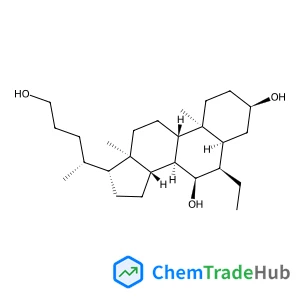
(3alpha,5beta,6alpha,7alpha)-6-Ethylcholane-3,7,24-triol
CAS Number:
1537866-49-1
Molecular Formula:
C26H46O3

![1-(1-Benzyl-1,2,3,6-tetrahydropyridin-4-yl)-1H-benzo[d]imidazol-2(3H)-one structure](https://static.chemtradehub.com/structs/603/60373-71-9-7dfb.webp "1-(1-Benzyl-1,2,3,6-tetrahydropyridin-4-yl)-1H-benzo[d]imidazol-2(3H)-one structure")
1-(1-Benzyl-1,2,3,6-tetrahydropyridin-4-yl)-1H-benzo[d]imidazol-2(3H)-one
CAS Number:
60373-71-9
Molecular Formula:
C19H19N3O
Recommended Suppliers






Disclaimer
This page provides academic journal information for reference and research purposes only. We are not affiliated with any journal publishers and do not handle publication submissions. For publication-related inquiries, please contact the respective journal publishers directly.
If you notice any inaccuracies in the information displayed, please contact us at support@chemtradehub.com. We will promptly review and address your concerns.