


Multi-lumen capillary based trypsin micro-reactor for the rapid digestion of proteins
Literature Information
Publication Date
2018-09-10
DOI
10.1039/C8AN01330F
Impact Factor
4.616
Authors
S. A. Currivan, W. Q. Chen, R. Wilson, E. Sanz Rodriguez, N. Upadhyay, D. Connolly
View Original
Abstract
In this work we evaluated a novel microreactor prepared using a surface modified, high surface-to-volume ratio multi-lumen fused silica capillary (MLC). The MLC investigated contained 126 parallel channels, each of 4 μm internal diameter. The MLC, along with conventional fused silica capillaries of 25 μm and 50 μm internal diameter, were treated by (3-aminopropyl)triethoxysilane (APTES) and then modified with gold nanoparticles, of ∼20 nm in diameter, to ultimately provide immobilisation sites for the proteolytic enzyme, trypsin. The modified capillaries and MLCs were characterised and profiled using non-invasive scanning capacitively coupled contactless conductivity detection (sC4D). The sC4D profiles confirmed a significantly higher amount of enzyme was immobilised to the MLC when compared to the fused silica capillaries, attributable to the increased surface to volume ratio. The MLC was used for dynamic protein digestion, where peptide fragments were collected and subjected to off-line chromatographic evaluation. The digestion was achieved with the MLC reactor, using a residence time of just 1.26 min, following which the HPLC peak associated with the intact protein decreased by >70%. The MLC reactors behaved similarly to the classical in vitro or in-solution approach, but provided a reduction in digestion time, and fewer peaks associated with trypsin auto-digestion, which is common using in-solution digestion. The digestion of cytochrome C using both the MLC-IMER and the in-solution approach, resulted in a sequence coverage of ∼80%. The preparation of the MLC microreactor was reproducible with <2.5% RSD between reactors (n = 3) as determined by sC4D.
Recommended Journals

Planta Medica

Proceedings of the National Academy of Sciences of the United States of America

Pure and Applied Chemistry

Pharmacological Reviews

Journal of Heterocyclic Chemistry

Organic Preparations and Procedures International

Journal of Physics and Chemistry of Solids

Journal of Catalysis

Science

Journal of Organometallic Chemistry
Related Literature
Morphology-controlled preparation and enhanced simulated sunlight and visible-light photocatalytic activity of Pt/Bi5Nb3O15 heterostructures
Ling Chen, Wan Guo, Yuxin Yang, Ang Zhang, Shengqu Zhang, Yihang Guo, Yingna Guo
2013-03-25
Paper
DOI: 10.1039/C3CP00084B
Raman spectral characteristics of 4-aminobenzenethiol adsorbed on ZnO nanorod arrays
Kwan Kim, Kyung Lock Kim, Kuan Soo Shin
2013-05-09
Paper
DOI: 10.1039/C3CP51204E
C60fullerene aggregation in aqueous solution
Yuriy I. Prylutskyy, Anatoly S. Buchelnikov, Dmitry P. Voronin, Viktor V. Kostjukov, Uwe Ritter, John A. Parkinson, Maxim P. Evstigneev
2013-04-16
Paper
DOI: 10.1039/C3CP50187F
Free volume in ionic liquids: a connection of experimentally accessible observables from PALS and PVT experiments with the molecular structure from XRD data‡
Yang Yu, Günter Dlubek, Reinhard Krause-Rehberg, Jürgen Pionteck, Dirk Pfefferkorn, Safak Bulut, Dana Bejan, Christian Friedrich
2013-04-10
Paper
DOI: 10.1039/C3CP43306D
Surface modification imparts selectivity, facilitating redox catalytic studies: quinone mediated oxygen reduction
Joseph Mason, Christopher Batchelor-McAuley, Richard G. Compton
2013-04-22
Paper
DOI: 10.1039/C3CP50607J
A time resolved high energy X-ray diffraction study of cooling liquid SiO2
C. J. Benmore, M. C. Wilding, S. K. Tumber
2013-04-05
Paper
DOI: 10.1039/C3CP44347G
Molecular dynamics investigation of the disordered crystal structure of hexagonal LiBH4
Keith Refson
2013-01-29
Paper
DOI: 10.1039/C3CP44520H
Speciation of adsorbed CO2 on metal oxides by a new 2-dimensional approach: 2D infrared inversion spectroscopy (2D IRIS)
Sergey Sirotin, Philippe Bazin, Françoise Maugé, Arnaud Travert
2013-04-17
Paper
DOI: 10.1039/C3CP51146D
The chemical sensitivity of X-ray spectroscopy: high energy resolution XANESversusX-ray emission spectroscopy of substituted ferrocenes
Andrew J. Atkins, Matthias Bauer, Christoph R. Jacob
2013-04-12
Paper
DOI: 10.1039/C3CP50999K
In situXRD studies of nanocrystallization of Fe-based metallic glass: a comparative study by reciprocal and direct space methods
Jozef Bednarcik, Stefan Michalik, Vladimir Kolesar, Uta Rütt, Hermann Franz
2013-04-15
Paper
DOI: 10.1039/C3CP44445G
You might also like
Compound Q&A
What is the market or research trend for N-(4-Methoxybenzyl)-2-pyridinamine (CAS: 52818-63-0)?
N-(4-Methoxybenzyl)-2-pyridinamine (CAS: 52818-63-0) is increasingly being used ...
52818-63-0N-(4-Methoxybenzyl)-...
Compound Q&A
What precautions should be taken when handling Ethyl 4-(2-chlorophenyl)-1,3-thiazole-2-carboxylate (CAS: 1050507-06-6)?
When handling Ethyl 4-(2-chlorophenyl)-1,3-thiazole-2-carboxylate, appropriate p...
1050507-06-6Ethyl 4-(2-chlorophe...
Compound Q&A
What regulatory guidelines apply to diethyldiselane (CAS: 628-39-7)?
Diethyldiselane (CAS: 628-39-7) is classified under the Globally Harmonized Syst...
628-39-7Diethyldiselane
Compound Q&A
What is the market or research trend for oxocopper (CAS: 12053-18-8)?
The market for oxocopper (CAS: 12053-18-8) is primarily driven by its use in cat...
12053-18-8oxocopper; oxo-(oxoc...
Compound Q&A
What is the market or research trend for 5-{[(2-Methyl-2-propanyl)oxy]carbonyl}-5-azaspiro[2.4]heptane-7-carboxylic acid?
The market for 5-{[(2-Methyl-2-propanyl)oxy]carbonyl}-5-azaspiro[2.4]heptane-7-c...
1268519-54-55-{[(2-Methyl-2-prop...
Compound Q&A
What is 2-(1-Pyrrolidinyl)-4-pyridinamine (CAS: 35981-63-6)?
2-(1-Pyrrolidinyl)-4-pyridinamine is a chemical compound with the CAS number 359...
35981-63-62-(1-Pyrrolidinyl)-4...
Compound Q&A
What are the physical and chemical properties of 2-(3-Pyridinyl)-1-azabicyclo[2.2.2]octane (CAS: 91556-75-1)?
2-(3-Pyridinyl)-1-azabicyclo[2.2.2]octane (CAS: 91556-75-1) is a crystalline sol...
91556-75-12-(3-Pyridinyl)-1-az...
Compound Q&A
How is (S)-Alpha-allyl-proline hydrochloride (CAS: 129704-91-2) typically synthesized?
(S)-Alpha-allyl-proline hydrochloride is usually synthesized via a Wittig reacti...
129704-91-2(S)-Alpha-allyl-prol...
Compound Q&A
What is 3-Methyl-1,2-oxazole-5-carboxylic acid (CAS: 4857-42-5)?
3-Methyl-1,2-oxazole-5-carboxylic acid (CAS: 4857-42-5) is an organic compound w...
4857-42-53-Methyl-1,2-oxazole...
Compound Q&A
How is Lys-SMCC-DM1 (CAS: 1281816-04-3) typically synthesized?
Lys-SMCC-DM1 is synthesized via a multi-step process involving the coupling of S...
1281816-04-3Lys-SMCC-DM1
Source Journal
Analyst

CiteScore:
7.8
Self-citation Rate:
5.6%
Articles per Year:
653
Analyst publishes analytical and bioanalytical research that reports premier fundamental discoveries and inventions, and the applications of those discoveries, unconfined by traditional discipline barriers.
Recommended Compounds
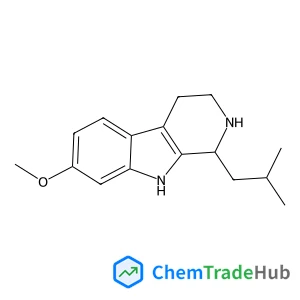
1-Isobutyl-7-methoxy-2,3,4,9-tetrahydro-1H-beta-carboline
CAS Number:
175975-76-5
Molecular Formula:
C16H22N2O
![5'-Fluoro-[2,3'-biindolinylidene]-2',3-dione structure](https://static.chemtradehub.com/structs/251/251903-00-1-9cb1.webp "5'-Fluoro-[2,3'-biindolinylidene]-2',3-dione structure")
Recommended Suppliers





Disclaimer
This page provides academic journal information for reference and research purposes only. We are not affiliated with any journal publishers and do not handle publication submissions. For publication-related inquiries, please contact the respective journal publishers directly.
If you notice any inaccuracies in the information displayed, please contact us at support@chemtradehub.com. We will promptly review and address your concerns.