












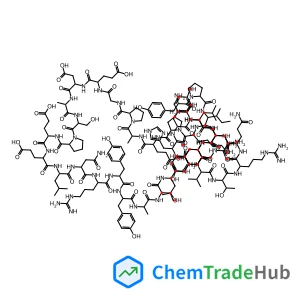
RAFT aqueous emulsion polymerization of methyl methacrylate: observation of unexpected constraints when employing a non-ionic steric stabilizer block
Literature Information
Publication Date
2021-09-27
DOI
10.1039/D1PY01008E
Impact Factor
5.582
Authors
Derek H. H. Chan, Amy A. Cockram, Rebecca R. Gibson, Emily L. Kynaston, Christopher Lindsay, Philip Taylor, Steven P. Armes
View Original
Abstract
The RAFT aqueous emulsion polymerization of methyl methacrylate (MMA) is conducted at 70 °C using poly(glycerol monomethacrylate) (PGMA) as a steric stabilizer block. This non-ionic precursor has previously proved to be highly effective for the RAFT aqueous emulsion polymerization of various vinyl monomers such as benzyl methacrylate (BzMA), 2,2,2-trifluoroethyl methacrylate (TFEMA), isopropylideneglycerol monomethacrylate (IPGMA) or glycidyl methacrylate. However, an unexpected constraint was encountered in the case of MMA. Targeting a degree of polymerization (DP) of 20 to 100 for the PMMA block led to colloidal dispersions of kinetically-trapped spherical nanoparticles ranging in size from 17 nm to 31 nm. On the other hand, targeting DPs above 100 invariably led to the formation of highly flocculated spherical nanoparticles. This rather limited DP range is in striking contrast to the much higher DPs that can be targeted without loss of colloidal stability when using more hydrophobic monomers such as BzMA, TFEMA or IPGMA. The same flocculation problem was also evident when employing a PGMA precursor containing an anionic carboxylate end-group, but a series of colloidally stable dispersions could be obtained when using an anionic poly(methacrylic acid) stabilizer. Finally, the efficient removal of RAFT end-groups from PGMA50-PMMA80 nanoparticles was achieved by visible light irradiation using a blue LED source (λ = 405 nm). UV GPC studies confirmed that up to 87% dithiobenzoate end-groups can be removed from such nanoparticles within 12 h at 80 °C. On the other hand, using excess H2O2 under the same conditions only led to 24% end-group removal. This is because this water-soluble reagent has restricted access to the hydrophobic PMMA cores.
Recommended Journals
Related Literature
99m-Technetium carbohydrate conjugates as potential agents in molecular imaging
Meryn L. Bowen, Chris Orvig
2008-09-12
Feature Article
DOI: 10.1039/B809365B
In situ synthesis of Cu nanocatalysts on ZnO whiskers embedded in a microstructured paper composite for autothermal hydrogen production
Hirotaka Koga, Takuya Kitaoka, Hiroyuki Wariishi
2008-09-26
Communication
DOI: 10.1039/B812216D
1-Azadienes in cycloaddition and multicomponent reactions towards N-heterocycles
Bas Groenendaal, Eelco Ruijter, Romano V. A. Orru
2008-09-08
Feature Article
DOI: 10.1039/B809206K
An enzymatic kinetics investigation into the significantly enhanced activity of functionalized gold nanoparticles
Chung-Shu Wu, Chia-Tien Wu, Yuh-Shyong Yang, Fu-Hsiang Ko
2008-09-17
Communication
DOI: 10.1039/B810889G
Synthesis of 3-hydroxy-1-alkenylboronates viaphosphine stabilized borylzirconacyclopropenes‡
Alina Botvinik, Abraham Rubinstein, Morris Srebnik
2008-09-29
Communication
DOI: 10.1039/B811287H
Design of chiral bifunctional secondary amine catalysts for asymmetric enamine catalysis
Taichi Kano, Keiji Maruoka
2008-09-10
Feature Article
DOI: 10.1039/B809301F
A facile approach to fabricate functional 3D macroscopic silica microtube networks using N,N′-methylenediacrylamide organogel as template
Yu Xia, Yu Wang, Kai Chen, Liming Tang
2008-09-23
Communication
DOI: 10.1039/B811412A
Cycloaddition reactions of transition metal hydrazides with alkynes and heteroalkynes: coupling of TiNNPh2 with PhCCMe, PhCCH, MeCN and tBuCP
Jonathan D. Selby, Christian Schulten, Andrew D. Schwarz, Andreas Stasch, Eric Clot, Cameron Jones, Philip Mountford
2008-09-23
Communication
DOI: 10.1039/B813911C
New functional materials for heavy metal sorption: “Supramolecular” attachment of thiols to mesoporous silica substrates
Timothy G. Carter, Wassana Yantasee, Thanapon Sangvanich, Glen E. Fryxell, Darren W. Johnson, R. Shane Addleman
2008-09-26
Communication
DOI: 10.1039/B810576F
You might also like
Compound Q&A
What are the main uses of 1H-Indazole-6-carbonitrile (CAS: 141290-59-7)?
1H-Indazole-6-carbonitrile finds applications in pharmaceuticals, where it serve...
141290-59-71H-Indazole-6-carbon...
Compound Q&A
How should waste containing Dioctyl (2E)-2-butenedioate (CAS: 2997-85-5) be handled?
Waste containing Dioctyl (2E)-2-butenedioate (CAS: 2997-85-5) should be collecte...
2997-85-5Dioctyl (2E)-2-buten...
Compound Q&A
What industries use Sodium [(1,2-benzoxazol-3-ylmethyl)sulfonyl]azanide (CAS: 68291-98-5)?
Sodium [(1,2-benzoxazol-3-ylmethyl)sulfonyl]azanide is primarily used in pharmac...
68291-98-5Sodium [(1,2-benzoxa...
Compound Q&A
Are there alternatives to Dimethyl 4-(4,4,5,5-tetramethyl-1,3,2-dioxaborolan-2-yl)-2,6-pyridinedicarboxylate (CAS: 741709-66-0) in synthesis?
Dimethyl 4-(4,4,5,5-tetramethyl-1,3,2-dioxaborolan-2-yl)-2,6-pyridinedicarboxyla...
741709-66-0Dimethyl 4-(4,4,5,5-...
Compound Q&A
How should waste containing 2-Fluoro-6-hydrazinopyridine (CAS: 80714-39-2) be handled?
Waste containing 2-Fluoro-6-hydrazinopyridine (CAS: 80714-39-2) should be manage...
80714-39-22-Fluoro-6-hydrazino...
Compound Q&A
What is 6-Formyl-2-pyridinecarboxylic acid (CAS: 499214-11-8)?
6-Formyl-2-pyridinecarboxylic acid is an organic compound with the molecular for...
499214-11-86-Formyl-2-pyridinec...
Compound Q&A
What is the market or research trend for 3-(3,4-dimethoxyphenyl)-2,5-dimethyl-N-(2-morpholin-4-ylethyl)pyrazolo[1,5-a]pyrimidin-7-amine (CAS: 900874-91-1)?
Research trends for this compound indicate a focus on its potential applications...
900874-91-13-(3,4-dimethoxyphen...
Compound Q&A
How is 9H-Tribenzo[b,d,f]azepine (CAS: 29875-73-8) typically synthesized?
9H-Tribenzo[b,d,f]azepine is typically synthesized via a multi-step process invo...
29875-73-89H-Tribenzo[b,d,f]az...
Compound Q&A
How is 1-Cyclopropyl-7-ethoxy-6-fluoro-8-methoxy-4-oxo-1,4-dihydro-3-quinolinecarboxylic acid (CAS: 1797982-51-4) typically synthesized?
1-Cyclopropyl-7-ethoxy-6-fluoro-8-methoxy-4-oxo-1,4-dihydro-3-quinolinecarboxyli...
1797982-51-41-Cyclopropyl-7-etho...
Compound Q&A
How should waste containing Methyl 3-oxo-1,2,3,4-tetrahydro-6-quinoxalinecarboxylate (CAS: 671820-52-3) be handled?
Waste containing Methyl 3-oxo-1,2,3,4-tetrahydro-6-quinoxalinecarboxylate (CAS: ...
671820-52-3Methyl 3-oxo-1,2,3,4...
Source Journal
Polymer Chemistry

CiteScore:
8.6
Self-citation Rate:
7.3%
Articles per Year:
457
Polymer Chemistry welcomes submissions in all areas of polymer science that have a strong focus on macromolecular chemistry. Manuscripts may cover a broad range of fields, yet no direct application focus is required.
Recommended Compounds
![2-Methyl-2-propanyl 4-{2-fluoro-5-[(4-oxo-3,4-dihydro-1-phthalazinyl)methyl]benzoyl}-1-piperazinecarboxylate structure](https://static.chemtradehub.com/structs/763/763114-04-1-65a9.webp "2-Methyl-2-propanyl 4-{2-fluoro-5-[(4-oxo-3,4-dihydro-1-phthalazinyl)methyl]benzoyl}-1-piperazinecarboxylate structure")
2-Methyl-2-propanyl 4-{2-fluoro-5-[(4-oxo-3,4-dihydro-1-phthalazinyl)methyl]benzoyl}-1-piperazinecarboxylate
CAS Number:
763114-04-1
Molecular Formula:
C25H27FN4O4
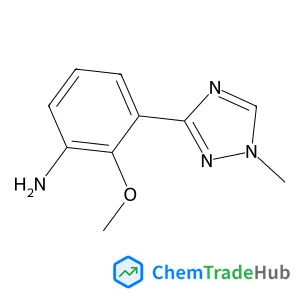
2-Methoxy-3-(1-methyl-1H-1,2,4-triazol-3-yl)aniline
CAS Number:
1609394-10-6
Molecular Formula:
C10H12N4O
Recommended Suppliers






Disclaimer
This page provides academic journal information for reference and research purposes only. We are not affiliated with any journal publishers and do not handle publication submissions. For publication-related inquiries, please contact the respective journal publishers directly.
If you notice any inaccuracies in the information displayed, please contact us at support@chemtradehub.com. We will promptly review and address your concerns.