












The influences of monomer structure and solvent on the radical copolymerization of tertiary amine and PEGylated methacrylates
Literature Information
Publication Date
2021-08-24
DOI
10.1039/D1PY00750E
Impact Factor
5.582
Authors
Priscila Quiñonez-Angulo, Robin A. Hutchinson, Ángel Licea-Claveríe, Enrique Saldívar-Guerra, Iván Zapata-González
View Original
Abstract
Tertiary Amine Methacrylates (TAMAs), such as 2-(N,N-diethylamino)ethyl methacrylate (DEAEMA) and 2-(N,N-dimethylamino)ethyl methacrylate (DMAEMA), and PEGylated (macro)monomers, such as 2-ethoxyethyl methacrylate (EEMA1) and poly(ethylene glycol) methyl ether methacrylates with 9 and 23 units (PEGMA9 and PEGMA23, respectively), are two families of monomers frequently used in the synthesis of stimuli-responsive and biocompatible materials. They, along with methyl (MMA) and butyl (BMA) methacrylate, were used to synthesize a minilibrary of copolymers, namely poly(DEAEMA-co-EEMA1), poly(DEAEMA-co-PEGMA23), poly(DMAEMA-co-PEGMA9), poly(DMAEMA-co-PEGMA23), poly(DEAEMA-co-MMA), and poly(BMA-co-PEGMA9). The rate of copolymerization increased as the length of the PEG-side chain is decreased, and was higher for DEAEMA compared to DMAEMA systems. The estimated values of the reactivity ratios are: rDEAEMA = 0.61 ± 0.06 and rEEMA1 = 0.92 ± 0.09, rDEAEMA = 0.71 ± 0.15 and rPEGMA23 = 1.05 ± 0.21, rDMAEMA = 0.83 ± 0.01 and rPEGMA9 = 1.08 ± 0.02, rDMAEMA = 0.52 ± 0.09 and rPEGMA23 = 0.76 ± 0.14, and rBMA = 0.55 ± 0.13 and rPEGMA9 = 0.38 ± 0.09; p-dioxane at 70 °C: rDEAEMA = 0.91 ± 0.12 and rPEGMA9 = 0.75 ± 0.09; and tetrahydrofuran at 66 °C: rDEAEMA = 0.96 ± 0.13 and rPEGMA9 = 0.81 ± 0.11. While there was no difference in relative reactivity between the two amine-functional monomers when copolymerized with PEGylated methacrylates, the increased relative activity of the TAMAs compared to BMA is attributed to the formation of a cyclic intermediate. Additionally, as the PEG side-chain length is extended, the reactivity ratios for the amino monomers decreased. Finally, although a higher content of DEAEMA is incorporated in the copolymer for the poly(DEAEMA-co-MMA) when a more polar solvent is used, no differences were observed in the Mayo–Lewis plots for the poly(DEAEMA-co-PEGMA23) using p-dioxane, tetrahydrofuran and ethanol.
Related Literature
Two new quinoline-based regenerable fluorescent probes with AIE characteristics for selective recognition of Cu2+ in aqueous solution and test strips
Jingwen Xiong, Zongzhi Li, Jihua Tan, Shaomin Ji, Jianwei Sun, Xianwei Li, Yanping Huo
2018-08-01
Paper
DOI: 10.1039/C8AN00940F
Determination of the illegal adulteration of natural healthcare products with chemical drugs using surface-enhanced Raman scattering
Jiawei Wu, Lixia Zhang, Xiangfeng Bu, Peng Li, Bing Zhao, Yuan Tian
2018-09-18
Paper
DOI: 10.1039/C8AN01286E
Real time plasmonic qPCR: how fast is ultra-fast? 30 cycles in 54 seconds
Philip J. R. Roche, Mohamed Najih, Seung S. Lee, Lenore K. Beitel, Matthew L. Carnevale, Andrew G. Kirk
2017-04-12
Paper
DOI: 10.1039/C7AN00304H
A reusable cyanide sensor via activation of C–H group: trifluoromethylcarbinol-directed meta-C–H cyanomethylation of naphthalimide
Yayun Chen, Xiaoxue Hu, Caihui Rao, Zheyao Li, Lu Chen, Chao Fu, Chuanxiang Liu
2018-08-20
Paper
DOI: 10.1039/C8AN00718G
An efficient two-photon fluorescent probe for measuring γ-glutamyltranspeptidase activity during the oxidative stress process in tumor cells and tissues
Peng Wang, Jing Zhang, Hong-Wen Liu, Xiao-Xiao Hu, Xia Yin, Xiao-Bing Zhang
2017-04-12
Paper
DOI: 10.1039/C7AN00229G
Nicotinamide adenine dinucleotide detection based on silver nanoclusters stabilized by a dumbbell-shaped probe
Hong-Ya Wang, Jin-Liang Ma, Bin-Cheng Yin
2017-04-12
Paper
DOI: 10.1039/C7AN00293A
Can all bulk-phase reactions be accelerated in microdroplets?
Shibdas Banerjee, Elumalai Gnanamani, Xin Yan, Richard N. Zare
2017-03-14
Perspective
DOI: 10.1039/C6AN02225A
Efficient synthesis of riboflavin-imprinted magnetic nanoparticles by boronate affinity-based surface imprinting for the selective recognition of riboflavin
Daojin Li, Zijun Bie, Fangfang Wang, Enhui Guo
2018-09-06
Paper
DOI: 10.1039/C8AN01044G
Effects and controls of capacitive hysteresis in ionic liquid electrochemical measurements
Anthony J. Lucio, Scott K. Shaw
2018-08-29
Paper
DOI: 10.1039/C8AN01085D
You might also like
Compound Q&A
What is the market or research trend for N-(4-Methoxybenzyl)-2-pyridinamine (CAS: 52818-63-0)?
N-(4-Methoxybenzyl)-2-pyridinamine (CAS: 52818-63-0) is increasingly being used ...
52818-63-0N-(4-Methoxybenzyl)-...
Compound Q&A
What precautions should be taken when handling Ethyl 4-(2-chlorophenyl)-1,3-thiazole-2-carboxylate (CAS: 1050507-06-6)?
When handling Ethyl 4-(2-chlorophenyl)-1,3-thiazole-2-carboxylate, appropriate p...
1050507-06-6Ethyl 4-(2-chlorophe...
Compound Q&A
What regulatory guidelines apply to diethyldiselane (CAS: 628-39-7)?
Diethyldiselane (CAS: 628-39-7) is classified under the Globally Harmonized Syst...
628-39-7Diethyldiselane
Compound Q&A
What is the market or research trend for oxocopper (CAS: 12053-18-8)?
The market for oxocopper (CAS: 12053-18-8) is primarily driven by its use in cat...
12053-18-8oxocopper; oxo-(oxoc...
Compound Q&A
What is the market or research trend for 5-{[(2-Methyl-2-propanyl)oxy]carbonyl}-5-azaspiro[2.4]heptane-7-carboxylic acid?
The market for 5-{[(2-Methyl-2-propanyl)oxy]carbonyl}-5-azaspiro[2.4]heptane-7-c...
1268519-54-55-{[(2-Methyl-2-prop...
Compound Q&A
What is 2-(1-Pyrrolidinyl)-4-pyridinamine (CAS: 35981-63-6)?
2-(1-Pyrrolidinyl)-4-pyridinamine is a chemical compound with the CAS number 359...
35981-63-62-(1-Pyrrolidinyl)-4...
Compound Q&A
What are the physical and chemical properties of 2-(3-Pyridinyl)-1-azabicyclo[2.2.2]octane (CAS: 91556-75-1)?
2-(3-Pyridinyl)-1-azabicyclo[2.2.2]octane (CAS: 91556-75-1) is a crystalline sol...
91556-75-12-(3-Pyridinyl)-1-az...
Compound Q&A
How is (S)-Alpha-allyl-proline hydrochloride (CAS: 129704-91-2) typically synthesized?
(S)-Alpha-allyl-proline hydrochloride is usually synthesized via a Wittig reacti...
129704-91-2(S)-Alpha-allyl-prol...
Compound Q&A
What is 3-Methyl-1,2-oxazole-5-carboxylic acid (CAS: 4857-42-5)?
3-Methyl-1,2-oxazole-5-carboxylic acid (CAS: 4857-42-5) is an organic compound w...
4857-42-53-Methyl-1,2-oxazole...
Compound Q&A
How is Lys-SMCC-DM1 (CAS: 1281816-04-3) typically synthesized?
Lys-SMCC-DM1 is synthesized via a multi-step process involving the coupling of S...
1281816-04-3Lys-SMCC-DM1
Source Journal
Polymer Chemistry

CiteScore:
8.6
Self-citation Rate:
7.3%
Articles per Year:
457
Polymer Chemistry welcomes submissions in all areas of polymer science that have a strong focus on macromolecular chemistry. Manuscripts may cover a broad range of fields, yet no direct application focus is required.
Recommended Compounds
![1,10-bis(3,5-dimethylphenyl)-12-hydroxy-4,5,6,7-tetrahydroiindeno[7,1-de:1',7'-fg][1,3,2]dioxaphosphocine 12-oxide structure](https://static.chemtradehub.com/structs/141/1412439-82-7-b9a9.webp "1,10-bis(3,5-dimethylphenyl)-12-hydroxy-4,5,6,7-tetrahydroiindeno[7,1-de:1',7'-fg][1,3,2]dioxaphosphocine 12-oxide structure")
1,10-bis(3,5-dimethylphenyl)-12-hydroxy-4,5,6,7-tetrahydroiindeno[7,1-de:1',7'-fg][1,3,2]dioxaphosphocine 12-oxide
CAS Number:
1412439-82-7
Molecular Formula:
C33H31O4P
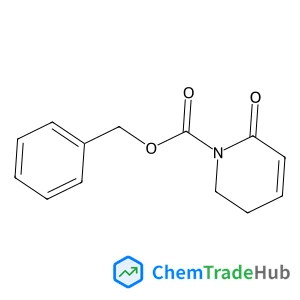
Benzyl 6-oxo-3,6-dihydro-1(2H)-pyridinecarboxylate
CAS Number:
725746-35-0
Molecular Formula:
C13H13NO3

2-(4,4-Difluorobutyl)-1H-isoindole-1,3(2H)-dione
CAS Number:
1265341-14-7
Molecular Formula:
C12H11F2NO2
Recommended Suppliers






Disclaimer
This page provides academic journal information for reference and research purposes only. We are not affiliated with any journal publishers and do not handle publication submissions. For publication-related inquiries, please contact the respective journal publishers directly.
If you notice any inaccuracies in the information displayed, please contact us at support@chemtradehub.com. We will promptly review and address your concerns.