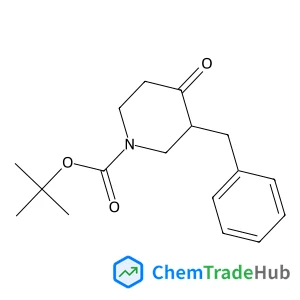
2-Methyl-2-propanyl 3-benzyl-4-oxo-1-piperidinecarboxylate
CAS Number:
193274-82-7
Molecular Formula:
C17H23NO3
Danil A. Markelov, Vitaly P. Kozinenko, Stephan Knecht, Alexey S. Kiryutin, Alexandra V. Yurkovskaya, Konstantin L. Ivanov
Detailed experimental and comprehensive theoretical analysis of singlet–triplet conversion in molecular hydrogen dissolved in a solution together with organometallic complexes used in experiments with parahydrogen (the H2 molecule in its nuclear singlet spin state) is reported. We demonstrate that this conversion, which gives rise to formation of orthohydrogen (the H2 molecule in its nuclear triplet spin state), is a remarkably efficient process that strongly reduces the resulting NMR (nuclear magnetic resonance) signal enhancement, here of 15N nuclei polarized at high fields using suitable NMR pulse sequences. We make use of a simple improvement of traditional pulse sequences, utilizing a single pulse on the proton channel that gives rise to an additional strong increase of the signal. Furthermore, analysis of the enhancement as a function of the pulse length allows one to estimate the actual population of the spin states of H2. We are also able to demonstrate that the spin conversion process in H2 is strongly affected by the concentration of 15N nuclei. This observation allows us to explain the dependence of the 15N signal enhancement on the abundance of 15N isotopes.
Faisal K. Algethami, Basant H. Koraim, Ehab A. Abdelrahman, Yasmeen G. Abou El-Reash, Mahmoud S. Rizk
DOI: 10.1039/D3AY01320K
Shanshan Zhou, Zongxin Li, Yan Li, Xiaoyao Wang, Kun Deng
DOI: 10.1039/D3AY01938A
Guoyun Wan, Xuheng Chen, Ruiling Gou, Chenguang Guan, Jiayu Chen, Qian Wang, Qiqing Zhang, Haijiao Wang
DOI: 10.1039/D3BM01627G
Ju Hwa Lee, Yun Chang Pyun, Jonggyu Park, Tae Woong Kang, Jin Sol Seo, Dae Hoon Lee
DOI: 10.1039/D3BM01008B
Yongjin Zhong, Yancheng Lai, Zeru Feng, Si Huang, Yu Fu, Lirong Huang, Keng-fu Lan, Anchun Mo
DOI: 10.1039/D3BM01676E
Mingzhu Liu, Jingran Sun, Jin Wu, Zunquan Zhao, Jialei Bai, Yanjun Fang, Xiaoyong Jin
DOI: 10.1039/D3AY01423A
Prajal Chettri, Kalathur Mohan Ganesh, Sahashransu Satyajeet Mahapatra, A. S. Vishwanathan, Shailesh Srivastava
DOI: 10.1039/D3AY01612A
DOI: 10.1039/D3AY01817B
6-Bromo-2-methylimidazo[1,2-a]pyrimidine (CAS: 1111638-05-1) falls under various...
While there are no direct alternatives, similar compounds like 1-Pyrrolidineetha...
4-Methyl-2,6-bis(2-methyl-2-propanyl)phenyl methylcarbamate (CAS: 1918-11-2) is ...
2-(3-Bromo-4-fluorophenyl)-1,3-dioxolane (CAS: 77771-04-1) should be stored in a...
4,5,6,7-Tetrahydro-1H-indazole hydrochloride is a white crystalline solid with a...
(2R)-1-Methoxy-3-phenyl-2-propanamine is a chiral organic compound with the CAS ...
Ethyl 1-(1-phenylethyl)-1H-imidazole-5-carboxylate is used in various industries...
4-[(1E,3S)-1-(4-Hydroxyphenyl)-1,4-pentadien-3-yl]phenol (CAS: 17676-24-3) falls...
(S)-3-Amino-5-phenylpentanoic acid hydrochloride is primarily used in the pharma...
7-Methoxy-1-benzothiophene-2-carboxylic acid is typically synthesized by reactin...

Physical Chemistry Chemical Physics (PCCP) is an international journal co-owned by 19 physical chemistry and physics societies from around the world. This journal publishes original, cutting-edge research in physical chemistry, chemical physics and biophysical chemistry. To be suitable for publication in PCCP, articles must include significant innovation and/or insight into physical chemistry; this is the most important criterion that reviewers and Editors will judge against when evaluating submissions. The journal has a broad scope and welcomes contributions spanning experiment, theory, computation and data science. Topical coverage includes spectroscopy, dynamics, kinetics, statistical mechanics, thermodynamics, electrochemistry, catalysis, surface science, quantum mechanics, quantum computing and machine learning. Interdisciplinary research areas such as polymers and soft matter, materials, nanoscience, energy, surfaces/interfaces, and biophysical chemistry are welcomed if they demonstrate significant innovation and/or insight into physical chemistry. Joined experimental/theoretical studies are particularly appreciated when complementary and based on up-to-date approaches.
![(3R)-4-(4-Chlorophenyl)-3-({[(2-methyl-2-propanyl)oxy]carbonyl}amino)butanoic acid structure](https://static.chemtradehub.com/structs/218/218608-96-9-f871.webp "(3R)-4-(4-Chlorophenyl)-3-({[(2-methyl-2-propanyl)oxy]carbonyl}amino)butanoic acid structure")