












UPLC-MS/MS method for quantitative determination of the advanced glycation endproducts Nε-(carboxymethyl)lysine and Nε-(carboxyethyl)lysine
Literature Information
Publication Date
2023-12-01
DOI
10.1039/D3AY01817B
Impact Factor
2.896
Authors
View Original
Abstract
During blood storage, red blood cells (RBCs) undergo physical, chemical, and metabolic changes that may contribute to post-transfusion complications. Due to the hyperglycemic environment of typical solutions used for RBC storage, the formation of advanced glycation endproducts (AGEs) on the stored RBCs has been implicated as a detrimental chemical change during storage. Unfortunately, there are limited studies involving quantitative determination and differentiation of carboxymethyl-lysine (CML) and carboxyethyl-lysine (CEL), two commonly formed AGEs, and no reported studies comparing these AGEs in experimental storage solutions. In this study, CML and CEL were identified and quantified on freshly drawn blood samples in two types of storage solutions, standard additive solution 1 (AS-1) and a normoglycemic version of AS-1 (AS-1N). To facilitate detection of the AGEs, a novel method was developed to reliably extract AGEs from RBCs, provide Food and Drug Administration (FDA) bioanalytical guidance criteria, and enable acceptable selectivity for these analytes. Ultra-performance liquid chromatography with tandem mass spectrometry (UPLC-MS/MS) was utilized to identify and quantify the AGEs. Results show this method is accurate, precise, has minimal interferences or matrix effects, and overcomes the issue of detecting AGE byproducts. Importantly, AGEs can be detected and quantified in both types of blood storage solutions (AS-1 and AS-1N), thereby enabling long-term (6 weeks) blood storage related studies.
Recommended Journals
Related Literature
Deformation behavior of an amorphous zeolitic imidazolate framework – from a supersoft material to a complex organometallic alloy
Puja Adhikari, Neng Li, Paul Rulis, Wai-Yim Ching
2018-10-11
Paper
DOI: 10.1039/C8CP05610B
Extreme electron transport suppression in siloxane ring-based molecular devices
Jie Li, Yunrui Duan, Tao Li, Hui Li
2018-08-21
Paper
DOI: 10.1039/C8CP03616K
Role of the carbon source in the transformation of amorphous carbon to graphene during rapid thermal processing
Yong Zhou, Xiaowei Xu, Aiying Wang, Kwang-Ryeol Lee
2019-04-08
Paper
DOI: 10.1039/C9CP01305A
Impact of pore size, interconnections, and dynamic conductivity on the electrochemistry of vanadium pentoxide in well defined porous structures
Nam Kim, Emily Sahadeo, Chanyuan Liu, Olivia Rose
2018-11-21
Paper
DOI: 10.1039/C8CP04706E
Hydrogen bond induced enhancement of Fermi resonances in N–H⋯N hydrogen bonded complexes of anilines
Saurabh Mishra, Jer-Lai Kuo, G. Naresh Patwari
2018-07-20
Paper
DOI: 10.1039/C8CP02448K
Why does 4-biphenyl carbonyl azide have ultra-short lived excited states? An ultrafast UV-vis spectroscopic and computational study
2018-11-06
Paper
DOI: 10.1039/C8CP05963B
Bulk phase behavior of lithium imide–metal nitride ammonia decomposition catalysts‡
Thomas J. Wood, Ronald I. Smith, Claire A. Murray
2018-08-23
Paper
DOI: 10.1039/C8CP02824A
A synergetic stabilization and strengthening strategy for two-dimensional ordered hybrid transition metal carbides
Dominik Legut, Timothy C. Germann, Shiyu Du, Joseph S. Francisco
2018-11-16
Paper
DOI: 10.1039/C8CP06458J
Vibrationally induced metallisation of the energetic azide α-NaN3
Svemir Rudić, Carole A. Morrison
2018-11-05
Paper
DOI: 10.1039/C8CP06161K
You might also like
Compound Q&A
What are the main uses of 4-Nitrophenyl phosphate disodium salt hexahydrate (CAS: 333338-18-4)?
4-Nitrophenyl phosphate disodium salt hexahydrate is primarily used as a substra...
333338-18-44-Nitrophenyl phosph...
Compound Q&A
What are the main uses of 2-(Trifluoromethyl)-1,3-oxazole-4-carboxylic Acid (CAS: 1060816-01-4)?
2-(Trifluoromethyl)-1,3-oxazole-4-carboxylic Acid (CAS: 1060816-01-4) is widely ...
1060816-01-42-(Trifluoromethyl)-...
Compound Q&A
How should 2-Fluoro-4-biphenylcarboxylic acid (CAS: 137045-30-8) be stored?
2-Fluoro-4-biphenylcarboxylic acid should be stored in a cool, dry place at room...
137045-30-82-Fluoro-4-biphenylc...
Compound Q&A
What industries use Prednisolone-21-Carboxylic Acid (CAS: 61549-70-0)?
Prednisolone-21-Carboxylic Acid is primarily used in the pharmaceutical industry...
61549-70-0Prednisolone-21-Carb...
Compound Q&A
How should 4-(Hydrazinomethyl)-1,2,3-benzenetriol (CAS: 3614-72-0) be stored?
4-(Hydrazinomethyl)-1,2,3-benzenetriol (CAS: 3614-72-0) should be stored in a co...
3614-72-04-(Hydrazinomethyl)-...
Compound Q&A
What industries use 4-Amino-1-methyl-1H-pyrazole-5-carboxylic acid hydrochloride (CAS: 92534-70-8)?
4-Amino-1-methyl-1H-pyrazole-5-carboxylic acid hydrochloride (CAS: 92534-70-8) i...
92534-70-84-Amino-1-methyl-1H-...
Compound Q&A
What regulatory guidelines apply to dehydropachymic acid (CAS: 77012-31-8)?
Dehydropachymic acid (CAS: 77012-31-8) is regulated by various agencies. It fall...
77012-31-8Dehydropachymic acid
Compound Q&A
What is the market or research trend for 6-[(2,2-Dimethylpropanoyl)amino]nicotinic acid (CAS: 898561-66-5)?
The market and research trends for 6-[(2,2-Dimethylpropanoyl)amino]nicotinic aci...
898561-66-56-[(2,2-Dimethylprop...
Compound Q&A
How should 1,10-Phenanthroline-2,9-dicarbaldehyde (CAS: 57709-62-3) be stored?
1,10-Phenanthroline-2,9-dicarbaldehyde should be stored in a cool, dry place awa...
57709-62-31,10-Phenanthroline-...
Compound Q&A
How is 5-Carbamoyl-11-oxo-10,11-dihydro-5H-dibenzo[b,f]azepin-10-yl acetate (CAS: 113952-21-9) typically synthesized?
5-Carbamoyl-11-oxo-10,11-dihydro-5H-dibenzo[b,f]azepin-10-yl acetate can be synt...
113952-21-95-Carbamoyl-11-oxo-1...
Source Journal
Analytical Methods
CiteScore:
5.1
Self-citation Rate:
3.7%
Articles per Year:
655
Analytical Methods welcomes early applications of new analytical and bioanalytical methods and technology demonstrating the potential for societal impact. We require that methods and technology reported in the journal are sufficiently innovative, robust, accurate, and compared to other available methods for the intended application. Developments with interdisciplinary approaches are particularly welcome. Systems should be proven with suitably complex and analytically challenging samples. We encourage developments within, but not limited to, the following technologies and applications: global health, point-of-care and molecular diagnostics biosensors and bioengineering drug development and pharmaceutical analysis applied microfluidics and nanotechnology omics studies, such as proteomics, metabolomics or glycomics environmental, agricultural and food science neuroscience biochemical and clinical analysis forensic analysis industrial process and method development
Recommended Compounds
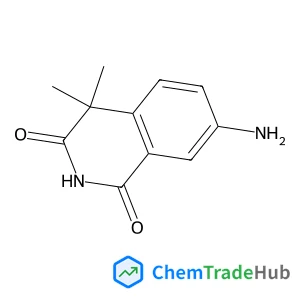
1,3(2H,4H)-Isoquinolinedione, 7-amino-4,4-dimethyl-
CAS Number:
14576-22-8
Molecular Formula:
C11H12N2O2
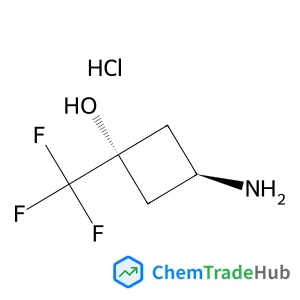
cis-3-Amino-1-(trifluoromethyl)cyclobutanol hydrochloride (1:1)
CAS Number:
1408075-16-0
Molecular Formula:
C5H9ClF3NO
Recommended Suppliers







Disclaimer
This page provides academic journal information for reference and research purposes only. We are not affiliated with any journal publishers and do not handle publication submissions. For publication-related inquiries, please contact the respective journal publishers directly.
If you notice any inaccuracies in the information displayed, please contact us at support@chemtradehub.com. We will promptly review and address your concerns.