


N-doped molybdenum oxide quantum dots as fluorescent probes for the quantitative detection of copper ions in environmental samples
Literature Information
Publication Date
2023-10-30
DOI
10.1039/D3AY01423A
Impact Factor
2.896
Authors
Mingzhu Liu, Jingran Sun, Jin Wu, Zunquan Zhao, Jialei Bai, Yanjun Fang, Xiaoyong Jin
View Original
Abstract
A novel, sensitive, and selective fluorescence sensor based on N-doped Mo oxide quantum dots (N-MoOx QDs) was fabricated for the detection of Cu2+ ions in water. The presence of Cu2+ induced dynamic fluorescence quenching of the N-MoOx QDs. The sensing conditions were optimized to enhance selectivity and sensitivity. Under optimal conditions, the linear relationship between fluorescence response at 408 nm and Cu2+ concentration was determined. The linear range of this relationship was 1–100 μM. The limits of detection (LOD) and quantitation (LOQ) for Cu2+ were 0.78 μM and 2.34 μM, respectively. The method was successfully applied to detect Cu2+ in water samples with satisfactory sample recovery rates from 91.7 to 116.4%. The sensor exhibits high selectivity toward Cu2+, making it useful for environmental sample monitoring.
Recommended Journals

Chemistry of Heterocyclic Compounds

Doklady Chemistry

Ferroelectrics

Corrosion Science

Bulletin of the Chemical Society of Japan

Advances in Colloid and Interface Science

Journal of the American Chemical Society

Chemistry of Natural Compounds

Anti-Corrosion Methods and Materials

Canadian Metallurgical Quarterly
Related Literature
Polarized absorbance and Davydov splitting in bulk and thin-film pentacene polymorphs
Caterina Cocchi, Tobias Breuer, Gregor Witte, Claudia Draxl
2018-11-14
Paper
DOI: 10.1039/C8CP06384B
Closed bipolar electrochemistry in a four-electrode configuration
Alonso Gamero-Quijano, Andrés F. Molina-Osorio, Pekka Peljo
2019-05-03
Perspective
DOI: 10.1039/C9CP00774A
Boron-based binary Be6B102− cluster: three-layered aromatic sandwich, electronic transmutation, and dynamic structural fluxionality
Lin-Yan Feng, Peng-Fei Li, Hua-Jin Zhai
2018-08-13
Paper
DOI: 10.1039/C8CP04332A
Optical properties and charge distribution in rod-shape DNA–silver cluster emitters
Matías Berdakin
2018-08-15
Paper
DOI: 10.1039/C8CP03895C
A synergetic stabilization and strengthening strategy for two-dimensional ordered hybrid transition metal carbides
Dominik Legut, Timothy C. Germann, Shiyu Du, Joseph S. Francisco
2018-11-16
Paper
DOI: 10.1039/C8CP06458J
Counteraction of denaturant-induced protein unfolding is a general property of stabilizing agents
Serena Cozzolino, Rosario Oliva, Giuseppe Graziano, Pompea Del Vecchio
2018-11-07
Paper
DOI: 10.1039/C8CP04421J
Interband transitions in closed-shell vacancy containing graphene quantum dots complexed with heavy metals
Rositsa Yakimova
2018-08-01
Paper
DOI: 10.1039/C8CP03306D
Conformational preference and cationic structure of 2-methylpyrazine by VUV-MATI spectroscopy and natural bond orbital analysis
Do Won Kang, Hong Lae Kim, Chan Ho Kwon
2019-04-16
Paper
DOI: 10.1039/C9CP00766K
Energy loss analysis in photoelectrochemical water splitting: a case study of hematite photoanodes
Zhiliang Wang, Miaoqiang Lyu, Peng Chen, Songcan Wang, Lianzhou Wang
2018-08-16
Paper
DOI: 10.1039/C8CP04021D
Atomistic modelling of entropy driven phase transitions between different crystal modifications in polymers: the case of poly(3-alkylthiophenes)
Mosè Casalegno, Tommaso Nicolini, Antonino Famulari, Guido Raos, Riccardo Po, Stefano V. Meille
2018-11-20
Communication
DOI: 10.1039/C8CP05820B
You might also like
Compound Q&A
What are the main uses of 4-Nitrophenyl phosphate disodium salt hexahydrate (CAS: 333338-18-4)?
4-Nitrophenyl phosphate disodium salt hexahydrate is primarily used as a substra...
333338-18-44-Nitrophenyl phosph...
Compound Q&A
What are the main uses of 2-(Trifluoromethyl)-1,3-oxazole-4-carboxylic Acid (CAS: 1060816-01-4)?
2-(Trifluoromethyl)-1,3-oxazole-4-carboxylic Acid (CAS: 1060816-01-4) is widely ...
1060816-01-42-(Trifluoromethyl)-...
Compound Q&A
How should 2-Fluoro-4-biphenylcarboxylic acid (CAS: 137045-30-8) be stored?
2-Fluoro-4-biphenylcarboxylic acid should be stored in a cool, dry place at room...
137045-30-82-Fluoro-4-biphenylc...
Compound Q&A
What industries use Prednisolone-21-Carboxylic Acid (CAS: 61549-70-0)?
Prednisolone-21-Carboxylic Acid is primarily used in the pharmaceutical industry...
61549-70-0Prednisolone-21-Carb...
Compound Q&A
How should 4-(Hydrazinomethyl)-1,2,3-benzenetriol (CAS: 3614-72-0) be stored?
4-(Hydrazinomethyl)-1,2,3-benzenetriol (CAS: 3614-72-0) should be stored in a co...
3614-72-04-(Hydrazinomethyl)-...
Compound Q&A
What industries use 4-Amino-1-methyl-1H-pyrazole-5-carboxylic acid hydrochloride (CAS: 92534-70-8)?
4-Amino-1-methyl-1H-pyrazole-5-carboxylic acid hydrochloride (CAS: 92534-70-8) i...
92534-70-84-Amino-1-methyl-1H-...
Compound Q&A
What regulatory guidelines apply to dehydropachymic acid (CAS: 77012-31-8)?
Dehydropachymic acid (CAS: 77012-31-8) is regulated by various agencies. It fall...
77012-31-8Dehydropachymic acid
Compound Q&A
What is the market or research trend for 6-[(2,2-Dimethylpropanoyl)amino]nicotinic acid (CAS: 898561-66-5)?
The market and research trends for 6-[(2,2-Dimethylpropanoyl)amino]nicotinic aci...
898561-66-56-[(2,2-Dimethylprop...
Compound Q&A
How should 1,10-Phenanthroline-2,9-dicarbaldehyde (CAS: 57709-62-3) be stored?
1,10-Phenanthroline-2,9-dicarbaldehyde should be stored in a cool, dry place awa...
57709-62-31,10-Phenanthroline-...
Compound Q&A
How is 5-Carbamoyl-11-oxo-10,11-dihydro-5H-dibenzo[b,f]azepin-10-yl acetate (CAS: 113952-21-9) typically synthesized?
5-Carbamoyl-11-oxo-10,11-dihydro-5H-dibenzo[b,f]azepin-10-yl acetate can be synt...
113952-21-95-Carbamoyl-11-oxo-1...
Source Journal
Analytical Methods

CiteScore:
5.1
Self-citation Rate:
3.7%
Articles per Year:
655
Analytical Methods welcomes early applications of new analytical and bioanalytical methods and technology demonstrating the potential for societal impact. We require that methods and technology reported in the journal are sufficiently innovative, robust, accurate, and compared to other available methods for the intended application. Developments with interdisciplinary approaches are particularly welcome. Systems should be proven with suitably complex and analytically challenging samples. We encourage developments within, but not limited to, the following technologies and applications: global health, point-of-care and molecular diagnostics biosensors and bioengineering drug development and pharmaceutical analysis applied microfluidics and nanotechnology omics studies, such as proteomics, metabolomics or glycomics environmental, agricultural and food science neuroscience biochemical and clinical analysis forensic analysis industrial process and method development
Recommended Compounds
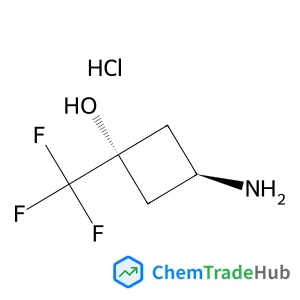
cis-3-Amino-1-(trifluoromethyl)cyclobutanol hydrochloride (1:1)
CAS Number:
1408075-16-0
Molecular Formula:
C5H9ClF3NO
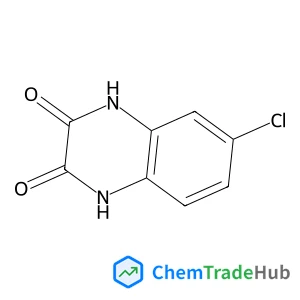
6-CHLORO-2,3-DIOXO-1,2,3,4-TETRAHYDROQUINOXALINE, 97
CAS Number:
169-14-2
Molecular Formula:
C8H5ClN2O2
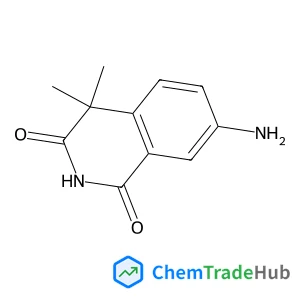
1,3(2H,4H)-Isoquinolinedione, 7-amino-4,4-dimethyl-
CAS Number:
14576-22-8
Molecular Formula:
C11H12N2O2
Recommended Suppliers




Disclaimer
This page provides academic journal information for reference and research purposes only. We are not affiliated with any journal publishers and do not handle publication submissions. For publication-related inquiries, please contact the respective journal publishers directly.
If you notice any inaccuracies in the information displayed, please contact us at support@chemtradehub.com. We will promptly review and address your concerns.