



4-Methyl-3-morpholinecarboxylic acid hydrochloride (1:1)
CAS Number:
1240518-90-4
Molecular Formula:
C6H12ClNO3
Prajal Chettri, Kalathur Mohan Ganesh, Sahashransu Satyajeet Mahapatra, A. S. Vishwanathan, Shailesh Srivastava
Optofluidic chips represent a cost-effective platform for the development of miniaturized devices to perform biochemical reactions at a microscale. The dye reduction-based electron-transfer activity monitoring (DREAM) assay is a colorimetric approach that has been adopted for the rapid assessment of bacterial activity in bioreactors used in bioremediation and industrial biotechnology. A three-layered PMMA-based optofluidic chip having laser-machined microchannels coupled with a detection system comprising an LED source and a photodiode interfaced with a microcontroller for automation constituted the experimental setup. Data acquisition was executed using a user-friendly graphical user interface (GUI) that enabled real-time monitoring of bacterial activity. A performance comparison study was performed to assess the viability of replacing expensive spectrophotometers with an inexpensive photodiode for optoelectronic automation. Bacterial activity across different growth phases of a bacterial culture, initiated using untreated domestic wastewater, was assessed by the detector on the basis of voltage readings corresponding to the rate of decrease in the blue color intensity. The highest activity observed corresponded to the log phase of the growth curve. The optimal time for measurement of bacterial activity within the log phase of the growth curve was identified using different dilutions of untreated domestic wastewater. Furthermore, the device showed comparable sensitivities for samples from different time points in a bacterial growth curve and for different dilutions of untreated domestic wastewater samples. The device also demonstrated a linear response in the assessment of bacterial activity as a function of the change in strength of untreated domestic wastewater. This is the first report on colorimetric assessment of bacterial activity using a low-cost photodiode-based device at the microscale constructed using off-the-shelf components.

Accounts of Chemical Research

Cement and Concrete Research

Journal of the American Chemical Society

Anti-Corrosion Methods and Materials

Ferroelectrics

Journal of the Chinese Chemical Society

Bulletin of the Chemical Society of Japan

Chemistry of Heterocyclic Compounds

Canadian Metallurgical Quarterly

Chemical & Pharmaceutical Bulletin
Jessica Exner, Steffen Eusterwiemann, Oliver Janka, Oliver Niehaus, Constantin G. Daniliuc, Rainer Pöttgen, Armido Studer
DOI: 10.1039/C8CP05837G
Yong Zhou, Xiaowei Xu, Aiying Wang, Kwang-Ryeol Lee
DOI: 10.1039/C9CP01305A
Shihu H. M. Deng, Gao-Lei Hou, Marat Valiev, Xue-Bin Wang
DOI: 10.1039/C8CP03896A
Zhixiao Liu, Shiguo Zhang, Wangyu Hu
DOI: 10.1039/C8CP01756E
Yong Xia, Sifeng Chen, Peifeng Su, Zhijun Yang, Carl O. Trindle, J. L. Knee
DOI: 10.1039/C8CP05979A
Dominik Legut, Timothy C. Germann, Shiyu Du, Joseph S. Francisco
DOI: 10.1039/C8CP06458J
A. I. Lozano, J. C. Oller, D. B. Jones, M. T. do N. Varella, M. H. F. Bettega, F. Ferreira da Silva, P. Limão-Vieira, M. A. P. Lima, R. D. White, M. J. Brunger, F. Blanco, A. Muñoz, G. García
DOI: 10.1039/C8CP03297A
DOI: 10.1039/C8CP06231E
4-Nitrophenyl phosphate disodium salt hexahydrate is primarily used as a substra...
2-(Trifluoromethyl)-1,3-oxazole-4-carboxylic Acid (CAS: 1060816-01-4) is widely ...
2-Fluoro-4-biphenylcarboxylic acid should be stored in a cool, dry place at room...
Prednisolone-21-Carboxylic Acid is primarily used in the pharmaceutical industry...
4-(Hydrazinomethyl)-1,2,3-benzenetriol (CAS: 3614-72-0) should be stored in a co...
4-Amino-1-methyl-1H-pyrazole-5-carboxylic acid hydrochloride (CAS: 92534-70-8) i...
Dehydropachymic acid (CAS: 77012-31-8) is regulated by various agencies. It fall...
The market and research trends for 6-[(2,2-Dimethylpropanoyl)amino]nicotinic aci...
1,10-Phenanthroline-2,9-dicarbaldehyde should be stored in a cool, dry place awa...
5-Carbamoyl-11-oxo-10,11-dihydro-5H-dibenzo[b,f]azepin-10-yl acetate can be synt...
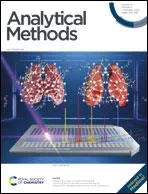
Analytical Methods welcomes early applications of new analytical and bioanalytical methods and technology demonstrating the potential for societal impact. We require that methods and technology reported in the journal are sufficiently innovative, robust, accurate, and compared to other available methods for the intended application. Developments with interdisciplinary approaches are particularly welcome. Systems should be proven with suitably complex and analytically challenging samples. We encourage developments within, but not limited to, the following technologies and applications: global health, point-of-care and molecular diagnostics biosensors and bioengineering drug development and pharmaceutical analysis applied microfluidics and nanotechnology omics studies, such as proteomics, metabolomics or glycomics environmental, agricultural and food science neuroscience biochemical and clinical analysis forensic analysis industrial process and method development
![(3R,5R)-1-[(Benzyloxy)carbonyl]-5-methyl-3-piperidinecarboxylic acid structure](https://static.chemtradehub.com/structs/126/1269757-29-0-c552.webp "(3R,5R)-1-[(Benzyloxy)carbonyl]-5-methyl-3-piperidinecarboxylic acid structure")


