
6-Bromo-3,4-dihydro-2H-1,4-benzoxazine hydrochloride (1:1)
CAS Number:
1260803-10-8
Molecular Formula:
C8H9BrClNO
Guoyun Wan, Xuheng Chen, Ruiling Gou, Chenguang Guan, Jiayu Chen, Qian Wang, Qiqing Zhang, Haijiao Wang
Presently, the commonly used anti-tumor drugs lack targeting ability, resulting in a limited therapeutic efficacy and significant side effects. In this view, platelet membranes (PMs) not only exhibit specific binding of its P-selectin protein with CD44, which is highly expressed on breast cancer cells, to promote tumor-active targeting by PM biomimetic nanoplatforms, but also respond to vascular damage, thus inducing biochemotactic targeting to further facilitate the aggregation of these nanoplatforms. Therefore, in this study, a PM was applied to construct a biochemotactic-targeting nanotherapeutic platform based on dendritic large pore mesoporous silica nanoparticles (DLMSNs) co-loaded with chlorin e6 (Ce6) and lapatinib (LAP) to achieve the combination of photodynamic therapy (PDT) and EGFR inhibition therapy for breast cancer. Under laser irradiation, PM@DLMSN/Ce6/Lap could not only effectively kill breast tumor cells by the PDT, but also damage blood vessels. By combining the EGFR inhibition of LAP, PM@DLMSN/Ce6/Lap could better inhibit the migration and movement of tumor cells. In vitro and in vivo results showed that PM@DLMSN/Ce6/Lap could achieve active-targeting drug delivery to breast tumors and further recruit more nanoparticles to accumulate at tumor sites after the PDT-induced damage of blood vessels through biochemotactic targeting, achieving continuous EGFR inhibition to prevent tumor proliferation and metastasis. In conclusion, this study not only provides a new strategy for the clinical treatment of breast cancer, but also provides a design idea for improving the targeted delivery of anti-tumor drugs.
D. Khakhulin, L. M. Lawson Daku, D. Leshchev, G. E. Newby, C. Bressler, M. Wulff
DOI: 10.1039/C9CP01263J
Miquel Blancafort-Jorquera, Arnau Vilà, Miguel González
DOI: 10.1039/C8CP05140B
Jaime Suárez, L. Méndez, I. Rabadán
DOI: 10.1039/C8CP03725F
Hikaru Sotome, Daichi Kitagawa, Tatsumoto Nakahama, Syoji Ito, Seiya Kobatake, Masahiro Irie, Hiroshi Miyasaka
DOI: 10.1039/C8CP07393G
Puja Adhikari, Neng Li, Paul Rulis, Wai-Yim Ching
DOI: 10.1039/C8CP05610B
Gary S. Harlow, Iain M. Aldous, Yvonne Gründer, Laurence J. Hardwick, Christopher A. Lucas
DOI: 10.1039/C9CP00499H
Shihu H. M. Deng, Gao-Lei Hou, Marat Valiev, Xue-Bin Wang
DOI: 10.1039/C8CP03896A
Joanna E. Rode, Marcin Górecki, Stanisław Witkowski, Jadwiga Frelek
DOI: 10.1039/C8CP02491J
Nam Kim, Emily Sahadeo, Chanyuan Liu, Olivia Rose
DOI: 10.1039/C8CP04706E
Michael S. Meijer, Paola A. Rojas-Gutierrez, Dmitry Busko, Florian Frenzel, Christian Würth, Ute Resch-Genger, Andrey Turshatov, John A. Capobianco, Sylvestre Bonnet
DOI: 10.1039/C8CP03935F
4-Nitrophenyl phosphate disodium salt hexahydrate is primarily used as a substra...
2-(Trifluoromethyl)-1,3-oxazole-4-carboxylic Acid (CAS: 1060816-01-4) is widely ...
2-Fluoro-4-biphenylcarboxylic acid should be stored in a cool, dry place at room...
Prednisolone-21-Carboxylic Acid is primarily used in the pharmaceutical industry...
4-(Hydrazinomethyl)-1,2,3-benzenetriol (CAS: 3614-72-0) should be stored in a co...
4-Amino-1-methyl-1H-pyrazole-5-carboxylic acid hydrochloride (CAS: 92534-70-8) i...
Dehydropachymic acid (CAS: 77012-31-8) is regulated by various agencies. It fall...
The market and research trends for 6-[(2,2-Dimethylpropanoyl)amino]nicotinic aci...
1,10-Phenanthroline-2,9-dicarbaldehyde should be stored in a cool, dry place awa...
5-Carbamoyl-11-oxo-10,11-dihydro-5H-dibenzo[b,f]azepin-10-yl acetate can be synt...
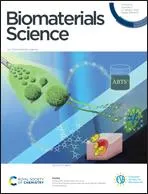
Biomaterials Science is an international high impact journal exploring the science of biomaterials and their translation towards clinical use. Its scope encompasses new concepts in biomaterials design, studies into the interaction of biomaterials with the body, and the use of materials to answer fundamental biological questions. Papers do not necessarily need to report a new biomaterial but should provide novel insight into the biological applications of the biomaterial. Articles that primarily focus on demonstrating novel materials chemistry and bring a molecular picture to bear on a given material’s suitability as a biomaterial are more suited to our companion journal, Journal of Materials Chemistry B. Biomaterials Science publishes primary research and review-type articles in the following areas: molecular design of biomaterials, including translation of emerging chemistries to biomaterials science of cells and materials at the nanoscale and microscale materials as model systems for stem cell and human biology materials for tissue engineering and regenerative medicine (Nano)materials and (nano)systems for therapeutic delivery interactions at the biointerface biologically inspired and biomimetic materials, including bio-inspired self-assembly systems and cell-inspired synthetic tools next-generation biomaterials tools and methods
![S-[2,3-Bis(palmitoyloxy)propyl]-N-[(9H-fluoren-9-ylmethoxy)(hydroxy)methylene]cysteine structure](https://static.chemtradehub.com/structs/210/210532-98-2-f6a7.webp "S-[2,3-Bis(palmitoyloxy)propyl]-N-[(9H-fluoren-9-ylmethoxy)(hydroxy)methylene]cysteine structure")
![1-[(4-Methylphenyl)sulfonyl]-3-(4,4,5,5-tetramethyl-1,3,2-dioxaborolan-2-yl)-1H-pyrrolo[2,3-b]pyridine-5-carbonitrile structure](https://static.chemtradehub.com/structs/143/1434747-57-5-fc0d.webp "1-[(4-Methylphenyl)sulfonyl]-3-(4,4,5,5-tetramethyl-1,3,2-dioxaborolan-2-yl)-1H-pyrrolo[2,3-b]pyridine-5-carbonitrile structure")