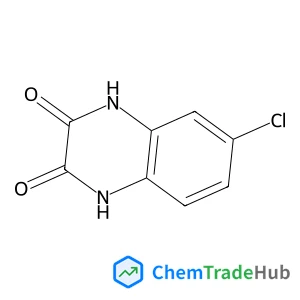
6-CHLORO-2,3-DIOXO-1,2,3,4-TETRAHYDROQUINOXALINE, 97
CAS Number:
169-14-2
Molecular Formula:
C8H5ClN2O2
Yongjin Zhong, Yancheng Lai, Zeru Feng, Si Huang, Yu Fu, Lirong Huang, Keng-fu Lan, Anchun Mo
Skin injuries and drug-resistant bacterial infections pose serious challenges to human health. It is essential to establish a novel multifunctional platform with good anti-infection and wound-healing abilities. In this study, a new MXene-doped composite microneedle (MN) patch with excellent mechanical strength and photothermal antibacterial and ROS removal properties has been developed for infected wound healing. When the MN tips carrying the MXene nanosheets are inserted into the cuticle of the skin, they will quickly dissolve and subsequently release the nanomaterials into the subcutaneous infection area. Under 808 nm NIR irradiation, the MXene, as a “nano-thermal knife”, sterilizes and inhibits bacterial growth through synergistic effects of sharp edges and photothermal antibacterial activity. Furthermore, ROS caused by injury and infection can be cleared by MXene-doped MNs to avoid excessive inflammatory responses. Based on the synergistic antibacterial and antioxidant strategy, the MXene-doped MNs have demonstrated excellent wound-healing properties in an MRSA-infected wound model, such as promoting re-epithelialization, collagen deposition, and angiogenesis and inhibiting the expression of pro-inflammatory factors. Therefore, the multifunctional MXene-doped MN patches provide an excellent alternative for clinical drug-resistant bacteria-infected wound management.
Matías Berdakin
DOI: 10.1039/C8CP03895C
Lin-Yan Feng, Peng-Fei Li, Hua-Jin Zhai
DOI: 10.1039/C8CP04332A
Amit R. Sharma, David E. Weeks
DOI: 10.1039/C8CP05550E
Caterina Cocchi, Tobias Breuer, Gregor Witte, Claudia Draxl
DOI: 10.1039/C8CP06384B
Do Won Kang, Hong Lae Kim, Chan Ho Kwon
DOI: 10.1039/C9CP00766K
Saurabh Mishra, Jer-Lai Kuo, G. Naresh Patwari
DOI: 10.1039/C8CP02448K
Rositsa Yakimova
DOI: 10.1039/C8CP03306D
Jie Li, Yunrui Duan, Tao Li, Hui Li
DOI: 10.1039/C8CP03616K
Andreas I. Savva, Kassiopeia A. Smith, Matthew Lawson, Sterling R. Croft, Ariel E. Weltner, Chris D. Jones, Hailey Bull, Paul J. Simmonds, Lan Li, Hui Xiong
DOI: 10.1039/C8CP04368J
Nam Kim, Emily Sahadeo, Chanyuan Liu, Olivia Rose
DOI: 10.1039/C8CP04706E
4-Nitrophenyl phosphate disodium salt hexahydrate is primarily used as a substra...
2-(Trifluoromethyl)-1,3-oxazole-4-carboxylic Acid (CAS: 1060816-01-4) is widely ...
2-Fluoro-4-biphenylcarboxylic acid should be stored in a cool, dry place at room...
Prednisolone-21-Carboxylic Acid is primarily used in the pharmaceutical industry...
4-(Hydrazinomethyl)-1,2,3-benzenetriol (CAS: 3614-72-0) should be stored in a co...
4-Amino-1-methyl-1H-pyrazole-5-carboxylic acid hydrochloride (CAS: 92534-70-8) i...
Dehydropachymic acid (CAS: 77012-31-8) is regulated by various agencies. It fall...
The market and research trends for 6-[(2,2-Dimethylpropanoyl)amino]nicotinic aci...
1,10-Phenanthroline-2,9-dicarbaldehyde should be stored in a cool, dry place awa...
5-Carbamoyl-11-oxo-10,11-dihydro-5H-dibenzo[b,f]azepin-10-yl acetate can be synt...
Biomaterials Science is an international high impact journal exploring the science of biomaterials and their translation towards clinical use. Its scope encompasses new concepts in biomaterials design, studies into the interaction of biomaterials with the body, and the use of materials to answer fundamental biological questions. Papers do not necessarily need to report a new biomaterial but should provide novel insight into the biological applications of the biomaterial. Articles that primarily focus on demonstrating novel materials chemistry and bring a molecular picture to bear on a given material’s suitability as a biomaterial are more suited to our companion journal, Journal of Materials Chemistry B. Biomaterials Science publishes primary research and review-type articles in the following areas: molecular design of biomaterials, including translation of emerging chemistries to biomaterials science of cells and materials at the nanoscale and microscale materials as model systems for stem cell and human biology materials for tissue engineering and regenerative medicine (Nano)materials and (nano)systems for therapeutic delivery interactions at the biointerface biologically inspired and biomimetic materials, including bio-inspired self-assembly systems and cell-inspired synthetic tools next-generation biomaterials tools and methods
phosphoryl}methyl 4-methylbenzenesulfonate structure](https://static.chemtradehub.com/structs/864/864068-45-1-ba7c.webp "{[3-(Hexadecyloxy)propoxy](hydroxy)phosphoryl}methyl 4-methylbenzenesulfonate structure")
![S-[2,3-Bis(palmitoyloxy)propyl]-N-[(9H-fluoren-9-ylmethoxy)(hydroxy)methylene]cysteine structure](https://static.chemtradehub.com/structs/210/210532-98-2-f6a7.webp "S-[2,3-Bis(palmitoyloxy)propyl]-N-[(9H-fluoren-9-ylmethoxy)(hydroxy)methylene]cysteine structure")