













Exceptionally high saturation magnetisation in Eu-doped magnetite stabilised by spin–orbit interaction
Literature Information
Publication Date
2021-09-02
DOI
10.1039/D1CP02164H
Impact Factor
3.676
Authors
M. Hussein N. Assadi, José Julio Gutiérrez Moreno, Dorian A. H. Hanaor, Hiroshi Katayama-Yoshida
View Original
Abstract
The significance of the spin–orbit interaction is very well known in compounds containing heavier elements such as the rare-earth Eu ion. Here, through density functional calculations, we investigated the effect of the spin–orbit interaction on the magnetic ground state of Eu doped magnetite (Fe3O4:EuFe). By examining all possible spin alignments between Eu and magnetite's Fe, we demonstrate that Eu, which is most stable when doped at the tetrahedral site, adapts a spin almost opposite the substituted Fe. Consequently, because of smaller spin cancellation between the cations on the tetrahedral site (FeTet and EuTet) and the cations on the octahedral sites (FeOct), Fe3O4:EuFe exhibits a maximum saturation magnetisation of 9.451 μB per f.u. which is significantly larger than that of undoped magnetite (calculated to be 3.929 μB per f.u.). We further show that this large magnetisation persists through additional electron doping. However, additional hole doping, which may unintentionally occur in Fe deficient magnetite, can reduce the magnetisation to values smaller than that of the undoped magnetite. The results presented here can aid in designing highly efficient magnetically recoverable catalysts for which both magnetite and rare earth dopants are common materials.
Related Literature
Proton transfer in hydrogen-bonded pyridine/acid systems: the role of higher aggregation
Vytautas Balevicius, Ruta Bariseviciute, Kestutis Aidas, Ingrid Svoboda, Helmut Ehrenberg, Hartmut Fuess
2007-04-16
Paper
DOI: 10.1039/B701775H
Radiation effects, energy storage and its release in solid rare gases
Alexey Ponomaryov, Galina Gumenchuk, Elena Savchenko
2007-02-05
Paper
DOI: 10.1039/B616441B
Temperature effects on femtosecond transient absorption kinetics of semiconducting single-walled carbon nanotubes
Ying-Zhong Ma, Sergei M. Bachilo, Graham R. Fleming
2006-11-20
Paper
DOI: 10.1039/B612207H
Fluorescence quenching in cyclic hydrogen-bonded complexes of 1H-pyrrolo[3,2-h]quinoline with methanol: cluster size effect
Alexander Kyrychenko, Randolph P. Thummel, Jacek Waluk, Bernhard Brutschy, Jerzy Herbich
2007-05-16
Paper
DOI: 10.1039/B703908E
Gas-phase electronic spectrum of the C14 ring
A. E. Boguslavskiy, J. P. Maier
2006-11-13
Paper
DOI: 10.1039/B613109C
Hydrogen chemisorption on supported platinum, gold, and platinum–gold-alloy catalysts
2007-04-10
Paper
DOI: 10.1039/B701402C
NMR measurements of scalar-coupling distributions in disordered solids
Sylvian Cadars, Anne Lesage, Michel Trierweiler, Laurent Heux, Lyndon Emsley
2006-10-24
Paper
DOI: 10.1039/B611096G
Similarities and differences on the molecular mechanism of CO oxidation on Rh(111) and bimetallic RhCu(111) surfaces
Silvia González, Carmen Sousa, Francesc Illas
2007-04-10
Paper
DOI: 10.1039/B701024A
You might also like
Compound Q&A
What is the market or research trend for N-(4-Methoxybenzyl)-2-pyridinamine (CAS: 52818-63-0)?
N-(4-Methoxybenzyl)-2-pyridinamine (CAS: 52818-63-0) is increasingly being used ...
52818-63-0N-(4-Methoxybenzyl)-...
Compound Q&A
What precautions should be taken when handling Ethyl 4-(2-chlorophenyl)-1,3-thiazole-2-carboxylate (CAS: 1050507-06-6)?
When handling Ethyl 4-(2-chlorophenyl)-1,3-thiazole-2-carboxylate, appropriate p...
1050507-06-6Ethyl 4-(2-chlorophe...
Compound Q&A
What regulatory guidelines apply to diethyldiselane (CAS: 628-39-7)?
Diethyldiselane (CAS: 628-39-7) is classified under the Globally Harmonized Syst...
628-39-7Diethyldiselane
Compound Q&A
What is the market or research trend for oxocopper (CAS: 12053-18-8)?
The market for oxocopper (CAS: 12053-18-8) is primarily driven by its use in cat...
12053-18-8oxocopper; oxo-(oxoc...
Compound Q&A
What is the market or research trend for 5-{[(2-Methyl-2-propanyl)oxy]carbonyl}-5-azaspiro[2.4]heptane-7-carboxylic acid?
The market for 5-{[(2-Methyl-2-propanyl)oxy]carbonyl}-5-azaspiro[2.4]heptane-7-c...
1268519-54-55-{[(2-Methyl-2-prop...
Compound Q&A
What is 2-(1-Pyrrolidinyl)-4-pyridinamine (CAS: 35981-63-6)?
2-(1-Pyrrolidinyl)-4-pyridinamine is a chemical compound with the CAS number 359...
35981-63-62-(1-Pyrrolidinyl)-4...
Compound Q&A
What are the physical and chemical properties of 2-(3-Pyridinyl)-1-azabicyclo[2.2.2]octane (CAS: 91556-75-1)?
2-(3-Pyridinyl)-1-azabicyclo[2.2.2]octane (CAS: 91556-75-1) is a crystalline sol...
91556-75-12-(3-Pyridinyl)-1-az...
Compound Q&A
How is (S)-Alpha-allyl-proline hydrochloride (CAS: 129704-91-2) typically synthesized?
(S)-Alpha-allyl-proline hydrochloride is usually synthesized via a Wittig reacti...
129704-91-2(S)-Alpha-allyl-prol...
Compound Q&A
What is 3-Methyl-1,2-oxazole-5-carboxylic acid (CAS: 4857-42-5)?
3-Methyl-1,2-oxazole-5-carboxylic acid (CAS: 4857-42-5) is an organic compound w...
4857-42-53-Methyl-1,2-oxazole...
Compound Q&A
How is Lys-SMCC-DM1 (CAS: 1281816-04-3) typically synthesized?
Lys-SMCC-DM1 is synthesized via a multi-step process involving the coupling of S...
1281816-04-3Lys-SMCC-DM1
Source Journal
Physical Chemistry Chemical Physics

CiteScore:
5.5
Self-citation Rate:
10.3%
Articles per Year:
3036
Physical Chemistry Chemical Physics (PCCP) is an international journal co-owned by 19 physical chemistry and physics societies from around the world. This journal publishes original, cutting-edge research in physical chemistry, chemical physics and biophysical chemistry. To be suitable for publication in PCCP, articles must include significant innovation and/or insight into physical chemistry; this is the most important criterion that reviewers and Editors will judge against when evaluating submissions. The journal has a broad scope and welcomes contributions spanning experiment, theory, computation and data science. Topical coverage includes spectroscopy, dynamics, kinetics, statistical mechanics, thermodynamics, electrochemistry, catalysis, surface science, quantum mechanics, quantum computing and machine learning. Interdisciplinary research areas such as polymers and soft matter, materials, nanoscience, energy, surfaces/interfaces, and biophysical chemistry are welcomed if they demonstrate significant innovation and/or insight into physical chemistry. Joined experimental/theoretical studies are particularly appreciated when complementary and based on up-to-date approaches.
Recommended Compounds
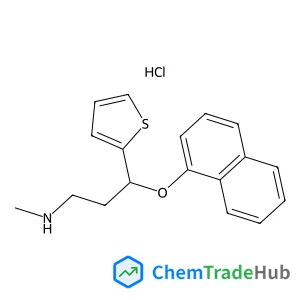
N-Methyl-3-(1-naphthyloxy)-3-(2-thienyl)-1-propanamine hydrochloride (1:1)
CAS Number:
1188266-11-6
Molecular Formula:
C18H20ClNOS
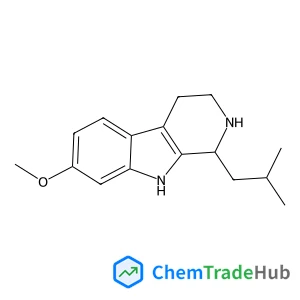
1-Isobutyl-7-methoxy-2,3,4,9-tetrahydro-1H-beta-carboline
CAS Number:
175975-76-5
Molecular Formula:
C16H22N2O
Recommended Suppliers







Disclaimer
This page provides academic journal information for reference and research purposes only. We are not affiliated with any journal publishers and do not handle publication submissions. For publication-related inquiries, please contact the respective journal publishers directly.
If you notice any inaccuracies in the information displayed, please contact us at support@chemtradehub.com. We will promptly review and address your concerns.