












![1-oxaspiro[4.4]nonan-6-one structure](https://static.chemtradehub.com/structs/134/134179-01-4-e051.webp "1-oxaspiro[4.4]nonan-6-one structure")
Fluorescence quenching in cyclic hydrogen-bonded complexes of 1H-pyrrolo[3,2-h]quinoline with methanol: cluster size effect
Literature Information
Publication Date
2007-05-16
DOI
10.1039/B703908E
Impact Factor
3.676
Authors
Alexander Kyrychenko, Randolph P. Thummel, Jacek Waluk, Bernhard Brutschy, Jerzy Herbich
View Original
Abstract
Laser induced fluorescence (LIF) excitation spectra of molecular complexes of 1H-pyrrolo[3,2-h]quinoline (PQ) with methanol (n = 1, 2, 3) as well as vibrational spectra of their electronic ground state are reported. The latter have been recorded in the mid-infrared region by fluorescence depletion (FDIR). The only PQ·methanoln complex clearly identified in the LIF spectrum is the triply hydrogen-bonded cyclic 1 ∶ 2 aggregate. Its stoichiometry has been proven by the femtosecond multiphoton ionization detected infrared measurements [J. Am. Chem. Soc., 2006, 128, 10 000]. The structure of the 1 ∶ 2 cluster is determined by means of FDIR spectroscopy in combination with ab initio and DFT calculations. No fluorescence was detected that could be attributed to the 1 ∶ 1 cluster. This behaviour of the 1 ∶ 1 complex is explained in terms of rapid excited state double proton transfer followed by a non-radiative relaxation. The n = 3 and heavier clusters are fluorescent. Their electronic spectra overlap, preventing the selective measurement of the FDIR spectra of individual complexes.
Related Literature
A reaction-based near-infrared fluorescent probe that can visualize endogenous selenocysteine in vivo in tumor-bearing mice
Xiaoning Kai, Yiran Zhang, Youguang Zheng, Yunsheng Xue, Xiaoxing Yin, Jing Zhao
2018-07-30
Paper
DOI: 10.1039/C8AN00765A
Probing glycosaminoglycan spectral signatures in live cells and their conditioned media by Raman microspectroscopy
H. T. Mohamed
2017-03-20
Paper
DOI: 10.1039/C6AN01951J
Effects and controls of capacitive hysteresis in ionic liquid electrochemical measurements
Anthony J. Lucio, Scott K. Shaw
2018-08-29
Paper
DOI: 10.1039/C8AN01085D
A ratiometric Raman probe for live-cell imaging of hydrogen sulfide in mitochondria by stimulated Raman scattering
Chen Zeng, Fanghao Hu, Rong Long, Wei Min
2018-09-03
Communication
DOI: 10.1039/C8AN00910D
A reusable cyanide sensor via activation of C–H group: trifluoromethylcarbinol-directed meta-C–H cyanomethylation of naphthalimide
Yayun Chen, Xiaoxue Hu, Caihui Rao, Zheyao Li, Lu Chen, Chao Fu, Chuanxiang Liu
2018-08-20
Paper
DOI: 10.1039/C8AN00718G
Two new quinoline-based regenerable fluorescent probes with AIE characteristics for selective recognition of Cu2+ in aqueous solution and test strips
Jingwen Xiong, Zongzhi Li, Jihua Tan, Shaomin Ji, Jianwei Sun, Xianwei Li, Yanping Huo
2018-08-01
Paper
DOI: 10.1039/C8AN00940F
Raman spectroscopy and multivariate analysis for the non invasive diagnosis of clinically inconclusive vulval lichen sclerosus
Linmarie Ludeman, Kathryn Hillaby, Robert Gornall, Gavin Lloyd, Catherine Kendall, Angela C. Shore, Nick Stone
2016-11-03
Paper
DOI: 10.1039/C6AN02009G
You might also like
Compound Q&A
What is the market or research trend for N-(4-Methoxybenzyl)-2-pyridinamine (CAS: 52818-63-0)?
N-(4-Methoxybenzyl)-2-pyridinamine (CAS: 52818-63-0) is increasingly being used ...
52818-63-0N-(4-Methoxybenzyl)-...
Compound Q&A
What precautions should be taken when handling Ethyl 4-(2-chlorophenyl)-1,3-thiazole-2-carboxylate (CAS: 1050507-06-6)?
When handling Ethyl 4-(2-chlorophenyl)-1,3-thiazole-2-carboxylate, appropriate p...
1050507-06-6Ethyl 4-(2-chlorophe...
Compound Q&A
What regulatory guidelines apply to diethyldiselane (CAS: 628-39-7)?
Diethyldiselane (CAS: 628-39-7) is classified under the Globally Harmonized Syst...
628-39-7Diethyldiselane
Compound Q&A
What is the market or research trend for oxocopper (CAS: 12053-18-8)?
The market for oxocopper (CAS: 12053-18-8) is primarily driven by its use in cat...
12053-18-8oxocopper; oxo-(oxoc...
Compound Q&A
What is the market or research trend for 5-{[(2-Methyl-2-propanyl)oxy]carbonyl}-5-azaspiro[2.4]heptane-7-carboxylic acid?
The market for 5-{[(2-Methyl-2-propanyl)oxy]carbonyl}-5-azaspiro[2.4]heptane-7-c...
1268519-54-55-{[(2-Methyl-2-prop...
Compound Q&A
What is 2-(1-Pyrrolidinyl)-4-pyridinamine (CAS: 35981-63-6)?
2-(1-Pyrrolidinyl)-4-pyridinamine is a chemical compound with the CAS number 359...
35981-63-62-(1-Pyrrolidinyl)-4...
Compound Q&A
What are the physical and chemical properties of 2-(3-Pyridinyl)-1-azabicyclo[2.2.2]octane (CAS: 91556-75-1)?
2-(3-Pyridinyl)-1-azabicyclo[2.2.2]octane (CAS: 91556-75-1) is a crystalline sol...
91556-75-12-(3-Pyridinyl)-1-az...
Compound Q&A
How is (S)-Alpha-allyl-proline hydrochloride (CAS: 129704-91-2) typically synthesized?
(S)-Alpha-allyl-proline hydrochloride is usually synthesized via a Wittig reacti...
129704-91-2(S)-Alpha-allyl-prol...
Compound Q&A
What is 3-Methyl-1,2-oxazole-5-carboxylic acid (CAS: 4857-42-5)?
3-Methyl-1,2-oxazole-5-carboxylic acid (CAS: 4857-42-5) is an organic compound w...
4857-42-53-Methyl-1,2-oxazole...
Compound Q&A
How is Lys-SMCC-DM1 (CAS: 1281816-04-3) typically synthesized?
Lys-SMCC-DM1 is synthesized via a multi-step process involving the coupling of S...
1281816-04-3Lys-SMCC-DM1
Source Journal
Physical Chemistry Chemical Physics

CiteScore:
5.5
Self-citation Rate:
10.3%
Articles per Year:
3036
Physical Chemistry Chemical Physics (PCCP) is an international journal co-owned by 19 physical chemistry and physics societies from around the world. This journal publishes original, cutting-edge research in physical chemistry, chemical physics and biophysical chemistry. To be suitable for publication in PCCP, articles must include significant innovation and/or insight into physical chemistry; this is the most important criterion that reviewers and Editors will judge against when evaluating submissions. The journal has a broad scope and welcomes contributions spanning experiment, theory, computation and data science. Topical coverage includes spectroscopy, dynamics, kinetics, statistical mechanics, thermodynamics, electrochemistry, catalysis, surface science, quantum mechanics, quantum computing and machine learning. Interdisciplinary research areas such as polymers and soft matter, materials, nanoscience, energy, surfaces/interfaces, and biophysical chemistry are welcomed if they demonstrate significant innovation and/or insight into physical chemistry. Joined experimental/theoretical studies are particularly appreciated when complementary and based on up-to-date approaches.
Recommended Compounds
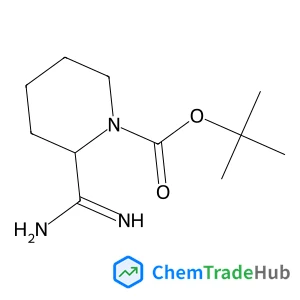
2-Methyl-2-propanyl 2-carbamimidoyl-1-piperidinecarboxylate
CAS Number:
1258640-98-0
Molecular Formula:
C11H21N3O2
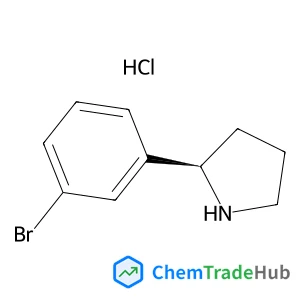
(2R)-2-(3-Bromophenyl)pyrrolidine hydrochloride (1:1)
CAS Number:
1391550-13-2
Molecular Formula:
C10H13BrClN
Recommended Suppliers



Disclaimer
This page provides academic journal information for reference and research purposes only. We are not affiliated with any journal publishers and do not handle publication submissions. For publication-related inquiries, please contact the respective journal publishers directly.
If you notice any inaccuracies in the information displayed, please contact us at support@chemtradehub.com. We will promptly review and address your concerns.