












Temperature effects on femtosecond transient absorption kinetics of semiconducting single-walled carbon nanotubes
Literature Information
Publication Date
2006-11-20
DOI
10.1039/B612207H
Impact Factor
3.676
Authors
Ying-Zhong Ma, Sergei M. Bachilo, Graham R. Fleming
View Original
Abstract
We report femtosecond transient absorption kinetics measured for selected semiconducting single-walled carbon nanotubes at different temperatures between 77 and 290 K. The nanotubes are embedded in a thin polymethylmethacrylate film, and the dominance of individual species enabled to probe selectively the kinetics associated with two desired tube types, the (6,5) and (7,5) tubes. A strikingly similar temperature dependence is found between the maximum change in the amplitude of transient absorption kinetics, the overall decay time and steady-state fluorescence emission intensity. The simplest explanation for our data is that the temperature dependence of the fluorescence intensity and the exciton decay kinetics are dominated by nonradiative decay and that the radiative decay rate is weakly temperature dependent.
Recommended Journals
Related Literature
Recent developments in stimuli-responsive luminescent polymers composed of boron compounds
Shunichiro Ito, Masayuki Gon, Kazuo Tanaka, Yoshiki Chujo
2021-10-01
Review Article
DOI: 10.1039/D1PY01170G
Introduction to chemistry for covalent adaptable networks
Filip Du Prez, Julia Kalow
2020-07-10
Editorial
DOI: 10.1039/D0PY90102D
Chiral amines as initiators for ROP and their chiral induction on poly(2-aminoisobutyric acid) chains
Matthias Rohmer, Özgün Ucak, Rahul Fredrick, Wolfgang H. Binder
2021-09-29
Paper
DOI: 10.1039/D1PY01021B
Sustainable synthesis of CO2-derived polycarbonates from d-xylose
David K. Tran, Ahmed Z. Rashad, Donald J. Darensbourg
2021-09-10
Communication
DOI: 10.1039/D1PY00784J
Reversible cyclic-linear topological transformation using a long-range rotaxane switch
Daisuke Aoki, Gota Aibara
2021-10-07
Communication
DOI: 10.1039/D1PY01197A
Cross-linking approaches for block copolymer nano-assemblies via RAFT-mediated polymerization-induced self-assembly
Shenzhen Li, Guang Han
2020-06-09
Minireview
DOI: 10.1039/D0PY00627K
Mechanically robust and reprocessable imine exchange networks from modular polyester pre-polymers
Rachel L. Snyder, Claire A. L. Lidston, Guilhem X. De Hoe, Maria J. S. Parvulescu, Marc A. Hillmyer, Geoffrey W. Coates
2020-02-27
Paper
DOI: 10.1039/C9PY01957J
Effect of polymerisation by microwave on the physical properties of molecularly imprinted polymers (MIPs) specific for caffeine
Heli A. Brahmbhatt, Alexander Surtees, Cavan Tierney, Oluwabukunmi A. Ige, Elena V. Piletska, Thomas Swift
2020-08-12
Paper
DOI: 10.1039/D0PY00921K
Impacts of performing electrolysis during organocatalyzed atom transfer radical polymerization
Daniel A. Corbin, Blaine G. McCarthy, Garret M. Miyake
2020-06-30
Paper
DOI: 10.1039/D0PY00643B
Facile preparation of polycarbonates from bio-based eugenol and 2-methoxy-4-vinylphenol
Mengqian Huang, De Bai, Qin Chen, Changbo Zhao, Tianhua Ren, Caijuan Huang, Michael North, Haibo Xie
2020-06-30
Communication
DOI: 10.1039/D0PY00291G
You might also like
Compound Q&A
What is the market or research trend for N-(4-Methoxybenzyl)-2-pyridinamine (CAS: 52818-63-0)?
N-(4-Methoxybenzyl)-2-pyridinamine (CAS: 52818-63-0) is increasingly being used ...
52818-63-0N-(4-Methoxybenzyl)-...
Compound Q&A
What precautions should be taken when handling Ethyl 4-(2-chlorophenyl)-1,3-thiazole-2-carboxylate (CAS: 1050507-06-6)?
When handling Ethyl 4-(2-chlorophenyl)-1,3-thiazole-2-carboxylate, appropriate p...
1050507-06-6Ethyl 4-(2-chlorophe...
Compound Q&A
What regulatory guidelines apply to diethyldiselane (CAS: 628-39-7)?
Diethyldiselane (CAS: 628-39-7) is classified under the Globally Harmonized Syst...
628-39-7Diethyldiselane
Compound Q&A
What is the market or research trend for oxocopper (CAS: 12053-18-8)?
The market for oxocopper (CAS: 12053-18-8) is primarily driven by its use in cat...
12053-18-8oxocopper; oxo-(oxoc...
Compound Q&A
What is the market or research trend for 5-{[(2-Methyl-2-propanyl)oxy]carbonyl}-5-azaspiro[2.4]heptane-7-carboxylic acid?
The market for 5-{[(2-Methyl-2-propanyl)oxy]carbonyl}-5-azaspiro[2.4]heptane-7-c...
1268519-54-55-{[(2-Methyl-2-prop...
Compound Q&A
What is 2-(1-Pyrrolidinyl)-4-pyridinamine (CAS: 35981-63-6)?
2-(1-Pyrrolidinyl)-4-pyridinamine is a chemical compound with the CAS number 359...
35981-63-62-(1-Pyrrolidinyl)-4...
Compound Q&A
What are the physical and chemical properties of 2-(3-Pyridinyl)-1-azabicyclo[2.2.2]octane (CAS: 91556-75-1)?
2-(3-Pyridinyl)-1-azabicyclo[2.2.2]octane (CAS: 91556-75-1) is a crystalline sol...
91556-75-12-(3-Pyridinyl)-1-az...
Compound Q&A
How is (S)-Alpha-allyl-proline hydrochloride (CAS: 129704-91-2) typically synthesized?
(S)-Alpha-allyl-proline hydrochloride is usually synthesized via a Wittig reacti...
129704-91-2(S)-Alpha-allyl-prol...
Compound Q&A
What is 3-Methyl-1,2-oxazole-5-carboxylic acid (CAS: 4857-42-5)?
3-Methyl-1,2-oxazole-5-carboxylic acid (CAS: 4857-42-5) is an organic compound w...
4857-42-53-Methyl-1,2-oxazole...
Compound Q&A
How is Lys-SMCC-DM1 (CAS: 1281816-04-3) typically synthesized?
Lys-SMCC-DM1 is synthesized via a multi-step process involving the coupling of S...
1281816-04-3Lys-SMCC-DM1
Source Journal
Physical Chemistry Chemical Physics

CiteScore:
5.5
Self-citation Rate:
10.3%
Articles per Year:
3036
Physical Chemistry Chemical Physics (PCCP) is an international journal co-owned by 19 physical chemistry and physics societies from around the world. This journal publishes original, cutting-edge research in physical chemistry, chemical physics and biophysical chemistry. To be suitable for publication in PCCP, articles must include significant innovation and/or insight into physical chemistry; this is the most important criterion that reviewers and Editors will judge against when evaluating submissions. The journal has a broad scope and welcomes contributions spanning experiment, theory, computation and data science. Topical coverage includes spectroscopy, dynamics, kinetics, statistical mechanics, thermodynamics, electrochemistry, catalysis, surface science, quantum mechanics, quantum computing and machine learning. Interdisciplinary research areas such as polymers and soft matter, materials, nanoscience, energy, surfaces/interfaces, and biophysical chemistry are welcomed if they demonstrate significant innovation and/or insight into physical chemistry. Joined experimental/theoretical studies are particularly appreciated when complementary and based on up-to-date approaches.
Recommended Compounds
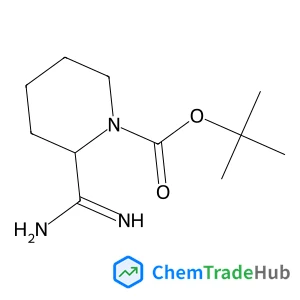
2-Methyl-2-propanyl 2-carbamimidoyl-1-piperidinecarboxylate
CAS Number:
1258640-98-0
Molecular Formula:
C11H21N3O2
Recommended Suppliers





Disclaimer
This page provides academic journal information for reference and research purposes only. We are not affiliated with any journal publishers and do not handle publication submissions. For publication-related inquiries, please contact the respective journal publishers directly.
If you notice any inaccuracies in the information displayed, please contact us at support@chemtradehub.com. We will promptly review and address your concerns.