












![1-[6-(1H-Imidazol-1-yl)-3-pyridinyl]methanamine structure](https://static.chemtradehub.com/structs/914/914637-08-4-8825.webp "1-[6-(1H-Imidazol-1-yl)-3-pyridinyl]methanamine structure")
Similarities and differences on the molecular mechanism of CO oxidation on Rh(111) and bimetallic RhCu(111) surfaces
Literature Information
Publication Date
2007-04-10
DOI
10.1039/B701024A
Impact Factor
3.676
Authors
Silvia González, Carmen Sousa, Francesc Illas
View Original
Abstract
The reaction between adsorbed CO and atomic O on various sites of Rh(111) and on the bimetallic RhCu(111) surface has been investigated by first principles density functional theory using slab models. The most likely reaction pathway for CO oxidation on Rh(111) involves probably migration of atomic oxygen from fcc to hcp sites. On the bimetallic surface the mechanism is similar, although depending on the type of bimetallic site a reduction of the energy barrier is predicted. Consequences for the NO reduction by CO reaction are analyzed.
Recommended Journals
Related Literature
Cross-linker control of vitrimer flow
Bassil M. El-Zaatari, Jacob S. A. Ishibashi, Julia A. Kalow
2020-04-08
Paper
DOI: 10.1039/D0PY00233J
Reversible cyclic-linear topological transformation using a long-range rotaxane switch
Daisuke Aoki, Gota Aibara
2021-10-07
Communication
DOI: 10.1039/D1PY01197A
On the limitations of cationic polymerization of vinyl monomers in aqueous dispersed media
Aurélie Destephen
2021-11-01
Paper
DOI: 10.1039/D1PY01046H
Architecture transition of supramolecular polymers through hierarchical self-assembly: from supramolecular polymers to fluorescent materials
Riqiang Li, Wenzhuo Chen, Ying Yang, Hui Li, Fenfen Xu, Zhaozhao Duan, Tongxiang Liang, Herui Wen, Wei Tian
2020-07-30
Paper
DOI: 10.1039/D0PY00829J
Identifying competitive tin- or metal-free catalyst combinations to tailor polyurethane prepolymer and network properties
Priscilla Arnould, Lionel Bosco, Federico Sanz, Frédéric N. Simon, Stéphane Fouquay, Guillaume Michaud, Jean Raynaud, Vincent Monteil
2020-08-25
Paper
DOI: 10.1039/D0PY00864H
General approach to prepare polymers bearing pendant isocyanate groups
Rodrigo Navarro, Carolina García, Juan Rodríguez-Hernández, Carlos Elvira, Angel Marcos-Fernández, Alberto Gallardo, Helmut Reinecke
2020-07-28
Communication
DOI: 10.1039/D0PY00989J
Well-defined cyclic polymer synthesis via an efficient etherification-based bimolecular ring-closure strategy
Sandeep Sharma, Konstantinos Ntetsikas, Viko Ladelta, Saibal Bhaumik, Nikos Hadjichristidis
2021-10-28
Paper
DOI: 10.1039/D1PY01337H
Unprecedentedly high active organocatalysts for the copolymerization of carbonyl sulfide and propylene oxide: steric hindrance effect of tertiary amines
Jiraya Kiriratnikom, Xin-Chen Yue, Jia-Liang Yang, Ying Wang, Shuo-Hong Chen, Ke-Ke Zhang, Cheng-Jian Zhang, Munir Ullah Khan
2021-08-23
Paper
DOI: 10.1039/D1PY01013A
Structure–property relations of amphiphilic poly(furfuryl glycidyl ether)-block-poly(ethylene glycol) macromonomers at the air–water interface
Alexander Holm, Alexander Southan, Curtis W. Frank
2020-07-30
Paper
DOI: 10.1039/D0PY00697A
Synthesis of polyethers from epoxides via a binary organocatalyst system
Ge-Ge Gu, Li-Yang Wang, Rong Zhang, Tian-Jun Yue, Bai-Hao Ren, Wei-Min Ren
2021-10-19
Paper
DOI: 10.1039/D1PY01085A
You might also like
Compound Q&A
What is the market or research trend for N-(4-Methoxybenzyl)-2-pyridinamine (CAS: 52818-63-0)?
N-(4-Methoxybenzyl)-2-pyridinamine (CAS: 52818-63-0) is increasingly being used ...
52818-63-0N-(4-Methoxybenzyl)-...
Compound Q&A
What precautions should be taken when handling Ethyl 4-(2-chlorophenyl)-1,3-thiazole-2-carboxylate (CAS: 1050507-06-6)?
When handling Ethyl 4-(2-chlorophenyl)-1,3-thiazole-2-carboxylate, appropriate p...
1050507-06-6Ethyl 4-(2-chlorophe...
Compound Q&A
What regulatory guidelines apply to diethyldiselane (CAS: 628-39-7)?
Diethyldiselane (CAS: 628-39-7) is classified under the Globally Harmonized Syst...
628-39-7Diethyldiselane
Compound Q&A
What is the market or research trend for oxocopper (CAS: 12053-18-8)?
The market for oxocopper (CAS: 12053-18-8) is primarily driven by its use in cat...
12053-18-8oxocopper; oxo-(oxoc...
Compound Q&A
What is the market or research trend for 5-{[(2-Methyl-2-propanyl)oxy]carbonyl}-5-azaspiro[2.4]heptane-7-carboxylic acid?
The market for 5-{[(2-Methyl-2-propanyl)oxy]carbonyl}-5-azaspiro[2.4]heptane-7-c...
1268519-54-55-{[(2-Methyl-2-prop...
Compound Q&A
What is 2-(1-Pyrrolidinyl)-4-pyridinamine (CAS: 35981-63-6)?
2-(1-Pyrrolidinyl)-4-pyridinamine is a chemical compound with the CAS number 359...
35981-63-62-(1-Pyrrolidinyl)-4...
Compound Q&A
What are the physical and chemical properties of 2-(3-Pyridinyl)-1-azabicyclo[2.2.2]octane (CAS: 91556-75-1)?
2-(3-Pyridinyl)-1-azabicyclo[2.2.2]octane (CAS: 91556-75-1) is a crystalline sol...
91556-75-12-(3-Pyridinyl)-1-az...
Compound Q&A
How is (S)-Alpha-allyl-proline hydrochloride (CAS: 129704-91-2) typically synthesized?
(S)-Alpha-allyl-proline hydrochloride is usually synthesized via a Wittig reacti...
129704-91-2(S)-Alpha-allyl-prol...
Compound Q&A
What is 3-Methyl-1,2-oxazole-5-carboxylic acid (CAS: 4857-42-5)?
3-Methyl-1,2-oxazole-5-carboxylic acid (CAS: 4857-42-5) is an organic compound w...
4857-42-53-Methyl-1,2-oxazole...
Compound Q&A
How is Lys-SMCC-DM1 (CAS: 1281816-04-3) typically synthesized?
Lys-SMCC-DM1 is synthesized via a multi-step process involving the coupling of S...
1281816-04-3Lys-SMCC-DM1
Source Journal
Physical Chemistry Chemical Physics

CiteScore:
5.5
Self-citation Rate:
10.3%
Articles per Year:
3036
Physical Chemistry Chemical Physics (PCCP) is an international journal co-owned by 19 physical chemistry and physics societies from around the world. This journal publishes original, cutting-edge research in physical chemistry, chemical physics and biophysical chemistry. To be suitable for publication in PCCP, articles must include significant innovation and/or insight into physical chemistry; this is the most important criterion that reviewers and Editors will judge against when evaluating submissions. The journal has a broad scope and welcomes contributions spanning experiment, theory, computation and data science. Topical coverage includes spectroscopy, dynamics, kinetics, statistical mechanics, thermodynamics, electrochemistry, catalysis, surface science, quantum mechanics, quantum computing and machine learning. Interdisciplinary research areas such as polymers and soft matter, materials, nanoscience, energy, surfaces/interfaces, and biophysical chemistry are welcomed if they demonstrate significant innovation and/or insight into physical chemistry. Joined experimental/theoretical studies are particularly appreciated when complementary and based on up-to-date approaches.
Recommended Compounds
![N-{[(2-Methyl-2-propanyl)oxy]carbonyl}-L-methionylglycine structure](https://static.chemtradehub.com/structs/234/23446-03-9-e1e5.webp "N-{[(2-Methyl-2-propanyl)oxy]carbonyl}-L-methionylglycine structure")
N-{[(2-Methyl-2-propanyl)oxy]carbonyl}-L-methionylglycine
CAS Number:
23446-03-9
Molecular Formula:
C12H22N2O5S
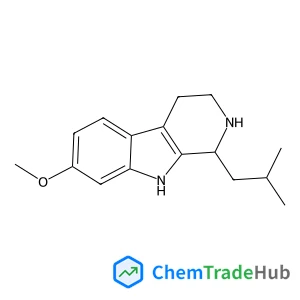
1-Isobutyl-7-methoxy-2,3,4,9-tetrahydro-1H-beta-carboline
CAS Number:
175975-76-5
Molecular Formula:
C16H22N2O
Recommended Suppliers





Disclaimer
This page provides academic journal information for reference and research purposes only. We are not affiliated with any journal publishers and do not handle publication submissions. For publication-related inquiries, please contact the respective journal publishers directly.
If you notice any inaccuracies in the information displayed, please contact us at support@chemtradehub.com. We will promptly review and address your concerns.