












Influence of water content on the [2σ+2σ+2π] cycloaddition of dimethyl azodicarboxylate with quadricyclane in mixed methanol–water solvents from QM/MM Monte Carlo simulations
Literature Information
Publication Date
2021-08-23
DOI
10.1039/D1CP01973B
Impact Factor
3.676
Authors
Lian Yang, Xudong Liu, Yan Zhang, Yongsheng Yang, Ying Xue
View Original
Abstract
Mixed quantum mechanics/molecular mechanics Monte Carlo (QM/MM/MC) simulations combined with the free energy perturbation (FEP) theory have been performed to investigate the mechanism and solvent effect of the [2σ+2σ+2π] cycloaddition reaction between dimethyl azodicarboxylate and quadricyclanes in the binary mixture solvents of methanol and water by varying the water content from 0 to 100 vol%. The two-dimensional potentials of mean force (2D PMF) calculations demonstrated that the mechanism of the reaction is a collaborative asynchronous procedure. The transition structures do not show large variation among different solvents. The calculated free energies of activation indicated that the QM/MM/MC method reproduced well the tendency of rate enhancement from pure methanol to methanol–water mixtures to “on water” with the water content increasing obtained in the experimental observation. The analyses of the energy pair distribution and radial distribution functions illustrated that hydrogen bonding plays an indispensable role in the stabilization of the transition structures. According to the results in methanol–water mixtures at different volume ratios, it is clear that the site-specific hydrogen bond effects are the central reason which leads to fast rate increases in progressing from a methanol–water volume ratio of 3 : 1 to 1 : 1. This work provides a new insight into the solvent effect for the [2σ+2σ+2π] cycloaddition reaction.
Recommended Journals
Related Literature
Mechanistical studies on the formation of isotopomers of hydrogen peroxide (HOOH), hydrotrioxy (HOOO), and dihydrogentrioxide (HOOOH) in electron-irradiated H218O/O2 ice mixtures
David Jewitt, Ralf I. Kaiser
2007-03-13
Paper
DOI: 10.1039/B700814G
A computational study of H2 dissociation on silver surfaces: The effect of oxygen in the added row structure of Ag(110)‡
Amjad B. Mohammad, Kok Hwa Lim, Konstantin M. Neyman, Notker Rösch
2007-01-19
Paper
DOI: 10.1039/B616675J
pH-responsive self-assembly of carboxyl-terminated hyperbranched polymers
Wenyong Dong, Yongfeng Zhou, Deyue Yan, Huiqin Li, Yu Liu
2007-01-23
Paper
DOI: 10.1039/B615525C
Prospects of transition interface sampling simulations for the theoretical study of zeolite synthesis
Titus S. Van Erp, Tom P. Caremans, Christine E. A. Kirschhock, Johan A. Martens
2007-01-25
Invited Article
DOI: 10.1039/B614980D
Cross sections for low-energy electron scattering from adenine in the condensed phase
Radmila Panajotović, Marc Michaud, Léon Sanche
2006-11-17
Paper
DOI: 10.1039/B612700B
Perturbation of water structure due to monovalent ions in solution
A. K. Soper
2007-05-04
Paper
DOI: 10.1039/B701855J
Temperature effects on femtosecond transient absorption kinetics of semiconducting single-walled carbon nanotubes
Ying-Zhong Ma, Sergei M. Bachilo, Graham R. Fleming
2006-11-20
Paper
DOI: 10.1039/B612207H
Photocatalytic properties of titania nanostructured films fabricated from titania nanosheets
Tatsuo Shibata, Nobuyuki Sakai, Katsutoshi Fukuda, Yasuo Ebina, Takayoshi Sasaki
2007-03-12
Paper
DOI: 10.1039/B618448K
You might also like
Compound Q&A
What is the market or research trend for N-(4-Methoxybenzyl)-2-pyridinamine (CAS: 52818-63-0)?
N-(4-Methoxybenzyl)-2-pyridinamine (CAS: 52818-63-0) is increasingly being used ...
52818-63-0N-(4-Methoxybenzyl)-...
Compound Q&A
What precautions should be taken when handling Ethyl 4-(2-chlorophenyl)-1,3-thiazole-2-carboxylate (CAS: 1050507-06-6)?
When handling Ethyl 4-(2-chlorophenyl)-1,3-thiazole-2-carboxylate, appropriate p...
1050507-06-6Ethyl 4-(2-chlorophe...
Compound Q&A
What regulatory guidelines apply to diethyldiselane (CAS: 628-39-7)?
Diethyldiselane (CAS: 628-39-7) is classified under the Globally Harmonized Syst...
628-39-7Diethyldiselane
Compound Q&A
What is the market or research trend for oxocopper (CAS: 12053-18-8)?
The market for oxocopper (CAS: 12053-18-8) is primarily driven by its use in cat...
12053-18-8oxocopper; oxo-(oxoc...
Compound Q&A
What is the market or research trend for 5-{[(2-Methyl-2-propanyl)oxy]carbonyl}-5-azaspiro[2.4]heptane-7-carboxylic acid?
The market for 5-{[(2-Methyl-2-propanyl)oxy]carbonyl}-5-azaspiro[2.4]heptane-7-c...
1268519-54-55-{[(2-Methyl-2-prop...
Compound Q&A
What is 2-(1-Pyrrolidinyl)-4-pyridinamine (CAS: 35981-63-6)?
2-(1-Pyrrolidinyl)-4-pyridinamine is a chemical compound with the CAS number 359...
35981-63-62-(1-Pyrrolidinyl)-4...
Compound Q&A
What are the physical and chemical properties of 2-(3-Pyridinyl)-1-azabicyclo[2.2.2]octane (CAS: 91556-75-1)?
2-(3-Pyridinyl)-1-azabicyclo[2.2.2]octane (CAS: 91556-75-1) is a crystalline sol...
91556-75-12-(3-Pyridinyl)-1-az...
Compound Q&A
How is (S)-Alpha-allyl-proline hydrochloride (CAS: 129704-91-2) typically synthesized?
(S)-Alpha-allyl-proline hydrochloride is usually synthesized via a Wittig reacti...
129704-91-2(S)-Alpha-allyl-prol...
Compound Q&A
What is 3-Methyl-1,2-oxazole-5-carboxylic acid (CAS: 4857-42-5)?
3-Methyl-1,2-oxazole-5-carboxylic acid (CAS: 4857-42-5) is an organic compound w...
4857-42-53-Methyl-1,2-oxazole...
Compound Q&A
How is Lys-SMCC-DM1 (CAS: 1281816-04-3) typically synthesized?
Lys-SMCC-DM1 is synthesized via a multi-step process involving the coupling of S...
1281816-04-3Lys-SMCC-DM1
Source Journal
Physical Chemistry Chemical Physics

CiteScore:
5.5
Self-citation Rate:
10.3%
Articles per Year:
3036
Physical Chemistry Chemical Physics (PCCP) is an international journal co-owned by 19 physical chemistry and physics societies from around the world. This journal publishes original, cutting-edge research in physical chemistry, chemical physics and biophysical chemistry. To be suitable for publication in PCCP, articles must include significant innovation and/or insight into physical chemistry; this is the most important criterion that reviewers and Editors will judge against when evaluating submissions. The journal has a broad scope and welcomes contributions spanning experiment, theory, computation and data science. Topical coverage includes spectroscopy, dynamics, kinetics, statistical mechanics, thermodynamics, electrochemistry, catalysis, surface science, quantum mechanics, quantum computing and machine learning. Interdisciplinary research areas such as polymers and soft matter, materials, nanoscience, energy, surfaces/interfaces, and biophysical chemistry are welcomed if they demonstrate significant innovation and/or insight into physical chemistry. Joined experimental/theoretical studies are particularly appreciated when complementary and based on up-to-date approaches.
Recommended Compounds
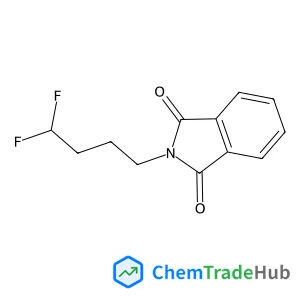
2-(4,4-Difluorobutyl)-1H-isoindole-1,3(2H)-dione
CAS Number:
1265341-14-7
Molecular Formula:
C12H11F2NO2
![1-(1-Benzyl-1,2,3,6-tetrahydropyridin-4-yl)-1H-benzo[d]imidazol-2(3H)-one structure](https://static.chemtradehub.com/structs/603/60373-71-9-7dfb.webp "1-(1-Benzyl-1,2,3,6-tetrahydropyridin-4-yl)-1H-benzo[d]imidazol-2(3H)-one structure")
1-(1-Benzyl-1,2,3,6-tetrahydropyridin-4-yl)-1H-benzo[d]imidazol-2(3H)-one
CAS Number:
60373-71-9
Molecular Formula:
C19H19N3O
Recommended Suppliers





Disclaimer
This page provides academic journal information for reference and research purposes only. We are not affiliated with any journal publishers and do not handle publication submissions. For publication-related inquiries, please contact the respective journal publishers directly.
If you notice any inaccuracies in the information displayed, please contact us at support@chemtradehub.com. We will promptly review and address your concerns.