


Evaluation of mixed quantum–classical molecular dynamics on cis-azobenzene photoisomerization
Literature Information
Publication Date
2021-06-02
DOI
10.1039/D1CP01374B
Impact Factor
3.676
Authors
Diandong Tang, Lin Shen, Wei-Hai Fang
View Original
Abstract
The quantitative prediction of nonadiabatic transitions between different electronic states is important to understand ultrafast processes in photochemistry. A variety of mixed quantum–classical molecular dynamics methods such as surface hopping and Ehrenfest mean-field have been developed. However, how to choose an appropriate one from a wide diversity of dynamics algorithms to study a realistic photochemical process is still unclear. In this work, we implemented 30 combinations of different mixed quantum-classical dynamics methods, including 24 surface hopping models with 8 decoherence corrections and 3 momentum rescaling strategies as well as 6 mean-field models. Then we performed numerical investigations by simulating the photoisomerization of cis-azobenzene combined with on-the-fly electronic structure calculations. Predictions of the S1 lifetime and the quantum yield of the photoproduct using different models are distinct. Surface hopping is more robust than mean-field in our test system. Moreover, the choice of momentum rescaling methods in surface hopping brings more significant changes than decoherence corrections, while a large discrepancy between simulation results with different mean-field algorithms has been observed.
Recommended Journals

Helvetica Chimica Acta

Israel Journal of Chemistry

Proceedings of the National Academy of Sciences of the United States of America

Planta Medica

European Journal of Wood and Wood Products

Journal of Physics and Chemistry of Solids

Journal of Organometallic Chemistry

Science Progress

Science

Russian Chemical Reviews
Related Literature
Ultrafast dynamics in complex fluids observed through the ultrafast optically-heterodyne-detected optical-Kerr-effect (OHD-OKE)
Neil T. Hunt, Andrew A. Jaye, Stephen R. Meech
2007-02-07
Invited Article
DOI: 10.1039/B616078F
Kinetics of NaCl nucleation in supercritical water investigated by molecular dynamics simulations
Norbert Lümmen, Bjørn Kvamme
2007-06-05
Paper
DOI: 10.1039/B703430J
A computational chemistry insight in the role of structure directing agents in the synthesis of zeolites
2007-01-18
Invited Article
DOI: 10.1039/B615035G
A novel approach to the micropatterning of proteins using dewetting of polymer bilayers
2006-11-20
Paper
DOI: 10.1039/B614085H
Consequences of chain networks on thermodynamic, dielectric and structural properties for liquid water
Steven W. Rick
2006-11-28
Paper
DOI: 10.1039/B614742A
pH-responsive self-assembly of carboxyl-terminated hyperbranched polymers
Wenyong Dong, Yongfeng Zhou, Deyue Yan, Huiqin Li, Yu Liu
2007-01-23
Paper
DOI: 10.1039/B615525C
On the curvature dependence of the interfacial tension in a symmetric three-component interface
2006-11-28
Paper
DOI: 10.1039/B613074G
Mechanistical studies on the formation of isotopomers of hydrogen peroxide (HOOH), hydrotrioxy (HOOO), and dihydrogentrioxide (HOOOH) in electron-irradiated H218O/O2 ice mixtures
David Jewitt, Ralf I. Kaiser
2007-03-13
Paper
DOI: 10.1039/B700814G
Inelastic insights for molecular tunneling pathways: Bypassing the terminal groups
Alessandro Troisi, Mark A. Ratner
2007-03-21
Paper
DOI: 10.1039/B702377D
You might also like
Compound Q&A
What is the market or research trend for N-(4-Methoxybenzyl)-2-pyridinamine (CAS: 52818-63-0)?
N-(4-Methoxybenzyl)-2-pyridinamine (CAS: 52818-63-0) is increasingly being used ...
52818-63-0N-(4-Methoxybenzyl)-...
Compound Q&A
What precautions should be taken when handling Ethyl 4-(2-chlorophenyl)-1,3-thiazole-2-carboxylate (CAS: 1050507-06-6)?
When handling Ethyl 4-(2-chlorophenyl)-1,3-thiazole-2-carboxylate, appropriate p...
1050507-06-6Ethyl 4-(2-chlorophe...
Compound Q&A
What regulatory guidelines apply to diethyldiselane (CAS: 628-39-7)?
Diethyldiselane (CAS: 628-39-7) is classified under the Globally Harmonized Syst...
628-39-7Diethyldiselane
Compound Q&A
What is the market or research trend for oxocopper (CAS: 12053-18-8)?
The market for oxocopper (CAS: 12053-18-8) is primarily driven by its use in cat...
12053-18-8oxocopper; oxo-(oxoc...
Compound Q&A
What is the market or research trend for 5-{[(2-Methyl-2-propanyl)oxy]carbonyl}-5-azaspiro[2.4]heptane-7-carboxylic acid?
The market for 5-{[(2-Methyl-2-propanyl)oxy]carbonyl}-5-azaspiro[2.4]heptane-7-c...
1268519-54-55-{[(2-Methyl-2-prop...
Compound Q&A
What is 2-(1-Pyrrolidinyl)-4-pyridinamine (CAS: 35981-63-6)?
2-(1-Pyrrolidinyl)-4-pyridinamine is a chemical compound with the CAS number 359...
35981-63-62-(1-Pyrrolidinyl)-4...
Compound Q&A
What are the physical and chemical properties of 2-(3-Pyridinyl)-1-azabicyclo[2.2.2]octane (CAS: 91556-75-1)?
2-(3-Pyridinyl)-1-azabicyclo[2.2.2]octane (CAS: 91556-75-1) is a crystalline sol...
91556-75-12-(3-Pyridinyl)-1-az...
Compound Q&A
How is (S)-Alpha-allyl-proline hydrochloride (CAS: 129704-91-2) typically synthesized?
(S)-Alpha-allyl-proline hydrochloride is usually synthesized via a Wittig reacti...
129704-91-2(S)-Alpha-allyl-prol...
Compound Q&A
What is 3-Methyl-1,2-oxazole-5-carboxylic acid (CAS: 4857-42-5)?
3-Methyl-1,2-oxazole-5-carboxylic acid (CAS: 4857-42-5) is an organic compound w...
4857-42-53-Methyl-1,2-oxazole...
Compound Q&A
How is Lys-SMCC-DM1 (CAS: 1281816-04-3) typically synthesized?
Lys-SMCC-DM1 is synthesized via a multi-step process involving the coupling of S...
1281816-04-3Lys-SMCC-DM1
Source Journal
Physical Chemistry Chemical Physics

CiteScore:
5.5
Self-citation Rate:
10.3%
Articles per Year:
3036
Physical Chemistry Chemical Physics (PCCP) is an international journal co-owned by 19 physical chemistry and physics societies from around the world. This journal publishes original, cutting-edge research in physical chemistry, chemical physics and biophysical chemistry. To be suitable for publication in PCCP, articles must include significant innovation and/or insight into physical chemistry; this is the most important criterion that reviewers and Editors will judge against when evaluating submissions. The journal has a broad scope and welcomes contributions spanning experiment, theory, computation and data science. Topical coverage includes spectroscopy, dynamics, kinetics, statistical mechanics, thermodynamics, electrochemistry, catalysis, surface science, quantum mechanics, quantum computing and machine learning. Interdisciplinary research areas such as polymers and soft matter, materials, nanoscience, energy, surfaces/interfaces, and biophysical chemistry are welcomed if they demonstrate significant innovation and/or insight into physical chemistry. Joined experimental/theoretical studies are particularly appreciated when complementary and based on up-to-date approaches.
Recommended Compounds
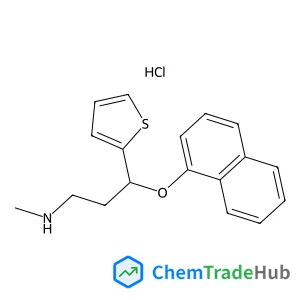
N-Methyl-3-(1-naphthyloxy)-3-(2-thienyl)-1-propanamine hydrochloride (1:1)
CAS Number:
1188266-11-6
Molecular Formula:
C18H20ClNOS

Recommended Suppliers





Disclaimer
This page provides academic journal information for reference and research purposes only. We are not affiliated with any journal publishers and do not handle publication submissions. For publication-related inquiries, please contact the respective journal publishers directly.
If you notice any inaccuracies in the information displayed, please contact us at support@chemtradehub.com. We will promptly review and address your concerns.