


A novel approach to the micropatterning of proteins using dewetting of polymer bilayers
Literature Information
Publication Date
2006-11-20
DOI
10.1039/B614085H
Impact Factor
3.676
Authors
View Original
Abstract
The ability to control protein and cell positioning on a microscopic scale is crucial in many biomedical and bioengineering applications, such as tissue engineering and the development of biosensors. We propose here a novel, simple, and versatile method for the micropatterning of proteins. Micropatterned substrates are produced by the dewetting of a metastable polymer film on top of another polymer film. Selective adsorption, or micropatterning, of proteins can be achieved on such substrates by choosing pairs of polymers which differ in protein affinity. In this study, patterns were produced in bilayers of poly(methylmethacrylate) (PMMA) and polystyrene (PS), and of PMMA and octadecyltrichlorosilane (OTS). Fluorescence microscopy and atomic force microscopy (AFM) provide evidence that model proteins adsorb preferentially on isolated bio-adhesive (PS and OTS) micropatches in a protein-resistant (PMMA) matrix. “Inverse” protein patterns, containing non-adhesive (PMMA) islands in a protein-adhesive (PS) matrix can also be produced. Such micropatterned substrates could potentially be used in the development of biosensors and bioassays, and in the study of cell growth and motility.
Recommended Journals

Current Opinion in Solid State & Materials Science

Acta Materialia

Chemical Communications

Crystallography Reports

Russian Journal of Organic Chemistry

Journal of Peptide Science

Chemistry Education Research and Practice

Russian Journal of Bioorganic Chemistry

Russian Journal of Applied Chemistry

Organic Process Research & Development
Related Literature
Self-healing behaviour of furan–maleimide poly(ionic liquid) covalent adaptable networks
Katelyn M. Lindenmeyer, R. Daniel Johnson, Kevin M. Miller
2020-02-26
Communication
DOI: 10.1039/D0PY00016G
Sustainable synthesis of CO2-derived polycarbonates from d-xylose
David K. Tran, Ahmed Z. Rashad, Donald J. Darensbourg
2021-09-10
Communication
DOI: 10.1039/D1PY00784J
Polymer actuators based on covalent adaptable networks
Yahe Wu, Yan Ji
2020-05-14
Review Article
DOI: 10.1039/D0PY00075B
Transformable fluorescent nanoparticles (TFNs) of amphiphilic block copolymers for visual detection of aromatic amines in water
Yuhan Cui, Yusheng Zhou, Guodong Liang
2021-08-31
Paper
DOI: 10.1039/D1PY00919B
Photo-switchable smart superhydrophobic surface with controllable superwettability
Xiaoyan Yang, Haibao Jin, Xinfeng Tao, Binbin Xu, Shaoliang Lin
2021-08-25
Paper
DOI: 10.1039/D1PY00984B
Biobased poly(ester-co-glycoside) from reactive natural Brønsted acidic deep eutectic solvent analogue
Gabriel Duaux, Etienne Fleury, Daniel Portinha
2021-08-27
Paper
DOI: 10.1039/D1PY00990G
Designing self-propagating polymers with ultrasensitivity through feedback signal amplification
Jiajia Tan, Jinming Hu, Shiyong Liu
2021-10-12
Minireview
DOI: 10.1039/D1PY01095F
Sequence regulation in living anionic terpolymerization of styrene and two categories of 1,1-diphenylethylene (DPE) derivatives
Lincan Yang, Heyu Shen, Li Han, Hongwei Ma, Chao Li, Lan Lei, Songbo Zhang, Pibo Liu, Yang Li
2020-07-14
Paper
DOI: 10.1039/D0PY00731E
You might also like
Compound Q&A
What is the market or research trend for N-(4-Methoxybenzyl)-2-pyridinamine (CAS: 52818-63-0)?
N-(4-Methoxybenzyl)-2-pyridinamine (CAS: 52818-63-0) is increasingly being used ...
52818-63-0N-(4-Methoxybenzyl)-...
Compound Q&A
What precautions should be taken when handling Ethyl 4-(2-chlorophenyl)-1,3-thiazole-2-carboxylate (CAS: 1050507-06-6)?
When handling Ethyl 4-(2-chlorophenyl)-1,3-thiazole-2-carboxylate, appropriate p...
1050507-06-6Ethyl 4-(2-chlorophe...
Compound Q&A
What regulatory guidelines apply to diethyldiselane (CAS: 628-39-7)?
Diethyldiselane (CAS: 628-39-7) is classified under the Globally Harmonized Syst...
628-39-7Diethyldiselane
Compound Q&A
What is the market or research trend for oxocopper (CAS: 12053-18-8)?
The market for oxocopper (CAS: 12053-18-8) is primarily driven by its use in cat...
12053-18-8oxocopper; oxo-(oxoc...
Compound Q&A
What is the market or research trend for 5-{[(2-Methyl-2-propanyl)oxy]carbonyl}-5-azaspiro[2.4]heptane-7-carboxylic acid?
The market for 5-{[(2-Methyl-2-propanyl)oxy]carbonyl}-5-azaspiro[2.4]heptane-7-c...
1268519-54-55-{[(2-Methyl-2-prop...
Compound Q&A
What is 2-(1-Pyrrolidinyl)-4-pyridinamine (CAS: 35981-63-6)?
2-(1-Pyrrolidinyl)-4-pyridinamine is a chemical compound with the CAS number 359...
35981-63-62-(1-Pyrrolidinyl)-4...
Compound Q&A
What are the physical and chemical properties of 2-(3-Pyridinyl)-1-azabicyclo[2.2.2]octane (CAS: 91556-75-1)?
2-(3-Pyridinyl)-1-azabicyclo[2.2.2]octane (CAS: 91556-75-1) is a crystalline sol...
91556-75-12-(3-Pyridinyl)-1-az...
Compound Q&A
How is (S)-Alpha-allyl-proline hydrochloride (CAS: 129704-91-2) typically synthesized?
(S)-Alpha-allyl-proline hydrochloride is usually synthesized via a Wittig reacti...
129704-91-2(S)-Alpha-allyl-prol...
Compound Q&A
What is 3-Methyl-1,2-oxazole-5-carboxylic acid (CAS: 4857-42-5)?
3-Methyl-1,2-oxazole-5-carboxylic acid (CAS: 4857-42-5) is an organic compound w...
4857-42-53-Methyl-1,2-oxazole...
Compound Q&A
How is Lys-SMCC-DM1 (CAS: 1281816-04-3) typically synthesized?
Lys-SMCC-DM1 is synthesized via a multi-step process involving the coupling of S...
1281816-04-3Lys-SMCC-DM1
Source Journal
Physical Chemistry Chemical Physics

CiteScore:
5.5
Self-citation Rate:
10.3%
Articles per Year:
3036
Physical Chemistry Chemical Physics (PCCP) is an international journal co-owned by 19 physical chemistry and physics societies from around the world. This journal publishes original, cutting-edge research in physical chemistry, chemical physics and biophysical chemistry. To be suitable for publication in PCCP, articles must include significant innovation and/or insight into physical chemistry; this is the most important criterion that reviewers and Editors will judge against when evaluating submissions. The journal has a broad scope and welcomes contributions spanning experiment, theory, computation and data science. Topical coverage includes spectroscopy, dynamics, kinetics, statistical mechanics, thermodynamics, electrochemistry, catalysis, surface science, quantum mechanics, quantum computing and machine learning. Interdisciplinary research areas such as polymers and soft matter, materials, nanoscience, energy, surfaces/interfaces, and biophysical chemistry are welcomed if they demonstrate significant innovation and/or insight into physical chemistry. Joined experimental/theoretical studies are particularly appreciated when complementary and based on up-to-date approaches.
Recommended Compounds
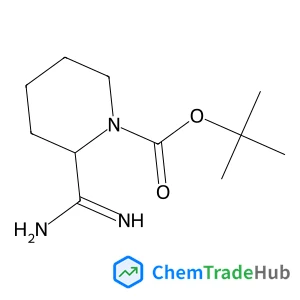
2-Methyl-2-propanyl 2-carbamimidoyl-1-piperidinecarboxylate
CAS Number:
1258640-98-0
Molecular Formula:
C11H21N3O2
![(2R,6S)-6-[(Benzyloxy)methyl]-4-{[(2-methyl-2-propanyl)oxy]carbonyl}-2-morpholinecarboxylic acid structure](https://static.chemtradehub.com/structs/109/1093085-91-6-3382.webp "(2R,6S)-6-[(Benzyloxy)methyl]-4-{[(2-methyl-2-propanyl)oxy]carbonyl}-2-morpholinecarboxylic acid structure")
(2R,6S)-6-[(Benzyloxy)methyl]-4-{[(2-methyl-2-propanyl)oxy]carbonyl}-2-morpholinecarboxylic acid
CAS Number:
1093085-91-6
Molecular Formula:
C18H25NO6
![1-(1-Benzyl-1,2,3,6-tetrahydropyridin-4-yl)-1H-benzo[d]imidazol-2(3H)-one structure](https://static.chemtradehub.com/structs/603/60373-71-9-7dfb.webp "1-(1-Benzyl-1,2,3,6-tetrahydropyridin-4-yl)-1H-benzo[d]imidazol-2(3H)-one structure")
1-(1-Benzyl-1,2,3,6-tetrahydropyridin-4-yl)-1H-benzo[d]imidazol-2(3H)-one
CAS Number:
60373-71-9
Molecular Formula:
C19H19N3O
Recommended Suppliers





Disclaimer
This page provides academic journal information for reference and research purposes only. We are not affiliated with any journal publishers and do not handle publication submissions. For publication-related inquiries, please contact the respective journal publishers directly.
If you notice any inaccuracies in the information displayed, please contact us at support@chemtradehub.com. We will promptly review and address your concerns.