












Absorption of self-propelled particles into a dense porous medium
Literature Information
Publication Date
2021-08-20
DOI
10.1039/D1CP01234G
Impact Factor
3.676
Authors
Bing-shuang Qian, Wen-de Tian
View Original
Abstract
We study the absorption of self-propelled particles into a finite-size dense porous medium, which is mimicked by an obstacle array. We find that, depending on the competition of the propelling strength versus the repulsive barrier formed by obstacles and the contrast between the characteristic time scales of permeation and propelling persistence, the absorption process exhibits three distinct types of behavior. In Type I and II behavior, the propelling strength is not large enough to surmount the barrier, and hence particles transport in the medium by barrier-hopping dynamics. The initial permeation of particles toward the medium center is phenomenologically similar to a normal slow diffusion process. But, surprisingly, after the initial permeation process, a concentrated nucleus of particle aggregates forms and grows at the medium center in Type I, due to the long propelling persistence. Such an abnormal “nucleation” phenomenon does not appear in Type II, in which the propelling persistence is low. When the propelling strength is very high (Type III), particles transport smoothly in the medium, hence the initial slow diffusion process disappears and small particle clusters form and merge randomly in the medium. Our results provide a foundation for applications of active objects in a complex environment and also suggest the possible usage of a porous medium, for example, in the selection or sorting of active matter.
Related Literature
Kinetics of NaCl nucleation in supercritical water investigated by molecular dynamics simulations
Norbert Lümmen, Bjørn Kvamme
2007-06-05
Paper
DOI: 10.1039/B703430J
Adiabatic and non-adiabatic corrections to rovibrational energies of diatomic molecules: variational calculations with experimental accuracy
2007-04-03
Paper
DOI: 10.1039/B700044H
Taxonomy of periodic nets and the design of materials
Olaf Delgado-Friedrichs, Michael O’Keeffe, Omar M. Yaghi
2007-01-02
Invited Article
DOI: 10.1039/B615006C
Energy-directed tree search: an efficient systematic algorithm for finding the lowest energy conformation of molecules
Ekaterina I. Izgorodina, Ching Yeh Lin, Michelle L. Coote
2007-04-04
Paper
DOI: 10.1039/B700938K
Gas-phase electronic spectrum of the C14 ring
A. E. Boguslavskiy, J. P. Maier
2006-11-13
Paper
DOI: 10.1039/B613109C
Layer-by-layer assembly as a versatile bottom-up nanofabrication technique for exploratory research and realistic application
Katsuhiko Ariga, Jonathan P. Hill, Qingmin Ji
2007-03-01
Invited Article
DOI: 10.1039/B700410A
Infrared spectroscopy and structure of photochemically protonated biomolecules in the gas phase: a noradrenaline analogue, lysine and alanyl alanine
Timothy D. Vaden, Tjalling S. J. A. de Boer, Neil A. MacLeod, Elaine M. Marzluff, John P. Simons, Lavina C. Snoek
2007-03-27
Paper
DOI: 10.1039/B700805H
Mechanistical studies on the formation of isotopomers of hydrogen peroxide (HOOH), hydrotrioxy (HOOO), and dihydrogentrioxide (HOOOH) in electron-irradiated H218O/O2 ice mixtures
David Jewitt, Ralf I. Kaiser
2007-03-13
Paper
DOI: 10.1039/B700814G
Gold catalysts for pure hydrogen production in the water–gas shift reaction: activity, structure and reaction mechanism
2006-10-02
Invited Article
DOI: 10.1039/B607837K
Inelastic insights for molecular tunneling pathways: Bypassing the terminal groups
Alessandro Troisi, Mark A. Ratner
2007-03-21
Paper
DOI: 10.1039/B702377D
You might also like
Compound Q&A
What is the market or research trend for N-(4-Methoxybenzyl)-2-pyridinamine (CAS: 52818-63-0)?
N-(4-Methoxybenzyl)-2-pyridinamine (CAS: 52818-63-0) is increasingly being used ...
52818-63-0N-(4-Methoxybenzyl)-...
Compound Q&A
What precautions should be taken when handling Ethyl 4-(2-chlorophenyl)-1,3-thiazole-2-carboxylate (CAS: 1050507-06-6)?
When handling Ethyl 4-(2-chlorophenyl)-1,3-thiazole-2-carboxylate, appropriate p...
1050507-06-6Ethyl 4-(2-chlorophe...
Compound Q&A
What regulatory guidelines apply to diethyldiselane (CAS: 628-39-7)?
Diethyldiselane (CAS: 628-39-7) is classified under the Globally Harmonized Syst...
628-39-7Diethyldiselane
Compound Q&A
What is the market or research trend for oxocopper (CAS: 12053-18-8)?
The market for oxocopper (CAS: 12053-18-8) is primarily driven by its use in cat...
12053-18-8oxocopper; oxo-(oxoc...
Compound Q&A
What is the market or research trend for 5-{[(2-Methyl-2-propanyl)oxy]carbonyl}-5-azaspiro[2.4]heptane-7-carboxylic acid?
The market for 5-{[(2-Methyl-2-propanyl)oxy]carbonyl}-5-azaspiro[2.4]heptane-7-c...
1268519-54-55-{[(2-Methyl-2-prop...
Compound Q&A
What is 2-(1-Pyrrolidinyl)-4-pyridinamine (CAS: 35981-63-6)?
2-(1-Pyrrolidinyl)-4-pyridinamine is a chemical compound with the CAS number 359...
35981-63-62-(1-Pyrrolidinyl)-4...
Compound Q&A
What are the physical and chemical properties of 2-(3-Pyridinyl)-1-azabicyclo[2.2.2]octane (CAS: 91556-75-1)?
2-(3-Pyridinyl)-1-azabicyclo[2.2.2]octane (CAS: 91556-75-1) is a crystalline sol...
91556-75-12-(3-Pyridinyl)-1-az...
Compound Q&A
How is (S)-Alpha-allyl-proline hydrochloride (CAS: 129704-91-2) typically synthesized?
(S)-Alpha-allyl-proline hydrochloride is usually synthesized via a Wittig reacti...
129704-91-2(S)-Alpha-allyl-prol...
Compound Q&A
What is 3-Methyl-1,2-oxazole-5-carboxylic acid (CAS: 4857-42-5)?
3-Methyl-1,2-oxazole-5-carboxylic acid (CAS: 4857-42-5) is an organic compound w...
4857-42-53-Methyl-1,2-oxazole...
Compound Q&A
How is Lys-SMCC-DM1 (CAS: 1281816-04-3) typically synthesized?
Lys-SMCC-DM1 is synthesized via a multi-step process involving the coupling of S...
1281816-04-3Lys-SMCC-DM1
Source Journal
Physical Chemistry Chemical Physics

CiteScore:
5.5
Self-citation Rate:
10.3%
Articles per Year:
3036
Physical Chemistry Chemical Physics (PCCP) is an international journal co-owned by 19 physical chemistry and physics societies from around the world. This journal publishes original, cutting-edge research in physical chemistry, chemical physics and biophysical chemistry. To be suitable for publication in PCCP, articles must include significant innovation and/or insight into physical chemistry; this is the most important criterion that reviewers and Editors will judge against when evaluating submissions. The journal has a broad scope and welcomes contributions spanning experiment, theory, computation and data science. Topical coverage includes spectroscopy, dynamics, kinetics, statistical mechanics, thermodynamics, electrochemistry, catalysis, surface science, quantum mechanics, quantum computing and machine learning. Interdisciplinary research areas such as polymers and soft matter, materials, nanoscience, energy, surfaces/interfaces, and biophysical chemistry are welcomed if they demonstrate significant innovation and/or insight into physical chemistry. Joined experimental/theoretical studies are particularly appreciated when complementary and based on up-to-date approaches.
Recommended Compounds
![N-{15-[(2,5-Dioxo-1-pyrrolidinyl)oxy]-15-oxo-3,6,9,12-tetraoxapentadec-1-yl}-2-(2-propyn-1-yloxy)acetamide structure](https://static.chemtradehub.com/structs/210/2101206-92-0-2eb5.webp "N-{15-[(2,5-Dioxo-1-pyrrolidinyl)oxy]-15-oxo-3,6,9,12-tetraoxapentadec-1-yl}-2-(2-propyn-1-yloxy)acetamide structure")
N-{15-[(2,5-Dioxo-1-pyrrolidinyl)oxy]-15-oxo-3,6,9,12-tetraoxapentadec-1-yl}-2-(2-propyn-1-yloxy)acetamide
CAS Number:
2101206-92-0
Molecular Formula:
C20H30N2O10
![1-[6-(1H-Imidazol-1-yl)-3-pyridinyl]methanamine structure](https://static.chemtradehub.com/structs/914/914637-08-4-8825.webp "1-[6-(1H-Imidazol-1-yl)-3-pyridinyl]methanamine structure")
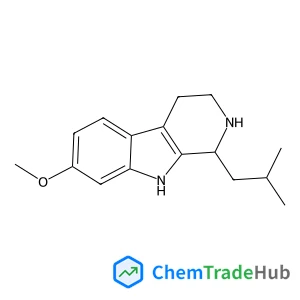
1-Isobutyl-7-methoxy-2,3,4,9-tetrahydro-1H-beta-carboline
CAS Number:
175975-76-5
Molecular Formula:
C16H22N2O
![(2R,6S)-6-[(Benzyloxy)methyl]-4-{[(2-methyl-2-propanyl)oxy]carbonyl}-2-morpholinecarboxylic acid structure](https://static.chemtradehub.com/structs/109/1093085-91-6-3382.webp "(2R,6S)-6-[(Benzyloxy)methyl]-4-{[(2-methyl-2-propanyl)oxy]carbonyl}-2-morpholinecarboxylic acid structure")
(2R,6S)-6-[(Benzyloxy)methyl]-4-{[(2-methyl-2-propanyl)oxy]carbonyl}-2-morpholinecarboxylic acid
CAS Number:
1093085-91-6
Molecular Formula:
C18H25NO6
Recommended Suppliers





Disclaimer
This page provides academic journal information for reference and research purposes only. We are not affiliated with any journal publishers and do not handle publication submissions. For publication-related inquiries, please contact the respective journal publishers directly.
If you notice any inaccuracies in the information displayed, please contact us at support@chemtradehub.com. We will promptly review and address your concerns.