












Gold catalysts for pure hydrogen production in the water–gas shift reaction: activity, structure and reaction mechanism
Literature Information
Publication Date
2006-10-02
DOI
10.1039/B607837K
Impact Factor
3.676
Authors
View Original
Abstract
The production of hydrogen containing very low levels of carbon monoxide for use in polymer electrolyte fuel cells requires the development of catalysts that show very high activity at low temperatures where the equilibrium for the removal of carbon monoxide using the water–gas shift reaction is favourable. It has been claimed that oxide-supported gold catalysts have the required high activity but there is considerable uncertainty in the literature about the feasibility of using these catalysts under real conditions. By comparing the activity of gold catalysts with that of platinum catalysts it is shown that well-prepared gold catalysts are significantly more active than the corresponding platinum catalysts. However, the method of preparation and pre-treatment of the gold catalysts is critical and activity variations of several orders of magnitude can be observed depending on the methods chosen. It is shown that an intimate contact between gold and the oxide support is important and any preparative procedure that does not generate such an interaction, or any subsequent treatment that can destroy such an interaction, may result in catalysts with low activity. The oxidation state and structure of active gold catalysts for the water–gas shift reaction is shown to comprise gold primarily in a zerovalent metallic state but in intimate contact with the support. This close contact between small metallic gold particles and the support may result in the “atoms” at the point of contact having a net charge (most probably cationic) but the high activity is associated with the presence of metallic gold. Both in situ XPS and XANES appear unequivocal on this point and this conclusion is consistent with similar measurements on gold catalysts even when used for CO oxidation. In situ EXAFS measurements under water gas shift conditions show that the active form of gold is a small gold cluster in intimate contact with the oxide support. The importance of the gold/oxide interface is indicated but the possible role of special sites (e.g., edge sites) on the gold clusters cannot be excluded. These may be important for CO oxidation but the fact that water has to be activated in the water gas shift reaction may point towards a more dominant role for the interfacial sites. The mechanism of the water gas shift reaction on gold and other low temperature catalysts has been widely investigated but little agreement exists. However, it is shown that a single “universal” model is consistent with much of the experimental literature. In this, it is proposed that the dominant surface intermediate is a function of reaction conditions. For example, as the temperature is increased the dominant species changes from a carbonate or carboxylate species, to a formate species and eventually at high temperatures to a mechanism that is characteristic of a redox process. Similar changes in the dominant intermediate are observed with changes in the gas composition. Overall, it is shown that reported variations in the kinetics, structure and reaction mechanism for the water gas shift reaction on gold catalysts can now be understood and rationalised.
Recommended Journals
Related Literature
Dependence of the liquid crystalline properties on the exactly controlled single-site functionalized density of mesogens focused on the alternating copolymer model
Ruixue Zhang, Xuwen Li, Hongwei Ma, Li Han, Chao Li, Songbo Zhang, Hongyuan Bai, Yang Li
2021-11-01
Paper
DOI: 10.1039/D1PY01310F
High-performance polyamides with engineered disorder
Julien Cretenoud, Sandor Balog, Véronique Michaud, Jean-Marc Chenal, Olivier Lame, Christopher J. G. Plummer, Holger Frauenrath
2021-10-15
Paper
DOI: 10.1039/D1PY01225H
Thermoresponsive polymers as macromolecular coordination ligands: complexation-dependence of thermally induced aggregation in aqueous solution
Maximilian Felix Toni Meier, Franck Thetiot, Narsimhulu Pittala, Ingo Lieberwirth, Cleiton Kunzler, Smail Triki, Ulrich Jonas
2021-08-13
Paper
DOI: 10.1039/D1PY00847A
Development of a fully bio-based hyperbranched benzoxazine
Wanan Cai, Zhicheng Wang, Zhaohui Shu, Wenbin Liu, Jun Wang, Jian Qiu
2021-11-13
Paper
DOI: 10.1039/D1PY01451J
Multi-responsive poly(oligo(ethylene glycol)methyl methacrylate)-co-poly(2-(diisopropylamino)ethyl methacrylate) hyperbranched copolymers via reversible addition fragmentation chain transfer polymerization
Dimitrios Selianitis, Stergios Pispas
2021-11-03
Paper
DOI: 10.1039/D1PY01320C
Self-healing behaviour of furan–maleimide poly(ionic liquid) covalent adaptable networks
Katelyn M. Lindenmeyer, R. Daniel Johnson, Kevin M. Miller
2020-02-26
Communication
DOI: 10.1039/D0PY00016G
High chemical recyclability of vinyl lactone acrylic bioplastics
Reid A. Gilsdorf, Matthew A. Nicki, Eugene Y.-X. Chen
2020-07-01
Paper
DOI: 10.1039/D0PY00786B
Crystallization behavior, structure, morphology, and thermal properties of crystalline and amorphous stereo diblock copolymers, poly(l-lactide)-b-poly(dl-lactide)
Hideto Tsuji, Kazumasa Iguchi, Kohji Tashiro, Yuki Arakawa
2020-08-28
Paper
DOI: 10.1039/D0PY01115K
Sequence regulation in living anionic terpolymerization of styrene and two categories of 1,1-diphenylethylene (DPE) derivatives
Lincan Yang, Heyu Shen, Li Han, Hongwei Ma, Chao Li, Lan Lei, Songbo Zhang, Pibo Liu, Yang Li
2020-07-14
Paper
DOI: 10.1039/D0PY00731E
You might also like
Compound Q&A
What is the market or research trend for N-(4-Methoxybenzyl)-2-pyridinamine (CAS: 52818-63-0)?
N-(4-Methoxybenzyl)-2-pyridinamine (CAS: 52818-63-0) is increasingly being used ...
52818-63-0N-(4-Methoxybenzyl)-...
Compound Q&A
What precautions should be taken when handling Ethyl 4-(2-chlorophenyl)-1,3-thiazole-2-carboxylate (CAS: 1050507-06-6)?
When handling Ethyl 4-(2-chlorophenyl)-1,3-thiazole-2-carboxylate, appropriate p...
1050507-06-6Ethyl 4-(2-chlorophe...
Compound Q&A
What regulatory guidelines apply to diethyldiselane (CAS: 628-39-7)?
Diethyldiselane (CAS: 628-39-7) is classified under the Globally Harmonized Syst...
628-39-7Diethyldiselane
Compound Q&A
What is the market or research trend for oxocopper (CAS: 12053-18-8)?
The market for oxocopper (CAS: 12053-18-8) is primarily driven by its use in cat...
12053-18-8oxocopper; oxo-(oxoc...
Compound Q&A
What is the market or research trend for 5-{[(2-Methyl-2-propanyl)oxy]carbonyl}-5-azaspiro[2.4]heptane-7-carboxylic acid?
The market for 5-{[(2-Methyl-2-propanyl)oxy]carbonyl}-5-azaspiro[2.4]heptane-7-c...
1268519-54-55-{[(2-Methyl-2-prop...
Compound Q&A
What is 2-(1-Pyrrolidinyl)-4-pyridinamine (CAS: 35981-63-6)?
2-(1-Pyrrolidinyl)-4-pyridinamine is a chemical compound with the CAS number 359...
35981-63-62-(1-Pyrrolidinyl)-4...
Compound Q&A
What are the physical and chemical properties of 2-(3-Pyridinyl)-1-azabicyclo[2.2.2]octane (CAS: 91556-75-1)?
2-(3-Pyridinyl)-1-azabicyclo[2.2.2]octane (CAS: 91556-75-1) is a crystalline sol...
91556-75-12-(3-Pyridinyl)-1-az...
Compound Q&A
How is (S)-Alpha-allyl-proline hydrochloride (CAS: 129704-91-2) typically synthesized?
(S)-Alpha-allyl-proline hydrochloride is usually synthesized via a Wittig reacti...
129704-91-2(S)-Alpha-allyl-prol...
Compound Q&A
What is 3-Methyl-1,2-oxazole-5-carboxylic acid (CAS: 4857-42-5)?
3-Methyl-1,2-oxazole-5-carboxylic acid (CAS: 4857-42-5) is an organic compound w...
4857-42-53-Methyl-1,2-oxazole...
Compound Q&A
How is Lys-SMCC-DM1 (CAS: 1281816-04-3) typically synthesized?
Lys-SMCC-DM1 is synthesized via a multi-step process involving the coupling of S...
1281816-04-3Lys-SMCC-DM1
Source Journal
Physical Chemistry Chemical Physics

CiteScore:
5.5
Self-citation Rate:
10.3%
Articles per Year:
3036
Physical Chemistry Chemical Physics (PCCP) is an international journal co-owned by 19 physical chemistry and physics societies from around the world. This journal publishes original, cutting-edge research in physical chemistry, chemical physics and biophysical chemistry. To be suitable for publication in PCCP, articles must include significant innovation and/or insight into physical chemistry; this is the most important criterion that reviewers and Editors will judge against when evaluating submissions. The journal has a broad scope and welcomes contributions spanning experiment, theory, computation and data science. Topical coverage includes spectroscopy, dynamics, kinetics, statistical mechanics, thermodynamics, electrochemistry, catalysis, surface science, quantum mechanics, quantum computing and machine learning. Interdisciplinary research areas such as polymers and soft matter, materials, nanoscience, energy, surfaces/interfaces, and biophysical chemistry are welcomed if they demonstrate significant innovation and/or insight into physical chemistry. Joined experimental/theoretical studies are particularly appreciated when complementary and based on up-to-date approaches.
Recommended Compounds
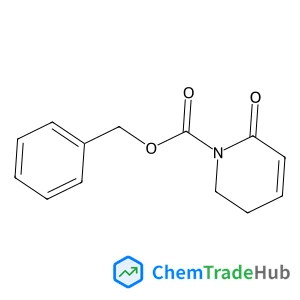
Benzyl 6-oxo-3,6-dihydro-1(2H)-pyridinecarboxylate
CAS Number:
725746-35-0
Molecular Formula:
C13H13NO3


2-(4,4-Difluorobutyl)-1H-isoindole-1,3(2H)-dione
CAS Number:
1265341-14-7
Molecular Formula:
C12H11F2NO2
Recommended Suppliers







Disclaimer
This page provides academic journal information for reference and research purposes only. We are not affiliated with any journal publishers and do not handle publication submissions. For publication-related inquiries, please contact the respective journal publishers directly.
If you notice any inaccuracies in the information displayed, please contact us at support@chemtradehub.com. We will promptly review and address your concerns.