












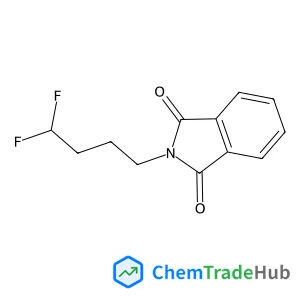
2-(4,4-Difluorobutyl)-1H-isoindole-1,3(2H)-dione
CAS Number:
1265341-14-7
Molecular Formula:
C12H11F2NO2
Ping-hua Ling, Xiao-na Zang, Cai-hua Qian, Feng Gao
A Metal–Organic Framework (MOFs) with large surface area, exposed active site, excellent catalytic performance and high chemical stability has been used as an artificial enzyme and designed for nonenzymatic electrochemical sensors. Here, a strategy of using an enhanced electrochemical sensing platform for the detection of nitic oxide (NO) and hydrogen peroxide (H2O2) was designed via a nano-metalloporphyrinic metal–organic framework (NporMOF(Fe)) as an electrode material. By taking advantage of the small size, high surface area and exposed Fe active site, the obtained NporMOF(Fe) displays excellent electrocatalytic activity toward NO and H2O2. The NporMOF(Fe) modified electrode shows high sensing ability toward the in situ generated NO in NO2− containing phosphate buffer (PB) solution with a wide linear detection range of 5 μM to 200 μM and a very low detection limit of 1.3 μM. Moreover, NporMOF(Fe) exhibits high electrocatalytic activity toward the reduction of H2O2 and the practical detection of H2O2 released from HeLa cells. Furthermore, the NporMOF(Fe) modified electrode shows excellent selectivity toward the detection of NO and H2O2 in the presence of other physiologically important analytes. This method shows excellent biosensing performance, implying the universal applicability of MOFs-based artificial nanozymes for biosensors and the potential application for third generation biosensors.
Peter Spijker, Nico Holmberg, Adam S. Foster
DOI: 10.1039/C4CP02375G
C. Battocchio, I. Fratoddi, L. Fontana, E. Bodo, F. Porcaro, C. Meneghini, S. Nappini, S. Mobilio, M. V. Russo, G. Polzonetti
DOI: 10.1039/C4CP01264J
V. L. Chandraboss, B. Karthikeyan, S. Senthilvelan
DOI: 10.1039/C4CP03274H
Jiandong Wu, Guohua Gao, Guangming Wu, Bo Liu, Huiyu Yang, Xiaowei Zhou, Jichao Wang
DOI: 10.1039/C4CP03176H
J. C. J. Camp, J. McGregor, I. M. Watson, R. A. Cox, M. Kalberer, A. D. Ward, F. D. Pope
DOI: 10.1039/C4CP00994K
Jianru Wang, Yan Zhao, Xiaoyan Qiao
DOI: 10.1039/C4CP02298J
Anne Neumeister, Jurij Jakobi, Christoph Rehbock, Janine Moysig, Stephan Barcikowski
DOI: 10.1039/C4CP03316G
Celesztina Domonkos, Ilona Fitos, Júlia Visy, Ferenc Zsila
DOI: 10.1039/C4CP02483D
Yongli Huang, Zengsheng Ma, Yichun Zhou, Weitao Zheng, Ji Zhou, Chang Q. Sun
DOI: 10.1039/C4CP02516D
N-(4-Methoxybenzyl)-2-pyridinamine (CAS: 52818-63-0) is increasingly being used ...
When handling Ethyl 4-(2-chlorophenyl)-1,3-thiazole-2-carboxylate, appropriate p...
Diethyldiselane (CAS: 628-39-7) is classified under the Globally Harmonized Syst...
The market for oxocopper (CAS: 12053-18-8) is primarily driven by its use in cat...
The market for 5-{[(2-Methyl-2-propanyl)oxy]carbonyl}-5-azaspiro[2.4]heptane-7-c...
2-(1-Pyrrolidinyl)-4-pyridinamine is a chemical compound with the CAS number 359...
2-(3-Pyridinyl)-1-azabicyclo[2.2.2]octane (CAS: 91556-75-1) is a crystalline sol...
(S)-Alpha-allyl-proline hydrochloride is usually synthesized via a Wittig reacti...
3-Methyl-1,2-oxazole-5-carboxylic acid (CAS: 4857-42-5) is an organic compound w...
Lys-SMCC-DM1 is synthesized via a multi-step process involving the coupling of S...

Analyst publishes analytical and bioanalytical research that reports premier fundamental discoveries and inventions, and the applications of those discoveries, unconfined by traditional discipline barriers.

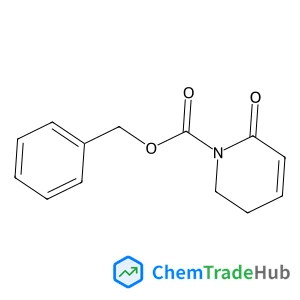
![1-oxaspiro[4.4]nonan-6-one structure](https://static.chemtradehub.com/structs/134/134179-01-4-e051.webp "1-oxaspiro[4.4]nonan-6-one structure")





