













Tavorite-FeSO4F as a potential cathode material for Mg ion batteries: a first principles calculation
Literature Information
Publication Date
2014-09-03
DOI
10.1039/C4CP03176H
Impact Factor
3.676
Authors
Jiandong Wu, Guohua Gao, Guangming Wu, Bo Liu, Huiyu Yang, Xiaowei Zhou, Jichao Wang
View Original
Abstract
The electrochemical and Mg ion diffusion properties of tavorite-Mg0.5FeSO4F were studied by using first principles calculations. A discharge voltage of about 2.52 V versus Mg/Mg2+ corresponding to the redox couples of Fe3+/Fe2+ was predicted for tavorite-Mg0.5FeSO4F, and the experimental diffusion coefficient for the Mg-vacancy in Mg0.5−xFeSO4F is expected to be of the same order of magnitude as that of the Li-vacancy in Li1−xFeSO4F.
Recommended Journals
Related Literature
Supramolecular isomerism in spin crossover networks with aurophilic interactions
Ana Galet, M. Carmen Muñoz, Víctor Martínez, José Antonio Real
2004-09-07
Communication
DOI: 10.1039/B409974E
Photochemical polymerization of thiophene derivatives in aqueous solution
Sergey A. Piletsky, Elena V. Piletska, Kal Karim, Frank Davis, Seamus P. J. Higson, Anthony P. F. Turner
2004-08-20
Communication
DOI: 10.1039/B408387C
Highly efficient epoxidation method of olefins with hydrogen peroxide as terminal oxidant, bicarbonate as a co-catalyst and oxodiperoxo molybdenum(vi) complex as catalyst
Narottam Gharah, Santu Chakraborty, Alok K. Mukherjee, Ramgopal Bhattacharyya
2004-09-28
Communication
DOI: 10.1039/B408946D
A novel strategy for the preparation of arylhydroxylamines: chemoselective reduction of aromatic nitro compounds using bakers' yeast
Feng Li, Jingnan Cui, Rong Zhang
2004-09-07
Communication
DOI: 10.1039/B408566C
Novel Pt/CeO2/C catalysts for electrooxidation of alcohols in alkaline media
Changwei Xu, Pei Kang Shen
2004-08-25
Communication
DOI: 10.1039/B408589B
Bundles of identical double-walled carbon nanotubes
J.-F. Colomer, L. Henrard, P. Launois, G. Van Tendeloo, A. A. Lucas, Ph. Lambin
2004-09-30
Communication
DOI: 10.1039/B410930A
The first samarium(ii)-mediated aryl radical cyclisation onto an aromatic ring
Hiroaki Ohno, Hiroki Iwasaki, Toru Eguchi, Tetsuaki Tanaka
2004-08-23
Communication
DOI: 10.1039/B410457A
An unprecedented intramolecular coupling of o-carboranyl and cyclopentadienyl. Synthesis and structural characterization of a ruthenium complex containing a novel doubly-bridged cyclopentadienyl-carboranyl ligand
Yi Sun, Hoi-Shan Chan, Pierre H. Dixneuf, Zuowei Xie
2004-09-30
Communication
DOI: 10.1039/B409772F
Molecular tectonics: design of luminescent H-bonded molecular networks
Sylvie Ferlay, Mir Wais Hosseini, Véronique Bulach, Jean-Marc Planeix
2004-09-07
Communication
DOI: 10.1039/B410459P
A C3-symmetric molecular scaffold for the construction of large receptors
Gebhard Haberhauer, Thomas Oeser, Frank Rominger
2004-08-06
Communication
DOI: 10.1039/B406335J
You might also like
Compound Q&A
What is the market or research trend for N-(4-Methoxybenzyl)-2-pyridinamine (CAS: 52818-63-0)?
N-(4-Methoxybenzyl)-2-pyridinamine (CAS: 52818-63-0) is increasingly being used ...
52818-63-0N-(4-Methoxybenzyl)-...
Compound Q&A
What precautions should be taken when handling Ethyl 4-(2-chlorophenyl)-1,3-thiazole-2-carboxylate (CAS: 1050507-06-6)?
When handling Ethyl 4-(2-chlorophenyl)-1,3-thiazole-2-carboxylate, appropriate p...
1050507-06-6Ethyl 4-(2-chlorophe...
Compound Q&A
What regulatory guidelines apply to diethyldiselane (CAS: 628-39-7)?
Diethyldiselane (CAS: 628-39-7) is classified under the Globally Harmonized Syst...
628-39-7Diethyldiselane
Compound Q&A
What is the market or research trend for oxocopper (CAS: 12053-18-8)?
The market for oxocopper (CAS: 12053-18-8) is primarily driven by its use in cat...
12053-18-8oxocopper; oxo-(oxoc...
Compound Q&A
What is the market or research trend for 5-{[(2-Methyl-2-propanyl)oxy]carbonyl}-5-azaspiro[2.4]heptane-7-carboxylic acid?
The market for 5-{[(2-Methyl-2-propanyl)oxy]carbonyl}-5-azaspiro[2.4]heptane-7-c...
1268519-54-55-{[(2-Methyl-2-prop...
Compound Q&A
What is 2-(1-Pyrrolidinyl)-4-pyridinamine (CAS: 35981-63-6)?
2-(1-Pyrrolidinyl)-4-pyridinamine is a chemical compound with the CAS number 359...
35981-63-62-(1-Pyrrolidinyl)-4...
Compound Q&A
What are the physical and chemical properties of 2-(3-Pyridinyl)-1-azabicyclo[2.2.2]octane (CAS: 91556-75-1)?
2-(3-Pyridinyl)-1-azabicyclo[2.2.2]octane (CAS: 91556-75-1) is a crystalline sol...
91556-75-12-(3-Pyridinyl)-1-az...
Compound Q&A
How is (S)-Alpha-allyl-proline hydrochloride (CAS: 129704-91-2) typically synthesized?
(S)-Alpha-allyl-proline hydrochloride is usually synthesized via a Wittig reacti...
129704-91-2(S)-Alpha-allyl-prol...
Compound Q&A
What is 3-Methyl-1,2-oxazole-5-carboxylic acid (CAS: 4857-42-5)?
3-Methyl-1,2-oxazole-5-carboxylic acid (CAS: 4857-42-5) is an organic compound w...
4857-42-53-Methyl-1,2-oxazole...
Compound Q&A
How is Lys-SMCC-DM1 (CAS: 1281816-04-3) typically synthesized?
Lys-SMCC-DM1 is synthesized via a multi-step process involving the coupling of S...
1281816-04-3Lys-SMCC-DM1
Source Journal
Physical Chemistry Chemical Physics

CiteScore:
5.5
Self-citation Rate:
10.3%
Articles per Year:
3036
Physical Chemistry Chemical Physics (PCCP) is an international journal co-owned by 19 physical chemistry and physics societies from around the world. This journal publishes original, cutting-edge research in physical chemistry, chemical physics and biophysical chemistry. To be suitable for publication in PCCP, articles must include significant innovation and/or insight into physical chemistry; this is the most important criterion that reviewers and Editors will judge against when evaluating submissions. The journal has a broad scope and welcomes contributions spanning experiment, theory, computation and data science. Topical coverage includes spectroscopy, dynamics, kinetics, statistical mechanics, thermodynamics, electrochemistry, catalysis, surface science, quantum mechanics, quantum computing and machine learning. Interdisciplinary research areas such as polymers and soft matter, materials, nanoscience, energy, surfaces/interfaces, and biophysical chemistry are welcomed if they demonstrate significant innovation and/or insight into physical chemistry. Joined experimental/theoretical studies are particularly appreciated when complementary and based on up-to-date approaches.
Recommended Compounds
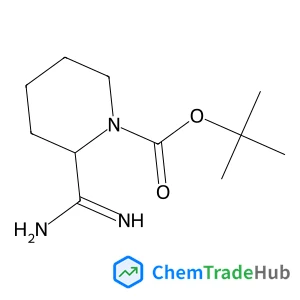
2-Methyl-2-propanyl 2-carbamimidoyl-1-piperidinecarboxylate
CAS Number:
1258640-98-0
Molecular Formula:
C11H21N3O2
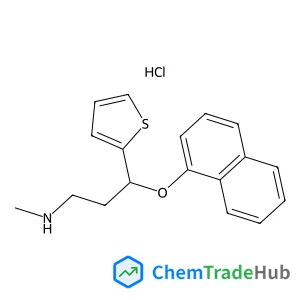
N-Methyl-3-(1-naphthyloxy)-3-(2-thienyl)-1-propanamine hydrochloride (1:1)
CAS Number:
1188266-11-6
Molecular Formula:
C18H20ClNOS
Recommended Suppliers






Disclaimer
This page provides academic journal information for reference and research purposes only. We are not affiliated with any journal publishers and do not handle publication submissions. For publication-related inquiries, please contact the respective journal publishers directly.
If you notice any inaccuracies in the information displayed, please contact us at support@chemtradehub.com. We will promptly review and address your concerns.