


Photoisomerization and structural dynamics of two nitrosylruthenium complexes: a joint study by NMR and nonlinear IR spectroscopies
Literature Information
Publication Date
2014-09-09
DOI
10.1039/C4CP02298J
Impact Factor
3.676
Authors
Jianru Wang, Yan Zhao, Xiaoyan Qiao
View Original
Abstract
In this work, the photoisomerization and structural dynamics of two isomeric nitrosylruthenium(II) complexes [Ru(OAc)(2cqn)2NO] (H2cqn = 2-chloro-8-quinolinol) in CDCl3 and DMSO are examined using NMR and IR spectroscopic methods. The two N atoms in the 2cqn ligand are in trans position in the synthesized cis-1 isomer, while they are in cis position in the cis-2 isomer. Kinetics monitored by NMR spectroscopy shows that the rate constant of photoisomerization from cis-2 to cis-1 isomer depends on the wavelength of irradiation and solvent polarity; it proceeds faster on irradiating near the absorption peak in the UV-Vis region, and also in more polar solvents (DMSO). Density functional theory computation indicates that the peculiarity of [Ru(II)–NO+] group affects the structure and reactivity of the nitrosylruthenium complexes. Using the nitrosyl stretching (νNO) to be vibrational probe, the structural dynamics and structural distributions of the cis-1 and cis-2 isomers are examined by steady-state linear infrared and ultrafast two-dimensional infrared (2D IR) spectroscopies. The structural and photochemical aspects of the observed spectroscopic parameters are discussed in terms of solute–solvent interactions for the two nitrosylruthenium complexes.
Recommended Journals

Science Progress

European Journal of Wood and Wood Products

Russian Chemical Reviews

Pure and Applied Chemistry

Journal of Heterocyclic Chemistry

Journal of Medicinal Chemistry

Proceedings of the National Academy of Sciences of the United States of America

Journal of Catalysis

Pharmacological Reviews

Journal of Organometallic Chemistry
Related Literature
Motion of methanol adsorbed in porous coordination polymer with paramagnetic metal ions
Satoshi Horike, Ryotaro Matsuda, Ryo Kitaura, Susumu Kitagawa, Takahiro Iijima, Kazunaka Endo, Yoshiki Kubota, Masaki Takata
2004-08-20
Communication
DOI: 10.1039/B406883A
Synthesis of core–shell polyurethane–ureananoparticles containing 4,4′-methylenedi-p-phenyl diisocyanate and isophorone diisocyanate by self-assembled neutralization emulsification
In Woo Cheong, Jung Hyun Kim
2004-09-14
Communication
DOI: 10.1039/B409755F
Strongly red-fluorescent novel donor–π-bridge–acceptor–π-bridge–donor (D–π–A–π–D) type 2,1,3-benzothiadiazoles with enhanced two-photon absorption cross-sections
Shin-ichiro Kato, Taisuke Matsumoto, Tsutomu Ishi-i, Thies Thiemann, Motoyuki Shigeiwa, Hideki Gorohmaru, Shuichi Maeda, Yoshiro Yamashita, Shuntaro Mataka
2004-09-07
Communication
DOI: 10.1039/B410016F
Water reduction and oxidation on Pt–Ru/Y2Ta2O5N2catalyst under visible light irradiation
Meiying Liu, Wansheng You, Zhibin Lei, Guohua Zhou, Jianjun Yang, Guopeng Wu, Guijun Ma, Guoyou Luan, Tuyoshi Takata, Michikazu Hara, Can Li
2004-08-19
Communication
DOI: 10.1039/B407892F
Advanced selective optical sensors based on periodically organized mesoporous hybrid silica thin films
Lionel Nicole, Cédric Boissière, David Grosso, Peter Hesemann, Joël Moreau, Clément Sanchez
2004-09-06
Communication
DOI: 10.1039/B408869G
Reversible folding/unfolding of linear molecular strands into helical channel-like complexes upon proton-modulated binding and release of metal ions
Adrian-Mihail Stadler, Nathalie Kyritsakas, Jean-Marie Lehn
2004-08-11
Communication
DOI: 10.1039/B407168A
Self-assembled zinc(ii) Schiff basepolymers for applications in polymer light-emitting devices
Chi-Chung Kwok, Sze-Chit Yu, Iona H. T. Sham, Chi-Ming Che
2004-10-20
Communication
DOI: 10.1039/B412762E
Secondary coordination sphere controlled reversible geometry reorganisations in copper(ii) complexes
John Fielden, De-Liang Long, Leroy Cronin
2004-08-20
Communication
DOI: 10.1039/B407229D
Liquid poly(ethylene glycol) and supercritical carbon dioxide as a biphasic solvent system for lipase-catalyzed esterification
Manfred T. Reetz, Wolfgang Wiesenhöfer
2004-10-18
Communication
DOI: 10.1039/B412049C
A very large Rh–Rh bond shortening on excitation of the [Rh2(1,8-diisocyano-p-menthane)4]2+ ion by time-resolved synchrotron X-ray diffraction
Yu-Sheng Chen, Tim Graber
2004-08-19
Communication
DOI: 10.1039/B409463H
You might also like
Compound Q&A
How should waste containing 6-Chloro-5-(2'-hydroxy-3'-methoxy-4-biphenylyl)-3-(3-methoxyphenyl)-1H-pyrrolo[3,2-d]pyrimidine-2,4(3H,5H)-dione (CAS: 1346607-05-3) be handled?
Waste containing 6-Chloro-5-(2'-hydroxy-3'-methoxy-4-biphenylyl)-3-(3-methoxyphe...
1346607-05-36-Chloro-5-(2'-hydro...
Compound Q&A
What are the main uses of (3alpha,5alpha)-3-Hydroxypregnane-11,20-dione (CAS: 23930-19-0)?
(3alpha,5alpha)-3-Hydroxypregnane-11,20-dione is primarily used in the pharmaceu...
23930-19-0(3alpha,5alpha)-3-Hy...
Compound Q&A
What is the market or research trend for 4-Amino-6-chloro-2-pyridinecarboxylic acid (CAS: 546141-56-4)?
The market for 4-Amino-6-chloro-2-pyridinecarboxylic acid (CAS: 546141-56-4) is ...
546141-56-44-Amino-6-chloro-2-p...
Compound Q&A
Are there alternatives to (2-Benzoylethyl)trimethylammonium chloride (CAS: 24472-88-6) in synthesis?
Alternatives to (2-Benzoylethyl)trimethylammonium chloride (CAS: 24472-88-6) in ...
24472-88-6(2-Benzoylethyl)trim...
Compound Q&A
Is N-[4-Nitro-3-(trifluoromethyl)phenyl]acetamide (CAS: 393-12-4) safe?
N-[4-Nitro-3-(trifluoromethyl)phenyl]acetamide (CAS: 393-12-4) is generally safe...
393-12-4N-[4-Nitro-3-(triflu...
Compound Q&A
Are there alternatives to [(4R,5R,6S)-5-hydroxy-10-imino-3,7-dioxa-1,9-diazatricyclo[6.4.0.02,6]dodeca-8,11-dien-4-yl]methyl dihydrogen phosphate (CAS: 39679-56-6) in synthesis?
Alternative reagents such as other phosphates or similar functional groups can b...
39679-56-6[(4R,5R,6S)-5-hydrox...
Compound Q&A
Are there alternatives to N,N'-Bis(3-aminopropyl)-1,3-propanediamine (CAS: 4605-14-5) in synthesis?
There are alternatives to N,N'-Bis(3-aminopropyl)-1,3-propanediamine (CAS: 4605-...
4605-14-5N,N'-Bis(3-aminoprop...
Compound Q&A
What precautions should be taken when handling Aluminium trihexadecanoate (CAS: 555-35-1)?
When handling Aluminium trihexadecanoate, it is important to use appropriate per...
555-35-1Aluminium trihexadec...
Compound Q&A
What is (1,1-Dioxido-3-oxo-1,2-benzothiazol-2(3H)-yl)acetic acid (CAS: 52188-11-1)?
(1,1-Dioxido-3-oxo-1,2-benzothiazol-2(3H)-yl)acetic acid is a chemical compound ...
52188-11-1(1,1-Dioxido-3-oxo-1...
Compound Q&A
Are there alternatives to 5,5-dimethyloxolan-2-one (CAS: 3123-97-5) in synthesis?
Several alternatives to 5,5-dimethyloxolan-2-one (CAS: 3123-97-5) can be used in...
3123-97-55,5-dimethyloxolan-2...
Source Journal
Physical Chemistry Chemical Physics

CiteScore:
5.5
Self-citation Rate:
10.3%
Articles per Year:
3036
Physical Chemistry Chemical Physics (PCCP) is an international journal co-owned by 19 physical chemistry and physics societies from around the world. This journal publishes original, cutting-edge research in physical chemistry, chemical physics and biophysical chemistry. To be suitable for publication in PCCP, articles must include significant innovation and/or insight into physical chemistry; this is the most important criterion that reviewers and Editors will judge against when evaluating submissions. The journal has a broad scope and welcomes contributions spanning experiment, theory, computation and data science. Topical coverage includes spectroscopy, dynamics, kinetics, statistical mechanics, thermodynamics, electrochemistry, catalysis, surface science, quantum mechanics, quantum computing and machine learning. Interdisciplinary research areas such as polymers and soft matter, materials, nanoscience, energy, surfaces/interfaces, and biophysical chemistry are welcomed if they demonstrate significant innovation and/or insight into physical chemistry. Joined experimental/theoretical studies are particularly appreciated when complementary and based on up-to-date approaches.
Recommended Compounds


(3alpha,5beta,6alpha,7alpha)-6-Ethylcholane-3,7,24-triol
CAS Number:
1537866-49-1
Molecular Formula:
C26H46O3
![1,10-bis(3,5-dimethylphenyl)-12-hydroxy-4,5,6,7-tetrahydroiindeno[7,1-de:1',7'-fg][1,3,2]dioxaphosphocine 12-oxide structure](https://static.chemtradehub.com/structs/141/1412439-82-7-b9a9.webp "1,10-bis(3,5-dimethylphenyl)-12-hydroxy-4,5,6,7-tetrahydroiindeno[7,1-de:1',7'-fg][1,3,2]dioxaphosphocine 12-oxide structure")
1,10-bis(3,5-dimethylphenyl)-12-hydroxy-4,5,6,7-tetrahydroiindeno[7,1-de:1',7'-fg][1,3,2]dioxaphosphocine 12-oxide
CAS Number:
1412439-82-7
Molecular Formula:
C33H31O4P
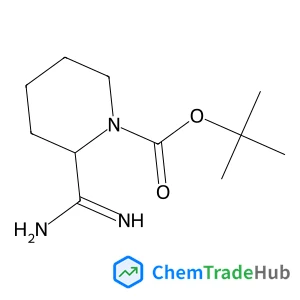
2-Methyl-2-propanyl 2-carbamimidoyl-1-piperidinecarboxylate
CAS Number:
1258640-98-0
Molecular Formula:
C11H21N3O2
Recommended Suppliers





Disclaimer
This page provides academic journal information for reference and research purposes only. We are not affiliated with any journal publishers and do not handle publication submissions. For publication-related inquiries, please contact the respective journal publishers directly.
If you notice any inaccuracies in the information displayed, please contact us at support@chemtradehub.com. We will promptly review and address your concerns.