


Ab initio Kinetic Monte Carlo simulations of dissolution at the NaCl–water interface
Literature Information
Publication Date
2014-09-11
DOI
10.1039/C4CP02375G
Impact Factor
3.676
Authors
Peter Spijker, Nico Holmberg, Adam S. Foster
View Original
Abstract
We have used ab initio molecular dynamics (AIMD) simulations to study the interaction of water with the NaCl surface. As expected, we find that water forms several ordered hydration layers, with the first hydration layer having water molecules aligned so that oxygen atoms are on average situated above Na sites. In an attempt to understand the dissolution of NaCl in water, we have then combined AIMD with constrained barrier searches, to calculate the dissolution energetics of Na+ and Cl− ions from terraces, steps, corners and kinks of the (100) surface. We find that the barrier heights show a systematic reduction from the most stable flat terrace sites, through steps to the smallest barriers for corner and kink sites. Generally, the barriers for removal of Na+ ions are slightly lower than for Cl− ions. Finally, we use our calculated barriers in a Kinetic Monte Carlo as a first order model of the dissolution process.
Recommended Journals

Journal of Organometallic Chemistry

Organic Preparations and Procedures International

Proceedings of the National Academy of Sciences of the United States of America

Nature

Journal of Medicinal Chemistry

Planta Medica

Helvetica Chimica Acta

Journal of Physics and Chemistry of Solids

Journal of Catalysis

Science Progress
Related Literature
Synthesis of Ag2S quantum dots in water-in-CO2 microemulsions
2004-09-30
Communication
DOI: 10.1039/B410700D
Fabrication and photoluminescence of chemically stable La2O3:Eu3+–La2Sn2O7 core–shell-structured nanoparticles
Eiji Hosono, Shinobu Fujihara
2004-08-13
Communication
DOI: 10.1039/B408495K
Preparation of poly(3,4-ethylenedioxythiophene) (PEDOT) coated silica core–shell particles and PEDOT hollow particles
Moon Gyu Han, Stephen H. Foulger
2004-08-20
Communication
DOI: 10.1039/B409396H
Supramolecular isomerism in spin crossover networks with aurophilic interactions
Ana Galet, M. Carmen Muñoz, Víctor Martínez, José Antonio Real
2004-09-07
Communication
DOI: 10.1039/B409974E
Electrophilicity parameters for σ-complexation by uncharged electron-deficient aromatic and heteroaromatic structures
François Terrier, Régis Goumont, Taoufik Boubaker, Erwin Buncel
2004-09-30
Communication
DOI: 10.1039/B410356D
A regioregular polyalkylthiophene bearing covalently-linked biotin, and its interaction with avidin in solution and in thin films
Fouzi Mouffouk, Simon J. Higgins, Stewart J. Brown, Naser Sedghi, Bill Eccleston, Stuart Reeman
2004-09-06
Communication
DOI: 10.1039/B408935A
Photochemical polymerization of thiophene derivatives in aqueous solution
Sergey A. Piletsky, Elena V. Piletska, Kal Karim, Frank Davis, Seamus P. J. Higson, Anthony P. F. Turner
2004-08-20
Communication
DOI: 10.1039/B408387C
Liquid poly(ethylene glycol) and supercritical carbon dioxide as a biphasic solvent system for lipase-catalyzed esterification
Manfred T. Reetz, Wolfgang Wiesenhöfer
2004-10-18
Communication
DOI: 10.1039/B412049C
A mixed ladderane/n-alkyl glycerol diether membrane lipid in an anaerobic ammonium-oxidizing bacterium
Jaap S. Sinninghe Damsté, W. Irene C. Rijpstra, Marc Strous, Mike S. M. Jetten, Olivier R. P. David, Jan A. J. Geenevasen, Jan H. van Maarseveen
2004-09-30
Communication
DOI: 10.1039/B409806D
A new organic superconductor β-(meso-DMBEDT-TTF)2PF6
Tadashi Kawamoto, Takehiko Mori, Hiroshi Moriyama, Yutaka Nishio, Koji Kajita
2004-09-21
Communication
DOI: 10.1039/B409631B
You might also like
Compound Q&A
What is the market or research trend for N-(4-Methoxybenzyl)-2-pyridinamine (CAS: 52818-63-0)?
N-(4-Methoxybenzyl)-2-pyridinamine (CAS: 52818-63-0) is increasingly being used ...
52818-63-0N-(4-Methoxybenzyl)-...
Compound Q&A
What precautions should be taken when handling Ethyl 4-(2-chlorophenyl)-1,3-thiazole-2-carboxylate (CAS: 1050507-06-6)?
When handling Ethyl 4-(2-chlorophenyl)-1,3-thiazole-2-carboxylate, appropriate p...
1050507-06-6Ethyl 4-(2-chlorophe...
Compound Q&A
What regulatory guidelines apply to diethyldiselane (CAS: 628-39-7)?
Diethyldiselane (CAS: 628-39-7) is classified under the Globally Harmonized Syst...
628-39-7Diethyldiselane
Compound Q&A
What is the market or research trend for oxocopper (CAS: 12053-18-8)?
The market for oxocopper (CAS: 12053-18-8) is primarily driven by its use in cat...
12053-18-8oxocopper; oxo-(oxoc...
Compound Q&A
What is the market or research trend for 5-{[(2-Methyl-2-propanyl)oxy]carbonyl}-5-azaspiro[2.4]heptane-7-carboxylic acid?
The market for 5-{[(2-Methyl-2-propanyl)oxy]carbonyl}-5-azaspiro[2.4]heptane-7-c...
1268519-54-55-{[(2-Methyl-2-prop...
Compound Q&A
What is 2-(1-Pyrrolidinyl)-4-pyridinamine (CAS: 35981-63-6)?
2-(1-Pyrrolidinyl)-4-pyridinamine is a chemical compound with the CAS number 359...
35981-63-62-(1-Pyrrolidinyl)-4...
Compound Q&A
What are the physical and chemical properties of 2-(3-Pyridinyl)-1-azabicyclo[2.2.2]octane (CAS: 91556-75-1)?
2-(3-Pyridinyl)-1-azabicyclo[2.2.2]octane (CAS: 91556-75-1) is a crystalline sol...
91556-75-12-(3-Pyridinyl)-1-az...
Compound Q&A
How is (S)-Alpha-allyl-proline hydrochloride (CAS: 129704-91-2) typically synthesized?
(S)-Alpha-allyl-proline hydrochloride is usually synthesized via a Wittig reacti...
129704-91-2(S)-Alpha-allyl-prol...
Compound Q&A
What is 3-Methyl-1,2-oxazole-5-carboxylic acid (CAS: 4857-42-5)?
3-Methyl-1,2-oxazole-5-carboxylic acid (CAS: 4857-42-5) is an organic compound w...
4857-42-53-Methyl-1,2-oxazole...
Compound Q&A
How is Lys-SMCC-DM1 (CAS: 1281816-04-3) typically synthesized?
Lys-SMCC-DM1 is synthesized via a multi-step process involving the coupling of S...
1281816-04-3Lys-SMCC-DM1
Source Journal
Physical Chemistry Chemical Physics

CiteScore:
5.5
Self-citation Rate:
10.3%
Articles per Year:
3036
Physical Chemistry Chemical Physics (PCCP) is an international journal co-owned by 19 physical chemistry and physics societies from around the world. This journal publishes original, cutting-edge research in physical chemistry, chemical physics and biophysical chemistry. To be suitable for publication in PCCP, articles must include significant innovation and/or insight into physical chemistry; this is the most important criterion that reviewers and Editors will judge against when evaluating submissions. The journal has a broad scope and welcomes contributions spanning experiment, theory, computation and data science. Topical coverage includes spectroscopy, dynamics, kinetics, statistical mechanics, thermodynamics, electrochemistry, catalysis, surface science, quantum mechanics, quantum computing and machine learning. Interdisciplinary research areas such as polymers and soft matter, materials, nanoscience, energy, surfaces/interfaces, and biophysical chemistry are welcomed if they demonstrate significant innovation and/or insight into physical chemistry. Joined experimental/theoretical studies are particularly appreciated when complementary and based on up-to-date approaches.
Recommended Compounds
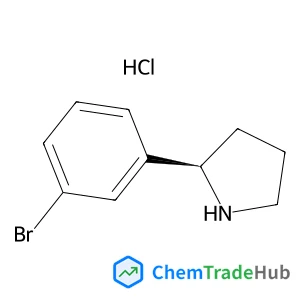
(2R)-2-(3-Bromophenyl)pyrrolidine hydrochloride (1:1)
CAS Number:
1391550-13-2
Molecular Formula:
C10H13BrClN
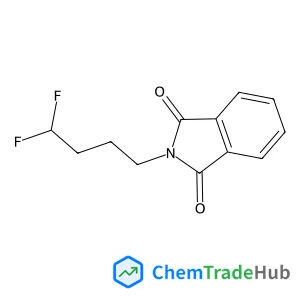
2-(4,4-Difluorobutyl)-1H-isoindole-1,3(2H)-dione
CAS Number:
1265341-14-7
Molecular Formula:
C12H11F2NO2
Recommended Suppliers





Disclaimer
This page provides academic journal information for reference and research purposes only. We are not affiliated with any journal publishers and do not handle publication submissions. For publication-related inquiries, please contact the respective journal publishers directly.
If you notice any inaccuracies in the information displayed, please contact us at support@chemtradehub.com. We will promptly review and address your concerns.