


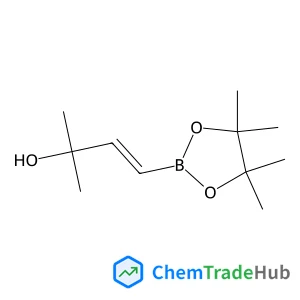
(E)-2-methyl-4-(4,4,5,5-tetramethyl-1,3,2-dioxaborolan-2-yl)but-3-en-2-ol
CAS Number:
581802-26-8
Molecular Formula:
C11H21BO3
Ting-Yu Chen
The reaction CH2I + O2 has been widely employed recently for the production of the simplest Criegee intermediate CH2OO in laboratories, but the detailed dynamics of this reaction have been little explored. Infrared emission of several products of this reaction, initiated on irradiation of CH2I2 and O2 (∼8 Torr) in a flowing mixture at 308 or 248 nm, was recorded with a step-scan Fourier-transform spectrometer; possible routes of formation were identified according to the observed vibrational distribution of products and published theoretical potential-energy schemes. Upon irradiation at 308 nm, Boltzmann distributions of CO (v ≤ 5, J ≤ 19) with an average vibrational energy of 32 ± 3 kJ mol−1 and OH (v ≤ 3, J ≤ 5.5) with an average vibrational energy of 29 ± 4 kJ mol−1 were observed and assigned to the decomposition of HCOOH* to form CO + H2O and OH + HCO, respectively. The broadband emission of CO2 was simulated with two vibrational distributions of average energies (91 ± 4) and (147 ± 8) kJ mol−1 and assigned to be produced from the decomposition of HCOOH* and methylene bis(oxy), respectively. Upon irradiation of samples at 248 nm, the emission of OH and CO2 showed similar distributions with slightly greater energies, but the distribution of CO (v ≤ 11, J ≤ 19) became bimodal with average vibrational energies of (23 ± 4) and (107 ± 29) kJ mol−1, and branching (56 ± 5) : (44 ± 5). The additional large-v component is assigned to be produced from a secondary reaction HCO + O2 to form CO + HO2; HCO is a coproduct of OH. The branching between CO and OH is (50 ± 5) : (50 ± 5) at 308 nm and (64 ± 5) : (36 ± 4) at 248 nm, consistent with the mechanism according to which an additional channel to produce CO opens at 248 nm. Highly internally excited H2CO was also observed. With O2 at 16 Torr, the extrapolated nascent internal distributions are similar to those with O2 at 8 Torr except for a slight quenching effect.

Pharmacological Reviews

Science Progress

European Journal of Wood and Wood Products

Journal of Physics and Chemistry of Solids

Journal of Medicinal Chemistry

Science

Israel Journal of Chemistry

Journal of Heterocyclic Chemistry

Proceedings of the National Academy of Sciences of the United States of America

Organic Preparations and Procedures International
Yi Xia, Rui Wang, Hui Qin, Yi Zhang, Lang Ma, Hong Tan, Zhongwei Gu
DOI: 10.1039/C4PY00870G
Thaissa de Camargo Chaparro, Franck D'Agosto, Muriel Lansalot, Amilton Martins Dos Santos, Elodie Bourgeat-Lami
DOI: 10.1039/C4PY00362D
Longhe Zhang, Lydia R. Cool, Chrys Wesdemiotis, R. A. Weiss, Kevin A. Cavicchi
DOI: 10.1039/C4PY90062F
Patricia R. Bachler, Kaitlyn E. Forry, Chelsea A. Sparks, Michael D. Schulz, Kenneth B. Wagener, Brent S. Sumerlin
DOI: 10.1039/C6PY00819D
Saswati Ghosh Roy, Priyadarsi De
DOI: 10.1039/C4PY00766B
DOI: 10.1039/C6PY00335D
Xiaodong Zhuang, Wuxue Zhao, Fan Zhang, Yu Cao, Feng Liu, Shuai Bi
DOI: 10.1039/C6PY00561F
Yves Gnanou
DOI: 10.1039/C6PY00365F
Huili Liu, Dongyu Bai, Qin Zhang, Ke Wang, Hua Deng, Feng Chen, Qiang Fu
DOI: 10.1039/C4PY00700J
When considering alternatives to 1-(4-Chlorophenyl)-N-hydroxymethanimine (CAS: 3...
This compound should be stored in a cool, dry place away from direct sunlight. I...
3-(4-Bromophenyl)-5-(2-fluorophenyl)-1,2,4-oxadiazole is synthesized through a m...
5-Chloro-2-(4-chlorophenyl)-4-methyl-6-[3-(1-piperidinyl)propoxy]pyrimidine (CAS...
2-Chloro-4-(difluoromethoxy)pyridine is used in the pharmaceutical industry for ...
3-Chloro-6-methylpyridazine (CAS: 1121-79-5) is classified under the Globally Ha...
Several alternatives can be used in the synthesis of Methyl 4,5-dimethyl-2-nitro...
Alternatives to (2E,2'E)-3,3'-(1,4-Phenylene)bisacrylaldehyde include other acry...
3-Amino-5-chloropyridin-2-ol hydrochloride is an organic compound with the CAS n...
When handling 6,7-Difluoro-2,3-dihydro-4H-chromen-4-one, it is essential to wear...

Physical Chemistry Chemical Physics (PCCP) is an international journal co-owned by 19 physical chemistry and physics societies from around the world. This journal publishes original, cutting-edge research in physical chemistry, chemical physics and biophysical chemistry. To be suitable for publication in PCCP, articles must include significant innovation and/or insight into physical chemistry; this is the most important criterion that reviewers and Editors will judge against when evaluating submissions. The journal has a broad scope and welcomes contributions spanning experiment, theory, computation and data science. Topical coverage includes spectroscopy, dynamics, kinetics, statistical mechanics, thermodynamics, electrochemistry, catalysis, surface science, quantum mechanics, quantum computing and machine learning. Interdisciplinary research areas such as polymers and soft matter, materials, nanoscience, energy, surfaces/interfaces, and biophysical chemistry are welcomed if they demonstrate significant innovation and/or insight into physical chemistry. Joined experimental/theoretical studies are particularly appreciated when complementary and based on up-to-date approaches.
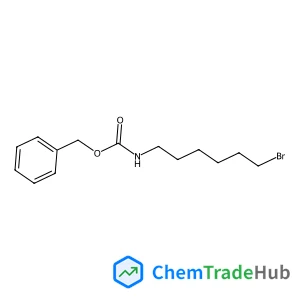
![(2S)-2-{[(9H-Fluoren-9-ylmethoxy)carbonyl]amino}-4-(methylselanyl)butanoic acid structure](https://static.chemtradehub.com/structs/121/1217852-49-7-f252.webp "(2S)-2-{[(9H-Fluoren-9-ylmethoxy)carbonyl]amino}-4-(methylselanyl)butanoic acid structure")
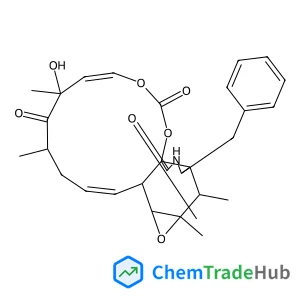
![4-[(3-Chloro-2-fluorophenyl)amino]-7-methoxy-6-quinazolinyl acetate structure](https://static.chemtradehub.com/structs/740/740081-22-5-f58f.webp "4-[(3-Chloro-2-fluorophenyl)amino]-7-methoxy-6-quinazolinyl acetate structure")






