












Modular segmented hyperbranched copolymers
Literature Information
Publication Date
2016-06-06
DOI
10.1039/C6PY00819D
Impact Factor
5.582
Authors
Patricia R. Bachler, Kaitlyn E. Forry, Chelsea A. Sparks, Michael D. Schulz, Kenneth B. Wagener, Brent S. Sumerlin
View Original
Abstract
Modular segmented hyperbranched polymers, amenable to facile post-polymerization functionalization, were created via two distinct approaches. Self-condensing vinyl polymerization via reversible addition–fragmentation chain transfer (RAFT) polymerization and RAFT polymerization with a divinyl comonomer were employed to create well-defined highly branched materials containing activated esters amenable to highly efficient functionalization in a modular manner.
Related Literature
One-pot synthesis of PLA-b-PHEA via sequential ROP and RAFT polymerizations
Diana Kalden, Matthias Westerhausen
2017-09-04
Paper
DOI: 10.1039/C7PY01176H
Analysis of the nonlinear dynamics of a direct methanol fuel cell
Thorsten Schultz
2000-11-23
Paper
DOI: 10.1039/B007283O
(Co)polymers containing boron difluoride 3-cyanoformazanate complexes: emission enhancement via random copolymerization
Samantha Novoa, Joe B. Gilroy
2017-08-10
Paper
DOI: 10.1039/C7PY01120B
The influence of orbital asymmetry on the kinetics of the gas-phase reactions of ozone with unsaturated compounds
David Johnson, Andrew R. Rickard, Charlotte D. McGill, George Marston
2000-01-25
Paper
DOI: 10.1039/A908701J
FTIR study of CO and NO adsorption and coadsorption on a Cu/SiO2 catalyst: Probing the oxidation state of copper
H. Knözinger
2001-02-15
Paper
DOI: 10.1039/B009649K
Distribution thermodynamics of 1,10-phenanthroline in non-ionic surfactant Triton X-100 micelles
Ryo Kanzaki, Yasuhiro Umebayashi, Kenshi Uemura, Shin-ichi Ishiguro
2001-02-06
Paper
DOI: 10.1039/B009132O
The selective population of the vibrational levels of thioformaldehyde
Céline Léonard, Gilberte Chambaud, Pavel Rosmus, Nicholas C. Handy
2001-01-23
Paper
DOI: 10.1039/B008454I
Mechanistic causes of the hydrocarbon effect on the activity of Ag–Al2O3 catalyst for the selective reduction of NO
Ken-ichi Shimizu, Junji Shibata, Atsushi Satsuma, Tadashi Hattori
2001-02-05
Paper
DOI: 10.1039/B007382M
Cyclometalated Pt complex-based random terpolymers for efficient polymer solar cells
Zheng Wan, Yanan Liu, Shifan Wang, Yu Zhong, Cheng Li, Zhiguo Zhang, Guichuan Xing, Sven Huettner, Youtian Tao, Yongfang Li
2017-07-11
Paper
DOI: 10.1039/C7PY00924K
Partial molar volumes of linear hydrocarbons in methanol in the very dilute region. Intermolecular interactions. H-bond effects
Ester F. G. Barbosa, Susana M. C. Sousa, M. Soledade C. S. Santos, Isabel M. S. Lampreia
2001-01-19
Paper
DOI: 10.1039/B008685L
You might also like
Compound Q&A
Are there alternatives to 1-(4-Chlorophenyl)-N-hydroxymethanimine (CAS: 3848-36-0) in synthesis?
When considering alternatives to 1-(4-Chlorophenyl)-N-hydroxymethanimine (CAS: 3...
3848-36-01-(4-Chlorophenyl)-N...
Compound Q&A
How should (1R,9S,10S,12S,14E,16S,19R,20R,21S,22R)-3,9,21-Trihydroxy-5,10,12,14,16,20,22-heptamethyl-23,24-dioxatetracyclo[17.3.1.1~6,9~.0~2,7~]tetracosa-2,5,7,14-tetraen-4-one (CAS: 183202-73-5) be stored?
This compound should be stored in a cool, dry place away from direct sunlight. I...
183202-73-5(1R,9S,10S,12S,14E,1...
Compound Q&A
How is 3-(4-Bromophenyl)-5-(2-fluorophenyl)-1,2,4-oxadiazole (CAS: 419553-16-5) typically synthesized?
3-(4-Bromophenyl)-5-(2-fluorophenyl)-1,2,4-oxadiazole is synthesized through a m...
419553-16-53-(4-Bromophenyl)-5-...
Compound Q&A
How is 5-Chloro-2-(4-chlorophenyl)-4-methyl-6-[3-(1-piperidinyl)propoxy]pyrimidine (CAS: 1639220-19-1) typically synthesized?
5-Chloro-2-(4-chlorophenyl)-4-methyl-6-[3-(1-piperidinyl)propoxy]pyrimidine (CAS...
1639220-19-15-Chloro-2-(4-chloro...
Compound Q&A
What industries use 2-Chloro-4-(difluoromethoxy)pyridine (CAS: 1206978-15-5)?
2-Chloro-4-(difluoromethoxy)pyridine is used in the pharmaceutical industry for ...
1206978-15-52-Chloro-4-(difluoro...
Compound Q&A
What regulatory guidelines apply to 3-Chloro-6-methylpyridazine (CAS: 1121-79-5)?
3-Chloro-6-methylpyridazine (CAS: 1121-79-5) is classified under the Globally Ha...
1121-79-53-Chloro-6-methylpyr...
Compound Q&A
Are there alternatives to Methyl 4,5-dimethyl-2-nitrobenzoate in synthesis?
Several alternatives can be used in the synthesis of Methyl 4,5-dimethyl-2-nitro...
90922-74-0Methyl 4,5-dimethyl-...
Compound Q&A
Are there alternatives to (2E,2'E)-3,3'-(1,4-Phenylene)bisacrylaldehyde in synthesis?
Alternatives to (2E,2'E)-3,3'-(1,4-Phenylene)bisacrylaldehyde include other acry...
63405-68-5(2E,2'E)-3,3'-(1,4-P...
Compound Q&A
What is 3-Amino-5-chloropyridin-2-ol hydrochloride (CAS: 1261906-29-9)?
3-Amino-5-chloropyridin-2-ol hydrochloride is an organic compound with the CAS n...
1261906-29-93-Amino-5-chloropyri...
Compound Q&A
What precautions should be taken when handling 6,7-Difluoro-2,3-dihydro-4H-chromen-4-one (CAS: 1092349-93-3)?
When handling 6,7-Difluoro-2,3-dihydro-4H-chromen-4-one, it is essential to wear...
1092349-93-36,7-Difluoro-2,3-dih...
Source Journal
Polymer Chemistry

CiteScore:
8.6
Self-citation Rate:
7.3%
Articles per Year:
457
Polymer Chemistry welcomes submissions in all areas of polymer science that have a strong focus on macromolecular chemistry. Manuscripts may cover a broad range of fields, yet no direct application focus is required.
Recommended Compounds
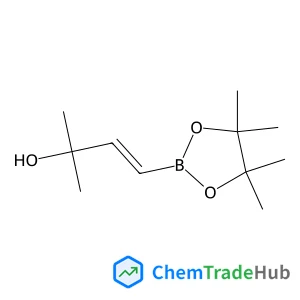
(E)-2-methyl-4-(4,4,5,5-tetramethyl-1,3,2-dioxaborolan-2-yl)but-3-en-2-ol
CAS Number:
581802-26-8
Molecular Formula:
C11H21BO3
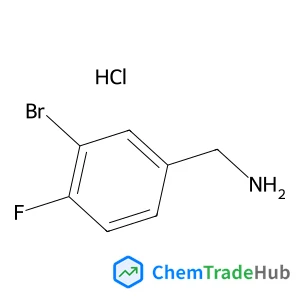
1-(3-Bromo-4-fluorophenyl)methanamine hydrochloride (1:1)
CAS Number:
202865-68-7
Molecular Formula:
C7H8BrClFN
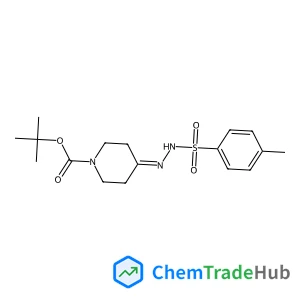
tert-Butyl 4-(2-(p-Tolylsulfonyl)hydrazono)piperidine-1-carboxylate
CAS Number:
1046478-89-0
Molecular Formula:
C17H25N3O4S
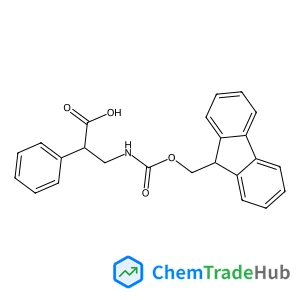
(S)-3-((((9H-Fluoren-9-yl)methoxy)carbonyl)amino)-2-phenylpropanoic acid
CAS Number:
1217663-60-9
Molecular Formula:
C24H21NO4
Recommended Suppliers



Disclaimer
This page provides academic journal information for reference and research purposes only. We are not affiliated with any journal publishers and do not handle publication submissions. For publication-related inquiries, please contact the respective journal publishers directly.
If you notice any inaccuracies in the information displayed, please contact us at support@chemtradehub.com. We will promptly review and address your concerns.