


Surface-engineered nanogel assemblies with integrated blood compatibility, cell proliferation and antibacterial property: towards multifunctional biomedical membranes
Literature Information
Publication Date
2014-07-08
DOI
10.1039/C4PY00870G
Impact Factor
5.582
Authors
Yi Xia, Rui Wang, Hui Qin, Yi Zhang, Lang Ma, Hong Tan, Zhongwei Gu
View Original
Abstract
In this study, novel 3D multifunctional nanolayers are fabricated on biomedical membrane surfaces via layer-by-layer (LBL) self-assembly of nanogels and heparin-like polymers. To integrate long-term antibacterial activity, Ag nanoparticles embedded in nanogels were first prepared. Then, the Ag nanogels were assembled onto membrane surfaces by electrostatic interaction. To obtain a heparin-mimicking surface, the as-prepared nanogel-coated membranes were further assembled with heparin-like polymers by two different processes. The results indicated that the obtained nanogel and heparin-mimicking polymer assembled membranes exhibited 3D surface morphologies. Systematical blood compatibility and antithrombotic evaluations revealed that the functionalized membranes showed increased hydrophilicity, decreased protein adsorption, and prolonged clotting times and greatly suppressed platelet adhesion compared to pristine membrane. The cell culture observations demonstrated that the pristine, nanogel-assembled, and heparin-mimicking membranes showed different performances in terms of endothelial cell proliferation and adhesion morphology. The results of the antibacterial study indicated that the functionalized membranes exhibited significant inhibition capability for Escherichia coli and Staphylococcus aureus. In general, the surface coassembly of nanogels and heparin-mimicking polymers produced functionalized membranes with integrated blood compatibility, cell proliferation and antibacterial properties for multiple applications, which may advance the fabrication of biomedical devices by surface assembly of functional nanogels.
Recommended Journals

Journal of Natural Medicines

Journal of Peptide Science

Russian Journal of Bioorganic Chemistry

Current Opinion in Solid State & Materials Science

Chemical Communications

Russian Chemical Bulletin

New Journal of Chemistry

Russian Journal of Coordination Chemistry

Russian Journal of Applied Chemistry

Chemistry Education Research and Practice
Related Literature
Towards systematically improvable models for actinides in condensed phase: the electronic spectrum of uranyl in Cs2UO2Cl4 as a test case
André Severo Pereira Gomes, Christoph R. Jacob, Florent Réal, Lucas Visscher, Valérie Vallet
2013-07-12
Paper
DOI: 10.1039/C3CP52090K
Propagation of nanopores during anodic etching of n-InP in KOH
Robert P. Lynch, Nathan Quill, Shohei Nakahara, D. Noel Buckley
2013-07-31
Paper
DOI: 10.1039/C3CP52253A
Introducing a standard method for experimental determination of the solvent response in laser pump, X-ray probe time-resolved wide-angle X-ray scattering experiments on systems in solution
Tim B. van Driel, Jan Kehres, Kristoffer Haldrup, Dmitry Khakhulin, Klaus Bechgaard, Marco Cammarata, Michael Wulff, Thomas Just Sørensen, Martin M. Nielsen
2013-06-24
Paper
DOI: 10.1039/C3CP50751C
Observing reduction of 4-nitrobenzenthiol on gold nanoparticlesin situ using surface-enhanced Raman spectroscopy
Xiaoqian Ren, Tingting You, Li Jiang, Hongyan Zhang, Penggang Yin, Lin Guo
2013-06-18
Paper
DOI: 10.1039/C3CP51385H
Multiphoton photoelectron emission microscopy of single Au nanorods: combined experimental and theoretical study of rod morphology and dielectric environment on localized surface plasmon resonances
Andrej Grubisic, Volker Schweikhard, Thomas A. Baker, David J. Nesbitt
2013-01-31
Paper
DOI: 10.1039/C3CP44385J
A low-cost bio-inspired integrated carbon counter electrode for high conversion efficiency dye-sensitized solar cells
Chunlei Wang, Fanning Meng, Mingxing Wu, Xiao Lin, Tonghua Wang, Jieshan Qiu, Tingli Ma
2013-06-27
Communication
DOI: 10.1039/C3CP52525B
Strain driven enhancement of ferroelectricity and magnetoelectric effect in multiferroic tunnel junction
Dan Cao, Hai-bo Shu, Zhi-wei Jiao, Yun Zhou, Miao-gen Chen, Meng-qiu Cai, Wang-yu Hu
2013-08-02
Paper
DOI: 10.1039/C3CP51350E
Tuning the dissolution kinetics of wollastonite via chelating agents for CO2 sequestration with integrated synthesis of precipitated calcium carbonates
Huangjing Zhao, Youngjune Park, Dong Hyun Lee, Ah-Hyung Alissa Park
2013-07-04
Paper
DOI: 10.1039/C3CP52459K
Enantiotopic discrimination and director organization in the twist-bend nematic phase
Cristina Greco, Geoffrey R. Luckhurst, Alberta Ferrarini
2013-07-18
Communication
DOI: 10.1039/C3CP52222A
Practical applications of small-angle neutron scattering
Martin J. Hollamby
2013-03-25
Perspective
DOI: 10.1039/C3CP50293G
You might also like
Compound Q&A
Are there alternatives to 1-(4-Chlorophenyl)-N-hydroxymethanimine (CAS: 3848-36-0) in synthesis?
When considering alternatives to 1-(4-Chlorophenyl)-N-hydroxymethanimine (CAS: 3...
3848-36-01-(4-Chlorophenyl)-N...
Compound Q&A
How should (1R,9S,10S,12S,14E,16S,19R,20R,21S,22R)-3,9,21-Trihydroxy-5,10,12,14,16,20,22-heptamethyl-23,24-dioxatetracyclo[17.3.1.1~6,9~.0~2,7~]tetracosa-2,5,7,14-tetraen-4-one (CAS: 183202-73-5) be stored?
This compound should be stored in a cool, dry place away from direct sunlight. I...
183202-73-5(1R,9S,10S,12S,14E,1...
Compound Q&A
How is 3-(4-Bromophenyl)-5-(2-fluorophenyl)-1,2,4-oxadiazole (CAS: 419553-16-5) typically synthesized?
3-(4-Bromophenyl)-5-(2-fluorophenyl)-1,2,4-oxadiazole is synthesized through a m...
419553-16-53-(4-Bromophenyl)-5-...
Compound Q&A
How is 5-Chloro-2-(4-chlorophenyl)-4-methyl-6-[3-(1-piperidinyl)propoxy]pyrimidine (CAS: 1639220-19-1) typically synthesized?
5-Chloro-2-(4-chlorophenyl)-4-methyl-6-[3-(1-piperidinyl)propoxy]pyrimidine (CAS...
1639220-19-15-Chloro-2-(4-chloro...
Compound Q&A
What industries use 2-Chloro-4-(difluoromethoxy)pyridine (CAS: 1206978-15-5)?
2-Chloro-4-(difluoromethoxy)pyridine is used in the pharmaceutical industry for ...
1206978-15-52-Chloro-4-(difluoro...
Compound Q&A
What regulatory guidelines apply to 3-Chloro-6-methylpyridazine (CAS: 1121-79-5)?
3-Chloro-6-methylpyridazine (CAS: 1121-79-5) is classified under the Globally Ha...
1121-79-53-Chloro-6-methylpyr...
Compound Q&A
Are there alternatives to Methyl 4,5-dimethyl-2-nitrobenzoate in synthesis?
Several alternatives can be used in the synthesis of Methyl 4,5-dimethyl-2-nitro...
90922-74-0Methyl 4,5-dimethyl-...
Compound Q&A
Are there alternatives to (2E,2'E)-3,3'-(1,4-Phenylene)bisacrylaldehyde in synthesis?
Alternatives to (2E,2'E)-3,3'-(1,4-Phenylene)bisacrylaldehyde include other acry...
63405-68-5(2E,2'E)-3,3'-(1,4-P...
Compound Q&A
What is 3-Amino-5-chloropyridin-2-ol hydrochloride (CAS: 1261906-29-9)?
3-Amino-5-chloropyridin-2-ol hydrochloride is an organic compound with the CAS n...
1261906-29-93-Amino-5-chloropyri...
Compound Q&A
What precautions should be taken when handling 6,7-Difluoro-2,3-dihydro-4H-chromen-4-one (CAS: 1092349-93-3)?
When handling 6,7-Difluoro-2,3-dihydro-4H-chromen-4-one, it is essential to wear...
1092349-93-36,7-Difluoro-2,3-dih...
Source Journal
Polymer Chemistry

CiteScore:
8.6
Self-citation Rate:
7.3%
Articles per Year:
457
Polymer Chemistry welcomes submissions in all areas of polymer science that have a strong focus on macromolecular chemistry. Manuscripts may cover a broad range of fields, yet no direct application focus is required.
Recommended Compounds
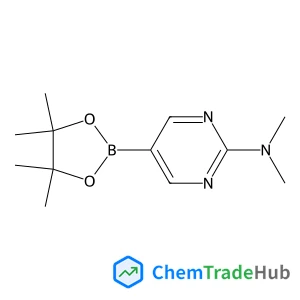
N,N-Dimethyl-5-(4,4,5,5-tetramethyl-1,3,2-dioxaborolan-2-yl)-2-pyrimidinamine
CAS Number:
1032759-30-0
Molecular Formula:
C12H20BN3O2
![2-{[(1R,2S)-2-Aminocyclohexyl]amino}-4-{[3-(2H-1,2,3-triazol-2-yl)phenyl]amino}-5-pyrimidinecarboxamide structure](https://static.chemtradehub.com/structs/137/1370261-96-3-40df.webp "2-{[(1R,2S)-2-Aminocyclohexyl]amino}-4-{[3-(2H-1,2,3-triazol-2-yl)phenyl]amino}-5-pyrimidinecarboxamide structure")
2-{[(1R,2S)-2-Aminocyclohexyl]amino}-4-{[3-(2H-1,2,3-triazol-2-yl)phenyl]amino}-5-pyrimidinecarboxamide
CAS Number:
1370261-96-3
Molecular Formula:
C19H23N9O
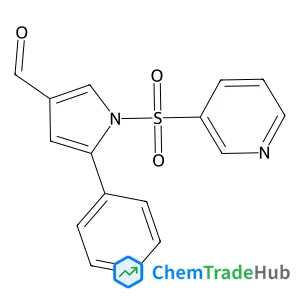
5-Phenyl-1-(pyridin-3-ylsulfonyl)-1H-pyrrole-3-carbaldehyde
CAS Number:
881676-90-0
Molecular Formula:
C16H12N2O3S
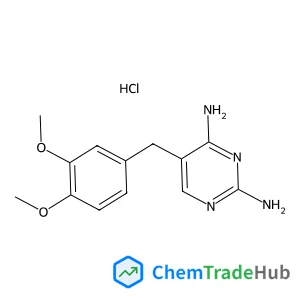
5-(3,4-Dimethoxybenzyl)-2,4-pyrimidinediamine hydrochloride (1:1)
CAS Number:
2507-23-5
Molecular Formula:
C13H17ClN4O2
Recommended Suppliers





Disclaimer
This page provides academic journal information for reference and research purposes only. We are not affiliated with any journal publishers and do not handle publication submissions. For publication-related inquiries, please contact the respective journal publishers directly.
If you notice any inaccuracies in the information displayed, please contact us at support@chemtradehub.com. We will promptly review and address your concerns.