












Enhancing the melt stability of polylactide stereocomplexes using a solid-state cross-linking strategy during a melt-blending process
Literature Information
Publication Date
2014-06-19
DOI
10.1039/C4PY00700J
Impact Factor
5.582
Authors
Huili Liu, Dongyu Bai, Qin Zhang, Ke Wang, Hua Deng, Feng Chen, Qiang Fu
View Original
Abstract
Stereocomplexation between poly(L-lactide) (PLLA) and poly(D-lactide) (PDLA) provides a feasible route for improving the performance of polylactide (PLA), including mechanical strength, thermal stability and hydrolysis resistance. In recent years, several effective methods have been developed to prepare polylactide stereocomplexes (sc-PLA) from commercially available, linear, high-molecular-weight PLLA and PDLA. However, it is still a big challenge to attain pure sc-PLA in the melt-processed products because the prepared sc-PLA has a very poor melt stability, that is the ability to trigger the reformulation of stereocomplex (sc) crystallites after complete melting is significantly depressed, resulting in the formation of mixed homochiral (hc) and sc crystallites. Here we present a facile strategy to fabricate sc-PLA with good melt stability by low-temperature (180 °C) melt-blending of equimolar PLLA and PDLA in the presence of a trace amount (0.1–0.5 wt%) of a cross-linker. During the blending process, sc crystallites form rapidly, followed by a slight cross-linking of PLLA and PDLA chain couples in the mobile amorphous phase, whereas the chain couples in the crystalline phase hardly participate in the cross-linking reaction. The exclusive cross-linking of PLA chains in the amorphous phase not only allows for the introduction of abundant cross-linking points at the ends of the chain couples to prevent them from completely decoupling upon melting but also retains large amounts of long crystallizable PLA segments existing in the initially formed sc crystallites to impart the resulting sc-PLA with an excellent recrystallization ability upon cooling. The formation or reformulation of sc crystallites in the continuous melting and recrystallization process is found to be perfectly reversible, without any trace of hc crystallites.
Recommended Journals
Related Literature
Remarkable magnetism and ferromagnetic coupling in semi-sulfuretted transition-metal dichalcogenides
Yungang Zhou, Chengfei Yang, Xia Xiang, Xiaotao Zu
2013-06-18
Paper
DOI: 10.1039/C3CP51518D
Highly sensitive, selective and reusable mercury(ii) ion sensor based on a ssDNA-functionalized photonic crystal film
Yuqi Zhang, Loujun Gao, Liping Wen, Liping Heng, Yanlin Song
2013-05-10
Paper
DOI: 10.1039/C3CP51324F
Chemically synthesised atomically precise gold clusters deposited and activated on titania. Part II
David P. Anderson, Jason F. Alvino, Oliver Shipper, Baira Donoeva, Jan-Yves Ruzicka, Hassan Al Qahtani, Hugh H. Harris, Bruce Cowie, Jade B. Aitken, Vladimir B. Golovko, Gregory F. Metha, Gunther G. Andersson
2013-07-24
Paper
DOI: 10.1039/C3CP52497C
Photoinduced charge transport over branched conjugation pathways: donor–acceptor substituted 1,1-diphenylethene and 2,3-diphenylbutadiene
Bas C. van der Wiel, René M. Williams
2013-08-09
Paper
DOI: 10.1039/C3CP52148F
Glassy dynamics of sorbitol solutions at terahertz frequencies
Juraj Sibik, Evgenyi Y. Shalaev, J. Axel Zeitler
2013-05-31
Paper
DOI: 10.1039/C3CP51936H
Estimation of electrode ionomer oxygen permeability and ionomer-phase oxygen transport resistance in polymer electrolyte fuel cells
Satheesh Sambandam, Javier Parrondo, Vijay Ramani
2013-07-10
Paper
DOI: 10.1039/C3CP51450A
Surface plasmon resonance-based fiber optic hydrogen sulphide gas sensor utilizing Cu–ZnO thin films
Rana Tabassum, Satyendra K. Mishra, Banshi D. Gupta
2013-05-30
Paper
DOI: 10.1039/C3CP51525G
Observing reduction of 4-nitrobenzenthiol on gold nanoparticlesin situ using surface-enhanced Raman spectroscopy
Xiaoqian Ren, Tingting You, Li Jiang, Hongyan Zhang, Penggang Yin, Lin Guo
2013-06-18
Paper
DOI: 10.1039/C3CP51385H
Practical applications of small-angle neutron scattering
Martin J. Hollamby
2013-03-25
Perspective
DOI: 10.1039/C3CP50293G
You might also like
Compound Q&A
Are there alternatives to 1-(4-Chlorophenyl)-N-hydroxymethanimine (CAS: 3848-36-0) in synthesis?
When considering alternatives to 1-(4-Chlorophenyl)-N-hydroxymethanimine (CAS: 3...
3848-36-01-(4-Chlorophenyl)-N...
Compound Q&A
How should (1R,9S,10S,12S,14E,16S,19R,20R,21S,22R)-3,9,21-Trihydroxy-5,10,12,14,16,20,22-heptamethyl-23,24-dioxatetracyclo[17.3.1.1~6,9~.0~2,7~]tetracosa-2,5,7,14-tetraen-4-one (CAS: 183202-73-5) be stored?
This compound should be stored in a cool, dry place away from direct sunlight. I...
183202-73-5(1R,9S,10S,12S,14E,1...
Compound Q&A
How is 3-(4-Bromophenyl)-5-(2-fluorophenyl)-1,2,4-oxadiazole (CAS: 419553-16-5) typically synthesized?
3-(4-Bromophenyl)-5-(2-fluorophenyl)-1,2,4-oxadiazole is synthesized through a m...
419553-16-53-(4-Bromophenyl)-5-...
Compound Q&A
How is 5-Chloro-2-(4-chlorophenyl)-4-methyl-6-[3-(1-piperidinyl)propoxy]pyrimidine (CAS: 1639220-19-1) typically synthesized?
5-Chloro-2-(4-chlorophenyl)-4-methyl-6-[3-(1-piperidinyl)propoxy]pyrimidine (CAS...
1639220-19-15-Chloro-2-(4-chloro...
Compound Q&A
What industries use 2-Chloro-4-(difluoromethoxy)pyridine (CAS: 1206978-15-5)?
2-Chloro-4-(difluoromethoxy)pyridine is used in the pharmaceutical industry for ...
1206978-15-52-Chloro-4-(difluoro...
Compound Q&A
What regulatory guidelines apply to 3-Chloro-6-methylpyridazine (CAS: 1121-79-5)?
3-Chloro-6-methylpyridazine (CAS: 1121-79-5) is classified under the Globally Ha...
1121-79-53-Chloro-6-methylpyr...
Compound Q&A
Are there alternatives to Methyl 4,5-dimethyl-2-nitrobenzoate in synthesis?
Several alternatives can be used in the synthesis of Methyl 4,5-dimethyl-2-nitro...
90922-74-0Methyl 4,5-dimethyl-...
Compound Q&A
Are there alternatives to (2E,2'E)-3,3'-(1,4-Phenylene)bisacrylaldehyde in synthesis?
Alternatives to (2E,2'E)-3,3'-(1,4-Phenylene)bisacrylaldehyde include other acry...
63405-68-5(2E,2'E)-3,3'-(1,4-P...
Compound Q&A
What is 3-Amino-5-chloropyridin-2-ol hydrochloride (CAS: 1261906-29-9)?
3-Amino-5-chloropyridin-2-ol hydrochloride is an organic compound with the CAS n...
1261906-29-93-Amino-5-chloropyri...
Compound Q&A
What precautions should be taken when handling 6,7-Difluoro-2,3-dihydro-4H-chromen-4-one (CAS: 1092349-93-3)?
When handling 6,7-Difluoro-2,3-dihydro-4H-chromen-4-one, it is essential to wear...
1092349-93-36,7-Difluoro-2,3-dih...
Source Journal
Polymer Chemistry

CiteScore:
8.6
Self-citation Rate:
7.3%
Articles per Year:
457
Polymer Chemistry welcomes submissions in all areas of polymer science that have a strong focus on macromolecular chemistry. Manuscripts may cover a broad range of fields, yet no direct application focus is required.
Recommended Compounds
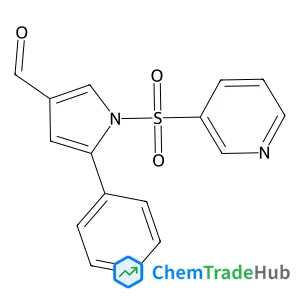
5-Phenyl-1-(pyridin-3-ylsulfonyl)-1H-pyrrole-3-carbaldehyde
CAS Number:
881676-90-0
Molecular Formula:
C16H12N2O3S
![4-[(3-Chloro-2-fluorophenyl)amino]-7-methoxy-6-quinazolinyl acetate structure](https://static.chemtradehub.com/structs/740/740081-22-5-f58f.webp "4-[(3-Chloro-2-fluorophenyl)amino]-7-methoxy-6-quinazolinyl acetate structure")
4-[(3-Chloro-2-fluorophenyl)amino]-7-methoxy-6-quinazolinyl acetate
CAS Number:
740081-22-5
Molecular Formula:
C17H13ClFN3O3
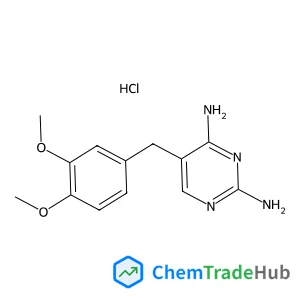
5-(3,4-Dimethoxybenzyl)-2,4-pyrimidinediamine hydrochloride (1:1)
CAS Number:
2507-23-5
Molecular Formula:
C13H17ClN4O2

Recommended Suppliers






Disclaimer
This page provides academic journal information for reference and research purposes only. We are not affiliated with any journal publishers and do not handle publication submissions. For publication-related inquiries, please contact the respective journal publishers directly.
If you notice any inaccuracies in the information displayed, please contact us at support@chemtradehub.com. We will promptly review and address your concerns.