












Tailoring the protonic conductivity of porous yttria-stabilized zirconia thin films by surface modification
Literature Information
Publication Date
2020-05-02
DOI
10.1039/D0CP01619E
Impact Factor
3.676
Authors
Erdogan Celik, Rajendra S. Negi, Michele Bastianello, Dominic Boll, Andrey Mazilkin, Torsten Brezesinski
View Original
Abstract
Porous yttria-stabilized zirconia (YSZ) thin films were prepared by pulsed laser deposition to investigate the influence of specific surface area on the electronic, oxygen ion, and protonic transport properties. Electrochemical impedance spectroscopy was carried out as a function of temperature, oxygen activity and humidity of the surrounding atmosphere. At high humidity, protons on the surface of the porous YSZ thin films lead to increased conductivity, even for temperatures up to 700 °C. With increasing relative humidity, the activation energy of proton transport decreases because of changes in the transport mechanism from Grotthuss-type to vehicle-type transport. By coating the porous YSZ films with an amorphous titania (TiO2) layer of only a few nanometer thickness using atomic layer deposition, the protonic contribution to conductivity is significantly reduced. Depositing an 18 nm-thick anatase TiO2 surface layer, the protonic conductivity contribution increases again, which can be attributed to enhanced capillary condensation because of the lower pore size. Interestingly, the filling of pores is accompanied by a decrease in proton mobility. Theses results demonstrate the significant effect that the porosity and the surface properties have on the protonic transport and further provide new design principles for developing nanostructured proton-conducting oxides.
Related Literature
Photocrosslinked PVDF-based star polymer coatings: an all-in-one alternative to PVDF/PMMA blends for outdoor applications
Gérald Lopez, Marc Guerre, Bruno Améduri, Jean-Pierre Habas, Vincent Ladmiral
2017-04-26
Communication
DOI: 10.1039/C7PY00580F
Non-conventional fluorescent biogenic and synthetic polymers without aromatic rings
Yilin Zhang, Liguo Xu, Rongrong Hu, Kam Sing Wong, William A. Goddard, III
2017-02-08
Paper
DOI: 10.1039/C7PY00154A
Poly(acrylate) with a tetraphenylethene pendant with aggregation-induced emission (AIE) characteristics: highly stable AIE-active polymer nanoparticles for effective detection of nitro compounds
Hui Zhou, Jiesheng Li, Ming Hui Chua, Hong Yan, Beng Zhong Tang, Jianwei Xu
2014-05-30
Paper
DOI: 10.1039/C4PY00518J
Synthesis of poly(ethylene glycol)-b-poly(N-(2-hydroxypropyl) methacrylamide) block copolymers with well-defined structures and their influence on in vivo circulation and biodistribution
Chengyan Dong, Jiajing Zhang, Jiyun Shi, Bing Jia, Fan Wang
2014-05-30
Paper
DOI: 10.1039/C4PY00681J
Oxygen and carbon dioxide dual gas-responsive homopolymers and diblock copolymers synthesized via RAFT polymerization
Xue Jiang, Guolin Lu, Huang Xiaoyu
2016-12-26
Paper
DOI: 10.1039/C6PY02004F
Dendrimer–doxorubicin conjugate as enzyme-sensitive and polymeric nanoscale drug delivery vehicle for ovarian cancer therapy
Chengyuan Zhang, Dayi Pan, Kui Luo, Ning Li, Chunhua Guo, Xiuli Zheng, Zhongwei Gu
2014-05-20
Paper
DOI: 10.1039/C4PY00601A
“Arm-first” approach for the synthesis of star-shaped stereoregular polymers through living coordination polymerization
Zhenghai Shi, Fang Guo, Rui Tan, Hui Niu, Tingting Li, Yang Li
2017-01-31
Communication
DOI: 10.1039/C6PY02097F
Unprecedented cucurbituril-based ternary host–guest supramolecular polymers mediated through included alkyl chains
Nana Sun, Dongdong Qi, Jianzhuang Jiang
2014-05-30
Communication
DOI: 10.1039/C4PY00512K
Ultra-sensitive detection of explosives in solution and film as well as the development of thicker film effectiveness by tetraphenylethene moiety in AIE active fluorescent conjugated polymer
Khama Rani Ghosh, Sukanta Kumar Saha
2014-06-11
Paper
DOI: 10.1039/C4PY00673A
One pot synthesis of higher order quasi-block copolymer libraries via sequential RAFT polymerization in an automated synthesizer
Graeme Moad, San H. Thang
2014-05-16
Paper
DOI: 10.1039/C4PY00496E
You might also like
Compound Q&A
What are the main uses of 4-Nitrophenyl phosphate disodium salt hexahydrate (CAS: 333338-18-4)?
4-Nitrophenyl phosphate disodium salt hexahydrate is primarily used as a substra...
333338-18-44-Nitrophenyl phosph...
Compound Q&A
What are the main uses of 2-(Trifluoromethyl)-1,3-oxazole-4-carboxylic Acid (CAS: 1060816-01-4)?
2-(Trifluoromethyl)-1,3-oxazole-4-carboxylic Acid (CAS: 1060816-01-4) is widely ...
1060816-01-42-(Trifluoromethyl)-...
Compound Q&A
How should 2-Fluoro-4-biphenylcarboxylic acid (CAS: 137045-30-8) be stored?
2-Fluoro-4-biphenylcarboxylic acid should be stored in a cool, dry place at room...
137045-30-82-Fluoro-4-biphenylc...
Compound Q&A
What industries use Prednisolone-21-Carboxylic Acid (CAS: 61549-70-0)?
Prednisolone-21-Carboxylic Acid is primarily used in the pharmaceutical industry...
61549-70-0Prednisolone-21-Carb...
Compound Q&A
How should 4-(Hydrazinomethyl)-1,2,3-benzenetriol (CAS: 3614-72-0) be stored?
4-(Hydrazinomethyl)-1,2,3-benzenetriol (CAS: 3614-72-0) should be stored in a co...
3614-72-04-(Hydrazinomethyl)-...
Compound Q&A
What industries use 4-Amino-1-methyl-1H-pyrazole-5-carboxylic acid hydrochloride (CAS: 92534-70-8)?
4-Amino-1-methyl-1H-pyrazole-5-carboxylic acid hydrochloride (CAS: 92534-70-8) i...
92534-70-84-Amino-1-methyl-1H-...
Compound Q&A
What regulatory guidelines apply to dehydropachymic acid (CAS: 77012-31-8)?
Dehydropachymic acid (CAS: 77012-31-8) is regulated by various agencies. It fall...
77012-31-8Dehydropachymic acid
Compound Q&A
What is the market or research trend for 6-[(2,2-Dimethylpropanoyl)amino]nicotinic acid (CAS: 898561-66-5)?
The market and research trends for 6-[(2,2-Dimethylpropanoyl)amino]nicotinic aci...
898561-66-56-[(2,2-Dimethylprop...
Compound Q&A
How should 1,10-Phenanthroline-2,9-dicarbaldehyde (CAS: 57709-62-3) be stored?
1,10-Phenanthroline-2,9-dicarbaldehyde should be stored in a cool, dry place awa...
57709-62-31,10-Phenanthroline-...
Compound Q&A
How is 5-Carbamoyl-11-oxo-10,11-dihydro-5H-dibenzo[b,f]azepin-10-yl acetate (CAS: 113952-21-9) typically synthesized?
5-Carbamoyl-11-oxo-10,11-dihydro-5H-dibenzo[b,f]azepin-10-yl acetate can be synt...
113952-21-95-Carbamoyl-11-oxo-1...
Source Journal
Physical Chemistry Chemical Physics

CiteScore:
5.5
Self-citation Rate:
10.3%
Articles per Year:
3036
Physical Chemistry Chemical Physics (PCCP) is an international journal co-owned by 19 physical chemistry and physics societies from around the world. This journal publishes original, cutting-edge research in physical chemistry, chemical physics and biophysical chemistry. To be suitable for publication in PCCP, articles must include significant innovation and/or insight into physical chemistry; this is the most important criterion that reviewers and Editors will judge against when evaluating submissions. The journal has a broad scope and welcomes contributions spanning experiment, theory, computation and data science. Topical coverage includes spectroscopy, dynamics, kinetics, statistical mechanics, thermodynamics, electrochemistry, catalysis, surface science, quantum mechanics, quantum computing and machine learning. Interdisciplinary research areas such as polymers and soft matter, materials, nanoscience, energy, surfaces/interfaces, and biophysical chemistry are welcomed if they demonstrate significant innovation and/or insight into physical chemistry. Joined experimental/theoretical studies are particularly appreciated when complementary and based on up-to-date approaches.
Recommended Compounds

6-Bromo-3,4-dihydro-2H-1,4-benzoxazine hydrochloride (1:1)
CAS Number:
1260803-10-8
Molecular Formula:
C8H9BrClNO

cis-3-Amino-1-(trifluoromethyl)cyclobutanol hydrochloride (1:1)
CAS Number:
1408075-16-0
Molecular Formula:
C5H9ClF3NO
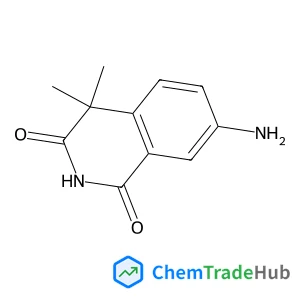
1,3(2H,4H)-Isoquinolinedione, 7-amino-4,4-dimethyl-
CAS Number:
14576-22-8
Molecular Formula:
C11H12N2O2
Recommended Suppliers






Disclaimer
This page provides academic journal information for reference and research purposes only. We are not affiliated with any journal publishers and do not handle publication submissions. For publication-related inquiries, please contact the respective journal publishers directly.
If you notice any inaccuracies in the information displayed, please contact us at support@chemtradehub.com. We will promptly review and address your concerns.