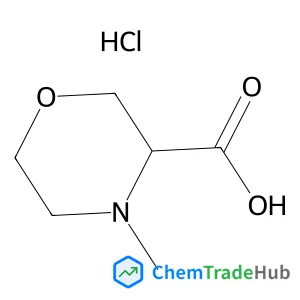
4-Methyl-3-morpholinecarboxylic acid hydrochloride (1:1)
CAS Number:
1240518-90-4
Molecular Formula:
C6H12ClNO3
Yilin Zhang, Liguo Xu, Rongrong Hu, Kam Sing Wong, William A. Goddard, III
Non-conventional fluorescent materials without aromatic structures have attracted much research attention in recent years. However, the working mechanism responsible for their fluorescence remains mysterious. Here we decipher the origin of fluorescence by studying the photophysical properties of a series of non-aromatic biogenic and synthetic peptides. An experimental study suggests that the turn-on fluorescence in the aggregation state/condensed phase is associated with the communication of amide groups, where hydrogen bonds are playing a critical role in bringing these functionalities into close proximity. This explanation is further justified by the study of the hierarchical influence on fluorescence and applied to biomimetic polymers in a more general content. This discovery provides a more comprehensive insight into the bioluminescence system. It may stimulate future development of new fluorescent materials, and inspire research on disease diagnostics, biomechanics measurements, etc. that are associated with protein morphology.

Journal of Peptide Science

Crystallography Reports

Organic Process Research & Development

Current Opinion in Colloid & Interface Science

Russian Journal of Coordination Chemistry

Chemical Communications

New Journal of Chemistry

Russian Journal of Applied Chemistry

Journal of Saudi Chemical Society

Russian Journal of General Chemistry
Carolina Moreno, María-Teresa Baeza-Romero, Óscar Gálvez, Vicente López Arza, James C. Ianni, Eva Espíldora
DOI: 10.1039/C9CP05601G
Masahiro Asahara, Haruhiko Kurimoto, Masato Nakamizu, Shingo Hattori, Kazuteru Shinozaki
DOI: 10.1039/C9CP06758B
DOI: 10.1039/C9CP06029D
Seyyed Amin Rounaghi, Hossein Eshghi, Sergio Scudino, Elaheh Esmaeili, Ali-Reza Kiani-Rashid
DOI: 10.1039/C9CP04577E
Xukun Feng, Jian Liu, Xikui Ma, Mingwen Zhao
DOI: 10.1039/C9CP06966F
Amr A. A. Attia, Alexandru Lupan, R. Bruce King, Sundargopal Ghosh
DOI: 10.1039/C9CP04263F
Shuaizhen Tian, Jinzhe Zeng, Xiao Liu, Jianzhong Chen
DOI: 10.1039/C9CP03598B
Li Jiang, Zhishan Fang, Haoran Lou, Chen Lin, Zhanhang Chen, Jing Li, Haiping He, Zhizhen Ye
DOI: 10.1039/C9CP04033A
Paula Pla, Yang Wang
DOI: 10.1039/C9CP06977A
Meng Cheng, Shengtong Sun, Peiyi Wu
DOI: 10.1039/C9CP04440J
4-Nitrophenyl phosphate disodium salt hexahydrate is primarily used as a substra...
2-(Trifluoromethyl)-1,3-oxazole-4-carboxylic Acid (CAS: 1060816-01-4) is widely ...
2-Fluoro-4-biphenylcarboxylic acid should be stored in a cool, dry place at room...
Prednisolone-21-Carboxylic Acid is primarily used in the pharmaceutical industry...
4-(Hydrazinomethyl)-1,2,3-benzenetriol (CAS: 3614-72-0) should be stored in a co...
4-Amino-1-methyl-1H-pyrazole-5-carboxylic acid hydrochloride (CAS: 92534-70-8) i...
Dehydropachymic acid (CAS: 77012-31-8) is regulated by various agencies. It fall...
The market and research trends for 6-[(2,2-Dimethylpropanoyl)amino]nicotinic aci...
1,10-Phenanthroline-2,9-dicarbaldehyde should be stored in a cool, dry place awa...
5-Carbamoyl-11-oxo-10,11-dihydro-5H-dibenzo[b,f]azepin-10-yl acetate can be synt...

Polymer Chemistry welcomes submissions in all areas of polymer science that have a strong focus on macromolecular chemistry. Manuscripts may cover a broad range of fields, yet no direct application focus is required.
![1-[(4-Methylphenyl)sulfonyl]-3-(4,4,5,5-tetramethyl-1,3,2-dioxaborolan-2-yl)-1H-pyrrolo[2,3-b]pyridine-5-carbonitrile structure](https://static.chemtradehub.com/structs/143/1434747-57-5-fc0d.webp "1-[(4-Methylphenyl)sulfonyl]-3-(4,4,5,5-tetramethyl-1,3,2-dioxaborolan-2-yl)-1H-pyrrolo[2,3-b]pyridine-5-carbonitrile structure")