


One pot synthesis of higher order quasi-block copolymer libraries via sequential RAFT polymerization in an automated synthesizer
Literature Information
Publication Date
2014-05-16
DOI
10.1039/C4PY00496E
Impact Factor
5.582
Authors
Graeme Moad, San H. Thang
View Original
Abstract
Recently developed sequential reversible addition–fragmentation chain transfer (RAFT) polymerization protocols allow the rapid, fully unattended preparation of quasi-block copolymer libraries that cover a wide range of copolymer compositions in an automated synthesizer. This contribution explores the scope and limitations of this sequential approach for the synthesis of higher order quasi-multiblock copolymers (including copolymer sequences of BAB, CBABC, ABC and ABCD). These syntheses illustrate the utility of this high-throughput approach for the one pot synthesis of functional polymers of increased complexity. Additionally, the use of this experimental technique for method development is highlighted.
Recommended Journals

Chemical Communications

Russian Journal of Coordination Chemistry

Current Opinion in Colloid & Interface Science

Russian Journal of Organic Chemistry

Chemistry Education Research and Practice

Crystallography Reports

Nature Medicine

Journal of Saudi Chemical Society

Russian Chemical Bulletin

Journal of Peptide Science
Related Literature
Correction: Thermodynamics, kinetics and electronic properties of point defects in β-FeSi2
Chen Ming, Pengfei Qiu, Yi-Yang Sun, Lidong Chen
2019-09-25
Correction
DOI: 10.1039/C9CP90237F
Implications of the fractional charge of hydroxide at the electrochemical interface
Leanne D. Chen, Michal Bajdich, Karen Chan
2020-03-03
Paper
DOI: 10.1039/C9CP05952K
Neutron spin echo monitoring of segmental-like diffusion of water confined in the cores of carbon nanotubes
Alexandra Parmentier, Marco Maccarini, Alessio De Francesco, Luisa Scaccia, Giovanna Rogati, Orsolya Czakkel, Francesco De Luca
2019-09-11
Paper
DOI: 10.1039/C9CP04248B
Lanthanide-induced conformational change of methanol dehydrogenase involving coordination change of cofactor pyrroloquinoline quinone
2019-09-04
Paper
DOI: 10.1039/C9CP03953H
Revealing the thermodynamics of individual catalytic steps based on temperature-dependent single-particle nanocatalysis
Tao Chen
2019-09-24
Paper
DOI: 10.1039/C9CP04538D
New insights into HER catalysis: the effect of nano-silica support on catalysis by silver nanoparticles
Gifty Sara Rolly, Guy Yardeni, Ronen Bar-Ziv, Tomer Zidki
2020-03-02
Paper
DOI: 10.1039/C9CP06820A
Systematic modification of the indium tin oxide work function via side-chain modulation of an amino-acid functionalization layer
Naomi Kramer, Soumyajit Sarkar, Leeor Kronik, Nurit Ashkenasy
2019-09-23
Paper
DOI: 10.1039/C9CP04079J
The total dose effect of γ-ray induced domain evolution on α-In2Se3 nanoflakes
Jinbin Wang, Xiangli Zhong, Xiaoping Ouyang
2020-03-30
Communication
DOI: 10.1039/D0CP00512F
The influence of a type III antifreeze protein and its mutants on methane hydrate adsorption–inhibition: a molecular dynamics simulation study
Mitra Maddah, Mina Maddah, Kiana Peyvandi
2019-08-31
Paper
DOI: 10.1039/C9CP03833G
You might also like
Compound Q&A
What are the main uses of 4-Nitrophenyl phosphate disodium salt hexahydrate (CAS: 333338-18-4)?
4-Nitrophenyl phosphate disodium salt hexahydrate is primarily used as a substra...
333338-18-44-Nitrophenyl phosph...
Compound Q&A
What are the main uses of 2-(Trifluoromethyl)-1,3-oxazole-4-carboxylic Acid (CAS: 1060816-01-4)?
2-(Trifluoromethyl)-1,3-oxazole-4-carboxylic Acid (CAS: 1060816-01-4) is widely ...
1060816-01-42-(Trifluoromethyl)-...
Compound Q&A
How should 2-Fluoro-4-biphenylcarboxylic acid (CAS: 137045-30-8) be stored?
2-Fluoro-4-biphenylcarboxylic acid should be stored in a cool, dry place at room...
137045-30-82-Fluoro-4-biphenylc...
Compound Q&A
What industries use Prednisolone-21-Carboxylic Acid (CAS: 61549-70-0)?
Prednisolone-21-Carboxylic Acid is primarily used in the pharmaceutical industry...
61549-70-0Prednisolone-21-Carb...
Compound Q&A
How should 4-(Hydrazinomethyl)-1,2,3-benzenetriol (CAS: 3614-72-0) be stored?
4-(Hydrazinomethyl)-1,2,3-benzenetriol (CAS: 3614-72-0) should be stored in a co...
3614-72-04-(Hydrazinomethyl)-...
Compound Q&A
What industries use 4-Amino-1-methyl-1H-pyrazole-5-carboxylic acid hydrochloride (CAS: 92534-70-8)?
4-Amino-1-methyl-1H-pyrazole-5-carboxylic acid hydrochloride (CAS: 92534-70-8) i...
92534-70-84-Amino-1-methyl-1H-...
Compound Q&A
What regulatory guidelines apply to dehydropachymic acid (CAS: 77012-31-8)?
Dehydropachymic acid (CAS: 77012-31-8) is regulated by various agencies. It fall...
77012-31-8Dehydropachymic acid
Compound Q&A
What is the market or research trend for 6-[(2,2-Dimethylpropanoyl)amino]nicotinic acid (CAS: 898561-66-5)?
The market and research trends for 6-[(2,2-Dimethylpropanoyl)amino]nicotinic aci...
898561-66-56-[(2,2-Dimethylprop...
Compound Q&A
How should 1,10-Phenanthroline-2,9-dicarbaldehyde (CAS: 57709-62-3) be stored?
1,10-Phenanthroline-2,9-dicarbaldehyde should be stored in a cool, dry place awa...
57709-62-31,10-Phenanthroline-...
Compound Q&A
How is 5-Carbamoyl-11-oxo-10,11-dihydro-5H-dibenzo[b,f]azepin-10-yl acetate (CAS: 113952-21-9) typically synthesized?
5-Carbamoyl-11-oxo-10,11-dihydro-5H-dibenzo[b,f]azepin-10-yl acetate can be synt...
113952-21-95-Carbamoyl-11-oxo-1...
Source Journal
Polymer Chemistry

CiteScore:
8.6
Self-citation Rate:
7.3%
Articles per Year:
457
Polymer Chemistry welcomes submissions in all areas of polymer science that have a strong focus on macromolecular chemistry. Manuscripts may cover a broad range of fields, yet no direct application focus is required.
Recommended Compounds

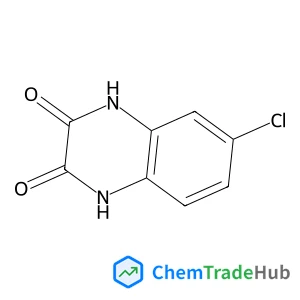
6-CHLORO-2,3-DIOXO-1,2,3,4-TETRAHYDROQUINOXALINE, 97
CAS Number:
169-14-2
Molecular Formula:
C8H5ClN2O2
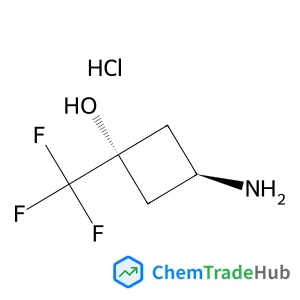
cis-3-Amino-1-(trifluoromethyl)cyclobutanol hydrochloride (1:1)
CAS Number:
1408075-16-0
Molecular Formula:
C5H9ClF3NO
Recommended Suppliers







Disclaimer
This page provides academic journal information for reference and research purposes only. We are not affiliated with any journal publishers and do not handle publication submissions. For publication-related inquiries, please contact the respective journal publishers directly.
If you notice any inaccuracies in the information displayed, please contact us at support@chemtradehub.com. We will promptly review and address your concerns.