


Poly(acrylate) with a tetraphenylethene pendant with aggregation-induced emission (AIE) characteristics: highly stable AIE-active polymer nanoparticles for effective detection of nitro compounds
Literature Information
Publication Date
2014-05-30
DOI
10.1039/C4PY00518J
Impact Factor
5.582
Authors
Hui Zhou, Jiesheng Li, Ming Hui Chua, Hong Yan, Beng Zhong Tang, Jianwei Xu
View Original
Abstract
Acrylate monomers with aggregation-induced emission (AIE) attributes were prepared by reacting 4-(1,2,2-triphenylvinyl)phenol with 1-bromoalkan-1-ol, followed by the treatment with acryloyl chloride in the presence of a base. The resulting acrylate monomers were polymerized by free radical polymerization to give very high molecular-weight AIE-active polymers (400 000–650 000) with low polydispersity indices (1.28–1.51). Thermal stabilities of the AIE polymers are comparable to that of poly(methyl methacrylate) (PMMA), while their glass transition temperatures are 50–70 °C lower than that of PMMA. The AIE polymers are soluble in common organic solvents and have outstanding film-forming ability. Most importantly, the polymers in the mixtures of THF–H2O can form extremely stable nanoparticles, with no tendency towards agglomeration at 4 °C for over nine months. The polymers exhibit much more significant AIE activity than their monomers and their precursor 4-(1,2,2-triphenylvinyl)phenol in THF–H2O mixtures. Fluorescence of the polymers in THF–H2O mixtures and in the film state can be dramatically quenched by a wide variety of nitro compounds, including picric acid, 2,4,6-trinitrotoluene, 2,4-dinitrotoluene, 4-nitrophenol, 4-nitrotoluene, nitromethane and nitrous sulfuric anhydride. The AIE polymers show no response to the reference compounds toluene and phenol. These AIE polymers are thus potential fluorescence sensors for nitroaromatic explosives.
Recommended Journals

Organic Process Research & Development

Russian Journal of Applied Chemistry

Saudi Pharmaceutical Journal

Journal of Natural Medicines

Current Opinion in Colloid & Interface Science

Crystallography Reports

Chemistry Education Research and Practice

Russian Journal of Bioorganic Chemistry

Russian Journal of Coordination Chemistry

Acta Materialia
Related Literature
Cu/SAPO-34 prepared by a facile ball milling method for enhanced catalytic performance in the selective catalytic reduction of NOx with NH3
Huazhen Chang, Xuan Qin, Lei Ma, Tao Zhang, Junhua Li
2019-09-24
Paper
DOI: 10.1039/C9CP04519H
Hysteresis in graphene nanoribbon field-effect devices
Akimitsu Narita, Hai I. Wang
2020-02-18
Paper
DOI: 10.1039/D0CP00298D
Charge separation, recombination and intersystem crossing of directly connected perylenemonoimide–carbazole electron donor/acceptor dyads
Xue Zhang, Ayhan Elmali, Ruomeng Duan, Qingyun Liu, Wei Ji, Chen Li, Ahmet Karatay
2020-02-24
Paper
DOI: 10.1039/C9CP06914C
Micro-kinetic model of electrochemical carbon dioxide reduction over platinum in non-aqueous solvents
Brian A. Rohr, Aayush R. Singh, Joseph A. Gauthier, Michael J. Statt, Jens K. Nørskov
2020-02-10
Paper
DOI: 10.1039/C9CP05751J
Automated exploration of the low-energy chemical space with fast quantum chemical methods
Philipp Pracht, Fabian Bohle, Stefan Grimme
2020-02-12
Paper
DOI: 10.1039/C9CP06869D
An inelastic neutron scattering, Raman, far-infrared, and molecular dynamics study of the intermolecular dynamics of two ionic liquids
Vitor H. Paschoal, Rafael S. Freitas, Luiz F. O. Faria, Mauro C. C. Ribeiro
2020-03-25
Paper
DOI: 10.1039/D0CP00374C
H/D solvent isotope effects on the photoracemization reaction of enantiomeric the tris(2,2′-bipyridine)ruthenium(ii) complex and its analogues
Masahiro Asahara, Haruhiko Kurimoto, Masato Nakamizu, Shingo Hattori, Kazuteru Shinozaki
2020-03-02
Paper
DOI: 10.1039/C9CP06758B
Optimizing the orbital occupation in the multiple minima problem of magnetic materials from the metaheuristic firefly algorithm
Adam Payne, Guillermo Avedaño-Franco, Xu He, Eric Bousquet, Aldo H. Romero
2019-09-17
Paper
DOI: 10.1039/C9CP03618K
Lanthanide-induced conformational change of methanol dehydrogenase involving coordination change of cofactor pyrroloquinoline quinone
2019-09-04
Paper
DOI: 10.1039/C9CP03953H
You might also like
Compound Q&A
What are the main uses of 4-Nitrophenyl phosphate disodium salt hexahydrate (CAS: 333338-18-4)?
4-Nitrophenyl phosphate disodium salt hexahydrate is primarily used as a substra...
333338-18-44-Nitrophenyl phosph...
Compound Q&A
What are the main uses of 2-(Trifluoromethyl)-1,3-oxazole-4-carboxylic Acid (CAS: 1060816-01-4)?
2-(Trifluoromethyl)-1,3-oxazole-4-carboxylic Acid (CAS: 1060816-01-4) is widely ...
1060816-01-42-(Trifluoromethyl)-...
Compound Q&A
How should 2-Fluoro-4-biphenylcarboxylic acid (CAS: 137045-30-8) be stored?
2-Fluoro-4-biphenylcarboxylic acid should be stored in a cool, dry place at room...
137045-30-82-Fluoro-4-biphenylc...
Compound Q&A
What industries use Prednisolone-21-Carboxylic Acid (CAS: 61549-70-0)?
Prednisolone-21-Carboxylic Acid is primarily used in the pharmaceutical industry...
61549-70-0Prednisolone-21-Carb...
Compound Q&A
How should 4-(Hydrazinomethyl)-1,2,3-benzenetriol (CAS: 3614-72-0) be stored?
4-(Hydrazinomethyl)-1,2,3-benzenetriol (CAS: 3614-72-0) should be stored in a co...
3614-72-04-(Hydrazinomethyl)-...
Compound Q&A
What industries use 4-Amino-1-methyl-1H-pyrazole-5-carboxylic acid hydrochloride (CAS: 92534-70-8)?
4-Amino-1-methyl-1H-pyrazole-5-carboxylic acid hydrochloride (CAS: 92534-70-8) i...
92534-70-84-Amino-1-methyl-1H-...
Compound Q&A
What regulatory guidelines apply to dehydropachymic acid (CAS: 77012-31-8)?
Dehydropachymic acid (CAS: 77012-31-8) is regulated by various agencies. It fall...
77012-31-8Dehydropachymic acid
Compound Q&A
What is the market or research trend for 6-[(2,2-Dimethylpropanoyl)amino]nicotinic acid (CAS: 898561-66-5)?
The market and research trends for 6-[(2,2-Dimethylpropanoyl)amino]nicotinic aci...
898561-66-56-[(2,2-Dimethylprop...
Compound Q&A
How should 1,10-Phenanthroline-2,9-dicarbaldehyde (CAS: 57709-62-3) be stored?
1,10-Phenanthroline-2,9-dicarbaldehyde should be stored in a cool, dry place awa...
57709-62-31,10-Phenanthroline-...
Compound Q&A
How is 5-Carbamoyl-11-oxo-10,11-dihydro-5H-dibenzo[b,f]azepin-10-yl acetate (CAS: 113952-21-9) typically synthesized?
5-Carbamoyl-11-oxo-10,11-dihydro-5H-dibenzo[b,f]azepin-10-yl acetate can be synt...
113952-21-95-Carbamoyl-11-oxo-1...
Source Journal
Polymer Chemistry

CiteScore:
8.6
Self-citation Rate:
7.3%
Articles per Year:
457
Polymer Chemistry welcomes submissions in all areas of polymer science that have a strong focus on macromolecular chemistry. Manuscripts may cover a broad range of fields, yet no direct application focus is required.
Recommended Compounds
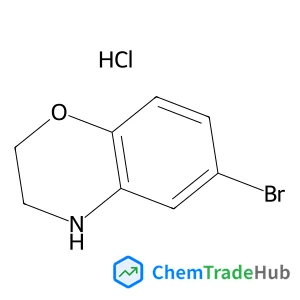
6-Bromo-3,4-dihydro-2H-1,4-benzoxazine hydrochloride (1:1)
CAS Number:
1260803-10-8
Molecular Formula:
C8H9BrClNO

4-Methyl-3-morpholinecarboxylic acid hydrochloride (1:1)
CAS Number:
1240518-90-4
Molecular Formula:
C6H12ClNO3

2,2-dideuterio-2-(3,4,5,6-tetradeuterio-2-pyridyl)acetic acid;hydrochloride
CAS Number:
1329799-67-8
Molecular Formula:
C7H2ClD6NO2
phosphoryl}methyl 4-methylbenzenesulfonate structure](https://static.chemtradehub.com/structs/864/864068-45-1-ba7c.webp "{[3-(Hexadecyloxy)propoxy](hydroxy)phosphoryl}methyl 4-methylbenzenesulfonate structure")
{[3-(Hexadecyloxy)propoxy](hydroxy)phosphoryl}methyl 4-methylbenzenesulfonate
CAS Number:
864068-45-1
Molecular Formula:
C27H49O7PS
Recommended Suppliers



Disclaimer
This page provides academic journal information for reference and research purposes only. We are not affiliated with any journal publishers and do not handle publication submissions. For publication-related inquiries, please contact the respective journal publishers directly.
If you notice any inaccuracies in the information displayed, please contact us at support@chemtradehub.com. We will promptly review and address your concerns.