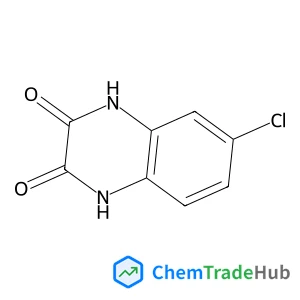
6-CHLORO-2,3-DIOXO-1,2,3,4-TETRAHYDROQUINOXALINE, 97
CAS Number:
169-14-2
Molecular Formula:
C8H5ClN2O2
Chengyan Dong, Jiajing Zhang, Jiyun Shi, Bing Jia, Fan Wang
Well-defined water-soluble block copolymers poly(ethylene glycol)-b-poly(N-(2-hydroxypropyl) methacrylamide-co-N-methacryloylglycylglycine) (PEG-b-P(HPMA-co-MAGG)) with different compositions and narrow polydispersity were synthesized by reversible addition–fragmentation chain transfer (RAFT) polymerization. The in vivo blood clearance and biodistribution of copolymers with different compositions were studied in normal BALB/c mice. The results showed that the electronegative copolymers were rapidly eliminated from blood and tended to accumulate in the liver and spleen. However, the copolymers with neutral or a small amount of negative charges showed a prolonged circulation time and low non-specific organ uptake. Combined with the quantitative analysis of in vitro hepatocyte uptake, we conclude that this was due to the balance between (i) the electrostatic repulsion between the copolymer and the cell membrane and (ii) the tendency of macrophage-like cells to capture the negative charged copolymers. This work also revealed the significant roles of the PEG chain length, negative charge and molecular weight for the copolymers as anticancer drug carriers with prolonged circulation time and optimal biodistribution.

Acta Materialia

Drug Discovery Today

Saudi Pharmaceutical Journal

Russian Journal of Applied Chemistry

Russian Journal of Bioorganic Chemistry

Current Opinion in Solid State & Materials Science

Current Opinion in Colloid & Interface Science

Journal of Saudi Chemical Society

Russian Journal of General Chemistry

Crystallography Reports
Gifty Sara Rolly, Guy Yardeni, Ronen Bar-Ziv, Tomer Zidki
DOI: 10.1039/C9CP06820A
Yuting Li, Wael A. Fouad
DOI: 10.1039/C9CP03231B
Tan Phat Dao, M. Idrees, Huynh V. Phuc, Nguyen N. Hieu, Nguyen T. T. Binh, Hoi B. Dinh, B. Amin, Chuong V. Nguyen
DOI: 10.1039/C9CP07009E
Amr A. A. Attia, Alexandru Lupan, R. Bruce King, Sundargopal Ghosh
DOI: 10.1039/C9CP04263F
Evgeniy V. Gromov, Tatiana Domratcheva
DOI: 10.1039/D0CP00814A
Carolina Moreno, María-Teresa Baeza-Romero, Óscar Gálvez, Vicente López Arza, James C. Ianni, Eva Espíldora
DOI: 10.1039/C9CP05601G
Hao Liu, Dong Song, Yangpeng Zhang, Sheng Yang, Ray Luo
DOI: 10.1039/C9CP03434J
Mitra Maddah, Mina Maddah, Kiana Peyvandi
DOI: 10.1039/C9CP03833G
Leanne D. Chen, Michal Bajdich, Karen Chan
DOI: 10.1039/C9CP05952K
Yanrong Jiang, Qinqin Yuan, Jonas Warneke, Zhubin Hu, Yan Yang, Xue-Bin Wang
DOI: 10.1039/D0CP00700E
4-Nitrophenyl phosphate disodium salt hexahydrate is primarily used as a substra...
2-(Trifluoromethyl)-1,3-oxazole-4-carboxylic Acid (CAS: 1060816-01-4) is widely ...
2-Fluoro-4-biphenylcarboxylic acid should be stored in a cool, dry place at room...
Prednisolone-21-Carboxylic Acid is primarily used in the pharmaceutical industry...
4-(Hydrazinomethyl)-1,2,3-benzenetriol (CAS: 3614-72-0) should be stored in a co...
4-Amino-1-methyl-1H-pyrazole-5-carboxylic acid hydrochloride (CAS: 92534-70-8) i...
Dehydropachymic acid (CAS: 77012-31-8) is regulated by various agencies. It fall...
The market and research trends for 6-[(2,2-Dimethylpropanoyl)amino]nicotinic aci...
1,10-Phenanthroline-2,9-dicarbaldehyde should be stored in a cool, dry place awa...
5-Carbamoyl-11-oxo-10,11-dihydro-5H-dibenzo[b,f]azepin-10-yl acetate can be synt...

Polymer Chemistry welcomes submissions in all areas of polymer science that have a strong focus on macromolecular chemistry. Manuscripts may cover a broad range of fields, yet no direct application focus is required.