


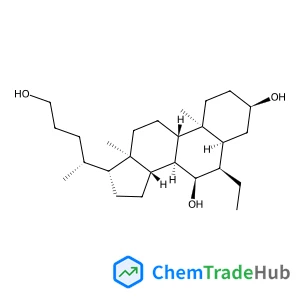
(3alpha,5beta,6alpha,7alpha)-6-Ethylcholane-3,7,24-triol
CAS Number:
1537866-49-1
Molecular Formula:
C26H46O3
Alain Desbois, Julien Valton, Yohann Moreau, Stéphane Torelli, Vincent Nivière
Superoxide reductases (SORs) are mononuclear non-heme iron enzymes involved in superoxide radical detoxification in some microorganisms. Their atypical active site is made of an iron atom pentacoordinated by four equatorial nitrogen atoms from histidine residues and one axial sulfur atom from a cysteinate residue, which plays a central role in catalysis. In most SORs, the residue immediately following the cysteinate ligand is an asparagine, which belongs to the second coordination sphere and is expected to have a critical influence on the properties of the active site. In this work, in order to investigate the role of this asparagine residue in the Desulfoarculus baarsii enzyme (Asn117), we carried out, in comparison with the wild-type enzyme, absorption and resonance Raman (RR) studies on a SOR mutant in which Asn117 was changed into an alanine. RR analysis was developed in order to assign the different bands using excitation in the (Cys116)–S−→ Fe3+ charge transfer band. By investigating the correlation between the (Cys116)–S− → Fe3+ charge transfer band maximum with the frequency of each RR band in different SOR forms, we assessed the contribution of the ν(Fe–S) vibration among the different RR bands. The data showed that Asn117, by making hydrogen bond interactions with Lys74 and Tyr76, allows a rigidification of the backbone of the Cys116 ligand, as well as that of the neighboring residues Ile118 and His119. Such a structural role of Asn117 has a deep impact on the S–Fe bond. It results in a tight control of the H-bond distance between the Ile118 and His119 NH peptidic moiety with the cysteine sulfur ligand, which in turn enables fine-tuning of the S–Fe bond strength, an essential property for the SOR active site. This study illustrates the intricate roles of second coordination sphere residues to adjust the ligand to metal bond properties in the active site of metalloenzymes.

Journal of Organometallic Chemistry

Proceedings of the National Academy of Sciences of the United States of America

Planta Medica

Journal of Heterocyclic Chemistry

Journal of Physics and Chemistry of Solids

Kinetics and Catalysis

Molecular Pharmacology

Nature

Pharmacological Reviews

Journal of Medicinal Chemistry
Shin-ichiro Kato, Taisuke Matsumoto, Tsutomu Ishi-i, Thies Thiemann, Motoyuki Shigeiwa, Hideki Gorohmaru, Shuichi Maeda, Yoshiro Yamashita, Shuntaro Mataka
DOI: 10.1039/B410016F
Sylvie Ferlay, Mir Wais Hosseini, Véronique Bulach, Jean-Marc Planeix
DOI: 10.1039/B410459P
François Lecolley, Lei Tao, Giuseppe Mantovani, Ian Durkin, Sylvie Lautru, David M. Haddleton
DOI: 10.1039/B407712A
Cheng-Hsien Yang, Kai-Hung Fang, Chun-Hung Chen, I-Wen Sun
DOI: 10.1039/B406958G
Madeleine M. Joullié, David J. Richard
DOI: 10.1039/B400334A
Ken Takazawa, Yasutaka Kitahama, Yasuyuki Kimura
DOI: 10.1039/B409690H
Agustino Zulys, Tarun K. Panda, Michael T. Gamer, Peter W. Roesky
DOI: 10.1039/B410918J
Anthony R. Chianese, Brian M. Zeglis, Robert H. Crabtree
DOI: 10.1039/B409672J
Yu-Sheng Chen, Tim Graber
DOI: 10.1039/B409463H
Moon Gyu Han, Stephen H. Foulger
DOI: 10.1039/B409396H
N-(4-Methoxybenzyl)-2-pyridinamine (CAS: 52818-63-0) is increasingly being used ...
When handling Ethyl 4-(2-chlorophenyl)-1,3-thiazole-2-carboxylate, appropriate p...
Diethyldiselane (CAS: 628-39-7) is classified under the Globally Harmonized Syst...
The market for oxocopper (CAS: 12053-18-8) is primarily driven by its use in cat...
The market for 5-{[(2-Methyl-2-propanyl)oxy]carbonyl}-5-azaspiro[2.4]heptane-7-c...
2-(1-Pyrrolidinyl)-4-pyridinamine is a chemical compound with the CAS number 359...
2-(3-Pyridinyl)-1-azabicyclo[2.2.2]octane (CAS: 91556-75-1) is a crystalline sol...
(S)-Alpha-allyl-proline hydrochloride is usually synthesized via a Wittig reacti...
3-Methyl-1,2-oxazole-5-carboxylic acid (CAS: 4857-42-5) is an organic compound w...
Lys-SMCC-DM1 is synthesized via a multi-step process involving the coupling of S...

Physical Chemistry Chemical Physics (PCCP) is an international journal co-owned by 19 physical chemistry and physics societies from around the world. This journal publishes original, cutting-edge research in physical chemistry, chemical physics and biophysical chemistry. To be suitable for publication in PCCP, articles must include significant innovation and/or insight into physical chemistry; this is the most important criterion that reviewers and Editors will judge against when evaluating submissions. The journal has a broad scope and welcomes contributions spanning experiment, theory, computation and data science. Topical coverage includes spectroscopy, dynamics, kinetics, statistical mechanics, thermodynamics, electrochemistry, catalysis, surface science, quantum mechanics, quantum computing and machine learning. Interdisciplinary research areas such as polymers and soft matter, materials, nanoscience, energy, surfaces/interfaces, and biophysical chemistry are welcomed if they demonstrate significant innovation and/or insight into physical chemistry. Joined experimental/theoretical studies are particularly appreciated when complementary and based on up-to-date approaches.
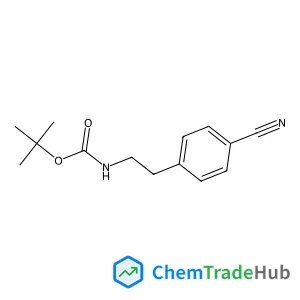
![N-{[(2-Methyl-2-propanyl)oxy]carbonyl}-L-methionylglycine structure](https://static.chemtradehub.com/structs/234/23446-03-9-e1e5.webp "N-{[(2-Methyl-2-propanyl)oxy]carbonyl}-L-methionylglycine structure")
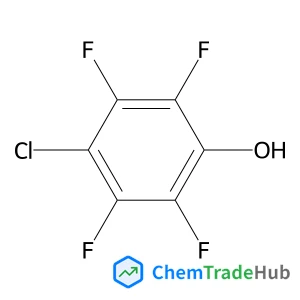
![1-oxaspiro[4.4]nonan-6-one structure](https://static.chemtradehub.com/structs/134/134179-01-4-e051.webp "1-oxaspiro[4.4]nonan-6-one structure")





