












![1-oxaspiro[4.4]nonan-6-one structure](https://static.chemtradehub.com/structs/134/134179-01-4-e051.webp "1-oxaspiro[4.4]nonan-6-one structure")
Experimental and theoretical study on the impact of a nitrate group on the chemistry of alkoxy radicals‡
Literature Information
Publication Date
2021-03-02
DOI
10.1039/D0CP05555G
Impact Factor
3.676
Authors
A. Novelli, C. Cho, H. Fuchs, A. Hofzumahaus, F. Rohrer, R. Tillmann, A. Kiendler-Scharr, A. Wahner, L. Vereecken
View Original
Abstract
The chemistry of nitrated alkoxy radicals, and its impact on RO2 measurements using the laser induced fluorescence (LIF) technique, is examined by a combined theoretical and experimental study. Quantum chemical and theoretical kinetic calculations show that the decomposition of β-nitrate-alkoxy radicals is much slower than β-OH-substituted alkoxy radicals, and that the spontaneous fragmentation of the α-nitrate-alkyl radical product to a carbonyl product + NO2 prevents other β-substituents from efficiently reducing the energy barrier. The systematic series of calculations is summarized as an update to the structure–activity relationship (SAR) by Vereecken and Peeters (2009), and shows increasing decomposition rates with higher degrees of substitution, as in the series ethene to 2,3-dimethyl-butene, and dominant H-migration for sufficiently large alkoxy radicals such as those formed from 1-pentene or longer alkenes. The slow decomposition allows other reactions to become competitive, including epoxidation in unsaturated nitrate-alkoxy radicals; the decomposition SAR is likewise updated for β-epoxy substituents. A set of experiments investigating the NO3-initiated oxidation of ethene, propene, cis-2-butene, 2,3-dimethyl-butene, 1-pentene, and trans-2-hexene, were performed in the atmospheric simulation chamber SAPHIR with measurements of HO2 and RO2 radicals performed with a LIF instrument. Comparisons between modelled and measured HO2 radicals in all experiments, performed in excess of carbon monoxide to avoid OH radical chemistry, suggest that the reaction of HO2 with β-nitrate alkylperoxy radicals has a channel forming OH and an alkoxy radical in yields of 15–65%, compatible with earlier literature data on nitrated isoprene and α-pinene radicals. Model concentrations of RO2 radicals when including the results of the theoretical calculations described here, agreed within 10% with the measured RO2 radicals for all species investigated when the alkene oxidation is dominated by NO3 radicals. The formation of NO2 in the decomposition of β-nitrate alkoxy radicals prevents detection of the parent RO2 radical in a LIF instrument, as it relies on formation of HO2. The implications for measurements of RO2 in ambient and experimental conditions, such as for the NO3-dominated chemistry during nighttime, is discussed. The current results appear in disagreement with an earlier indirect experimental study by Yeh et al. on pentadecene.
Recommended Journals
Related Literature
The isomerisation of (Z)-3-[2H1]-phenylprop-2-enone as a measure of the rate of hydroperoxide addition in Weitz–Scheffer and Juliá–Colonna epoxidations
David R. Kelly, Eva Caroff, Robert W. Flood, William Heal, Stanley M. Roberts
2004-08-25
Communication
DOI: 10.1039/B404389H
Novel Pt/CeO2/C catalysts for electrooxidation of alcohols in alkaline media
Changwei Xu, Pei Kang Shen
2004-08-25
Communication
DOI: 10.1039/B408589B
Metal-chelating nanoparticles as selective fluorescent sensor for Cu2+
Rachel Méallet-Renault, Robert Pansu, Sonia Amigoni-Gerbier, Chantal Larpent
2004-09-07
Communication
DOI: 10.1039/B407766K
Electrodeposition of monodispersed Fe nanocrystals from an ionic liquid
C. L. Aravinda, W. Freyland
2004-10-19
Communication
DOI: 10.1039/B409861G
Chiral amplification by polypeptides and its relevance to prebiotic catalysis
David R. Kelly, Alastair Meek, Stanley M. Roberts
2004-08-25
Communication
DOI: 10.1039/B404379K
The anion sequence in the phase transformation of mesostructures templated by non-ionic block copolymers
Jiawei Tang, Chengzhong Yu, Xufeng Zhou, Xiaoxia Yan, Dongyuan Zhao
2004-08-25
Communication
DOI: 10.1039/B408100E
Electrophilicity parameters for σ-complexation by uncharged electron-deficient aromatic and heteroaromatic structures
François Terrier, Régis Goumont, Taoufik Boubaker, Erwin Buncel
2004-09-30
Communication
DOI: 10.1039/B410356D
A modular ditopic crown-shielded phosphate ion-pair receptor
Patrick Gunning, Andrew C. Benniston, Robert D. Peacock
2004-08-20
Communication
DOI: 10.1039/B409132A
Molecular tectonics: design of luminescent H-bonded molecular networks
Sylvie Ferlay, Mir Wais Hosseini, Véronique Bulach, Jean-Marc Planeix
2004-09-07
Communication
DOI: 10.1039/B410459P
Secondary coordination sphere controlled reversible geometry reorganisations in copper(ii) complexes
John Fielden, De-Liang Long, Leroy Cronin
2004-08-20
Communication
DOI: 10.1039/B407229D
You might also like
Compound Q&A
What is the market or research trend for N-(4-Methoxybenzyl)-2-pyridinamine (CAS: 52818-63-0)?
N-(4-Methoxybenzyl)-2-pyridinamine (CAS: 52818-63-0) is increasingly being used ...
52818-63-0N-(4-Methoxybenzyl)-...
Compound Q&A
What precautions should be taken when handling Ethyl 4-(2-chlorophenyl)-1,3-thiazole-2-carboxylate (CAS: 1050507-06-6)?
When handling Ethyl 4-(2-chlorophenyl)-1,3-thiazole-2-carboxylate, appropriate p...
1050507-06-6Ethyl 4-(2-chlorophe...
Compound Q&A
What regulatory guidelines apply to diethyldiselane (CAS: 628-39-7)?
Diethyldiselane (CAS: 628-39-7) is classified under the Globally Harmonized Syst...
628-39-7Diethyldiselane
Compound Q&A
What is the market or research trend for oxocopper (CAS: 12053-18-8)?
The market for oxocopper (CAS: 12053-18-8) is primarily driven by its use in cat...
12053-18-8oxocopper; oxo-(oxoc...
Compound Q&A
What is the market or research trend for 5-{[(2-Methyl-2-propanyl)oxy]carbonyl}-5-azaspiro[2.4]heptane-7-carboxylic acid?
The market for 5-{[(2-Methyl-2-propanyl)oxy]carbonyl}-5-azaspiro[2.4]heptane-7-c...
1268519-54-55-{[(2-Methyl-2-prop...
Compound Q&A
What is 2-(1-Pyrrolidinyl)-4-pyridinamine (CAS: 35981-63-6)?
2-(1-Pyrrolidinyl)-4-pyridinamine is a chemical compound with the CAS number 359...
35981-63-62-(1-Pyrrolidinyl)-4...
Compound Q&A
What are the physical and chemical properties of 2-(3-Pyridinyl)-1-azabicyclo[2.2.2]octane (CAS: 91556-75-1)?
2-(3-Pyridinyl)-1-azabicyclo[2.2.2]octane (CAS: 91556-75-1) is a crystalline sol...
91556-75-12-(3-Pyridinyl)-1-az...
Compound Q&A
How is (S)-Alpha-allyl-proline hydrochloride (CAS: 129704-91-2) typically synthesized?
(S)-Alpha-allyl-proline hydrochloride is usually synthesized via a Wittig reacti...
129704-91-2(S)-Alpha-allyl-prol...
Compound Q&A
What is 3-Methyl-1,2-oxazole-5-carboxylic acid (CAS: 4857-42-5)?
3-Methyl-1,2-oxazole-5-carboxylic acid (CAS: 4857-42-5) is an organic compound w...
4857-42-53-Methyl-1,2-oxazole...
Compound Q&A
How is Lys-SMCC-DM1 (CAS: 1281816-04-3) typically synthesized?
Lys-SMCC-DM1 is synthesized via a multi-step process involving the coupling of S...
1281816-04-3Lys-SMCC-DM1
Source Journal
Physical Chemistry Chemical Physics

CiteScore:
5.5
Self-citation Rate:
10.3%
Articles per Year:
3036
Physical Chemistry Chemical Physics (PCCP) is an international journal co-owned by 19 physical chemistry and physics societies from around the world. This journal publishes original, cutting-edge research in physical chemistry, chemical physics and biophysical chemistry. To be suitable for publication in PCCP, articles must include significant innovation and/or insight into physical chemistry; this is the most important criterion that reviewers and Editors will judge against when evaluating submissions. The journal has a broad scope and welcomes contributions spanning experiment, theory, computation and data science. Topical coverage includes spectroscopy, dynamics, kinetics, statistical mechanics, thermodynamics, electrochemistry, catalysis, surface science, quantum mechanics, quantum computing and machine learning. Interdisciplinary research areas such as polymers and soft matter, materials, nanoscience, energy, surfaces/interfaces, and biophysical chemistry are welcomed if they demonstrate significant innovation and/or insight into physical chemistry. Joined experimental/theoretical studies are particularly appreciated when complementary and based on up-to-date approaches.
Recommended Compounds
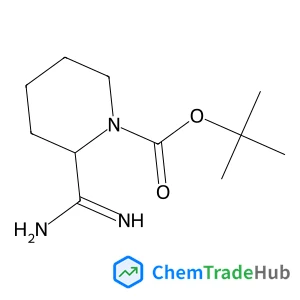
2-Methyl-2-propanyl 2-carbamimidoyl-1-piperidinecarboxylate
CAS Number:
1258640-98-0
Molecular Formula:
C11H21N3O2
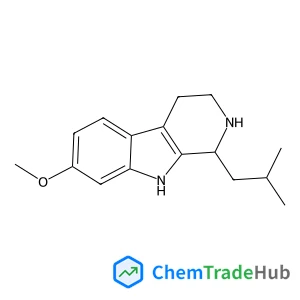
1-Isobutyl-7-methoxy-2,3,4,9-tetrahydro-1H-beta-carboline
CAS Number:
175975-76-5
Molecular Formula:
C16H22N2O
Recommended Suppliers




Disclaimer
This page provides academic journal information for reference and research purposes only. We are not affiliated with any journal publishers and do not handle publication submissions. For publication-related inquiries, please contact the respective journal publishers directly.
If you notice any inaccuracies in the information displayed, please contact us at support@chemtradehub.com. We will promptly review and address your concerns.