












![1-[6-(1H-Imidazol-1-yl)-3-pyridinyl]methanamine structure](https://static.chemtradehub.com/structs/914/914637-08-4-8825.webp "1-[6-(1H-Imidazol-1-yl)-3-pyridinyl]methanamine structure")
Reply to the ‘comment on “impact of water on the BrO + HO2 gas-phase reaction: mechanism, kinetics and products”’ by R. Chow, D. K. W. Mok, E. P. F. Lee and J. M. Dyke, Phys. Chem. Chem. Phys., 2021, 23, DOI: 10.1039/D0CP00222D
Literature Information
Publication Date
2021-03-10
DOI
10.1039/D0CP02854A
Impact Factor
3.676
Authors
Narcisse T. Tsona, Shanshan Tang, Lin Du
View Original
Abstract
We reply to the comment on our recent paper entitled “Impact of water on the BrO + HO2 gas-phase reaction: mechanism, kinetics and products” by Chow et al. In their comment, the authors raised the differences between our results and their results in an earlier paper (R. Chow, D. K. W. Mok, E. P. F. Lee and J. M. Dyke, Phys. Chem. Chem. Phys., 2016, 18, 30554–30569), in terms of kinetics and potential energy surface, and they attributed these differences to the use of a small integration grid size and closed-shell wavefunctions for geometry optimizations in our study. Indeed, in our original manuscript, we did not ensure the proper use of UHF wavefunctions for singlet states, which led the singlet states to be treated with restricted M06-2X wavefunctions during optimizations. Furthermore, the default integration grid was used. New geometry optimizations have been performed where reactant complexes on the singlet surface were treated in their open-shell singlet states (ensured by using unrestricted-spin wave-functions) and using very tight convergence criteria, and new reaction rate constants have been calculated based on new energy barriers. No barrierless hydrogen abstraction reactions were observed as reported in our previous results and, consequently, the outer rate coefficient in the two-transition state approach (given by eqn (5) in Tsona et al., 2019) was determined by the collision theory. Overall rate constants exhibit a negative temperature dependency in the 200–400 K range. Despite the changes on the reaction energies and kinetics due to wrong UHF wavefunctions, our main conclusion that water has no net effect on the BrO + HO2 → BrOH + O2 reaction is still valid.
Related Literature
Intriguing emission properties of triphenylamine–carborane systems
So-Yoen Kim, Yang-Jin Cho, Guo Fan Jin, Won-Sik Han, Ho-Jin Son
2015-05-13
Communication
DOI: 10.1039/C5CP01658D
Correlation of electrochromic properties and oxidation states in nanocrystalline tungsten trioxide
S. Darmawi, S. Burkhardt, T. Leichtweiss, D. A. Weber, S. Wenzel, J. Janek, P. J. Klar
2015-05-13
Paper
DOI: 10.1039/C5CP02482J
Electrochemical growth of CoNi and Pt–CoNi soft magnetic composites on an alkanethiol monolayer-modified ITO substrate
D. Escalera-López, E. Gómez, E. Vallés
2015-05-27
Paper
DOI: 10.1039/C5CP02291F
Free electrons and ionic liquids: study of excited states by means of electron-energy loss spectroscopy and the density functional theory multireference configuration interaction method
Christoph Bannwarth, Stefan Grimme
2015-05-20
Paper
DOI: 10.1039/C5CP01417D
Protein synthesis in artificial cells: using compartmentalisation for spatial organisation in vesicle bioreactors
2015-05-01
Communication
DOI: 10.1039/C4CP05933F
Tailoring of optical properties of fluorescein using green synthesized gold nanoparticles
Jisha John, Lincy Thomas, Nibu A. George, Achamma Kurian, Sajan D. George
2015-05-12
Paper
DOI: 10.1039/C5CP02029H
Efficient dye regeneration at low driving force achieved in triphenylamine dye LEG4 and TEMPO redox mediator based dye-sensitized solar cells
Wenxing Yang, Yan Hao, Gerrit Boschloo
2015-05-12
Paper
DOI: 10.1039/C5CP01880C
Geometry controls the stability of FeSi14
Vikas Chauhan, Marissa Baddick Abreu, Arthur C. Reber, Shiv N. Khanna
2015-05-18
Paper
DOI: 10.1039/C5CP01386K
Cation-assisted interactions between N-heterocycles and CO2
Huarong Tang, Dongmei Lu, Chao Wu
2015-05-12
Paper
DOI: 10.1039/C5CP01793A
You might also like
Compound Q&A
How should waste containing 6-Chloro-5-(2'-hydroxy-3'-methoxy-4-biphenylyl)-3-(3-methoxyphenyl)-1H-pyrrolo[3,2-d]pyrimidine-2,4(3H,5H)-dione (CAS: 1346607-05-3) be handled?
Waste containing 6-Chloro-5-(2'-hydroxy-3'-methoxy-4-biphenylyl)-3-(3-methoxyphe...
1346607-05-36-Chloro-5-(2'-hydro...
Compound Q&A
What are the main uses of (3alpha,5alpha)-3-Hydroxypregnane-11,20-dione (CAS: 23930-19-0)?
(3alpha,5alpha)-3-Hydroxypregnane-11,20-dione is primarily used in the pharmaceu...
23930-19-0(3alpha,5alpha)-3-Hy...
Compound Q&A
What is the market or research trend for 4-Amino-6-chloro-2-pyridinecarboxylic acid (CAS: 546141-56-4)?
The market for 4-Amino-6-chloro-2-pyridinecarboxylic acid (CAS: 546141-56-4) is ...
546141-56-44-Amino-6-chloro-2-p...
Compound Q&A
Are there alternatives to (2-Benzoylethyl)trimethylammonium chloride (CAS: 24472-88-6) in synthesis?
Alternatives to (2-Benzoylethyl)trimethylammonium chloride (CAS: 24472-88-6) in ...
24472-88-6(2-Benzoylethyl)trim...
Compound Q&A
Is N-[4-Nitro-3-(trifluoromethyl)phenyl]acetamide (CAS: 393-12-4) safe?
N-[4-Nitro-3-(trifluoromethyl)phenyl]acetamide (CAS: 393-12-4) is generally safe...
393-12-4N-[4-Nitro-3-(triflu...
Compound Q&A
Are there alternatives to [(4R,5R,6S)-5-hydroxy-10-imino-3,7-dioxa-1,9-diazatricyclo[6.4.0.02,6]dodeca-8,11-dien-4-yl]methyl dihydrogen phosphate (CAS: 39679-56-6) in synthesis?
Alternative reagents such as other phosphates or similar functional groups can b...
39679-56-6[(4R,5R,6S)-5-hydrox...
Compound Q&A
Are there alternatives to N,N'-Bis(3-aminopropyl)-1,3-propanediamine (CAS: 4605-14-5) in synthesis?
There are alternatives to N,N'-Bis(3-aminopropyl)-1,3-propanediamine (CAS: 4605-...
4605-14-5N,N'-Bis(3-aminoprop...
Compound Q&A
What precautions should be taken when handling Aluminium trihexadecanoate (CAS: 555-35-1)?
When handling Aluminium trihexadecanoate, it is important to use appropriate per...
555-35-1Aluminium trihexadec...
Compound Q&A
What is (1,1-Dioxido-3-oxo-1,2-benzothiazol-2(3H)-yl)acetic acid (CAS: 52188-11-1)?
(1,1-Dioxido-3-oxo-1,2-benzothiazol-2(3H)-yl)acetic acid is a chemical compound ...
52188-11-1(1,1-Dioxido-3-oxo-1...
Compound Q&A
Are there alternatives to 5,5-dimethyloxolan-2-one (CAS: 3123-97-5) in synthesis?
Several alternatives to 5,5-dimethyloxolan-2-one (CAS: 3123-97-5) can be used in...
3123-97-55,5-dimethyloxolan-2...
Source Journal
Physical Chemistry Chemical Physics

CiteScore:
5.5
Self-citation Rate:
10.3%
Articles per Year:
3036
Physical Chemistry Chemical Physics (PCCP) is an international journal co-owned by 19 physical chemistry and physics societies from around the world. This journal publishes original, cutting-edge research in physical chemistry, chemical physics and biophysical chemistry. To be suitable for publication in PCCP, articles must include significant innovation and/or insight into physical chemistry; this is the most important criterion that reviewers and Editors will judge against when evaluating submissions. The journal has a broad scope and welcomes contributions spanning experiment, theory, computation and data science. Topical coverage includes spectroscopy, dynamics, kinetics, statistical mechanics, thermodynamics, electrochemistry, catalysis, surface science, quantum mechanics, quantum computing and machine learning. Interdisciplinary research areas such as polymers and soft matter, materials, nanoscience, energy, surfaces/interfaces, and biophysical chemistry are welcomed if they demonstrate significant innovation and/or insight into physical chemistry. Joined experimental/theoretical studies are particularly appreciated when complementary and based on up-to-date approaches.
Recommended Compounds
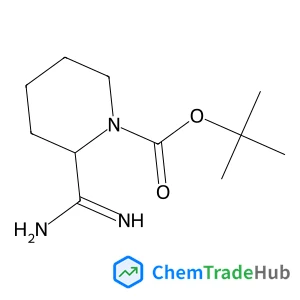
2-Methyl-2-propanyl 2-carbamimidoyl-1-piperidinecarboxylate
CAS Number:
1258640-98-0
Molecular Formula:
C11H21N3O2


2-(4,4-Difluorobutyl)-1H-isoindole-1,3(2H)-dione
CAS Number:
1265341-14-7
Molecular Formula:
C12H11F2NO2
Recommended Suppliers





Disclaimer
This page provides academic journal information for reference and research purposes only. We are not affiliated with any journal publishers and do not handle publication submissions. For publication-related inquiries, please contact the respective journal publishers directly.
If you notice any inaccuracies in the information displayed, please contact us at support@chemtradehub.com. We will promptly review and address your concerns.