












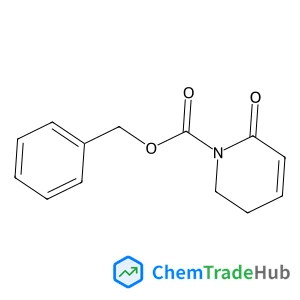
Benzyl 6-oxo-3,6-dihydro-1(2H)-pyridinecarboxylate
CAS Number:
725746-35-0
Molecular Formula:
C13H13NO3
Pau Besalú-Sala, Josep M. Luis, Miquel Solà
The shift towards renewable energy is one of the main challenges of this generation. Dye-sensitized solar cells (DSSCs), based on donor–acceptor architectures, can help in this transition as they present excellent photovoltaic efficiencies yet cheap and simple manufacturing. For molecular heterojunction DSSCs, donor–acceptor pairs are linked in a covalent manner, which facilitates their tailoring and rational design. Nevertheless, reliable computational characterization of charge transfer rate constants (kCT) is needed to speed this development process up. In this context, the performance of time-dependent density functional theory for the calculation of kCT values in donor–acceptor fullerene-based dyads has not been benchmarked yet. Herein, we present a detailed analysis on the performance of seven well-known density functional approximations (DFAs) for this type of system, focusing on several parameters such as the reorganization energies (λ), electronic couplings (VDA), and Gibbs energies (ΔG0CT), as well as the final rate constants. The amount of exact exchange at short range (SR) and long range (LR) electron–electron distances (and the transition from the SR to LR) turned out to be key for the success of the prediction. The tuning of these parameters improves significantly the performance of current DFAs.
Martin Wessig, Martin Spitzbarth, Malte Drescher, Rainer Winter, Sebastian Polarz
DOI: 10.1039/C5CP01369K
Mohammad R. Momeni, Lisa Shulman, Eric Rivard, Alex Brown
DOI: 10.1039/C5CP01993A
Mustafa Supur, Yuki Kawashima, Kei Ohkubo, Hayato Sakai, Taku Hasobe
DOI: 10.1039/C5CP01403D
K. V. Gataullina, M. A. Ziganshin, I. I. Stoikov, A. T. Gubaidullin, V. V. Gorbatchuk
DOI: 10.1039/C5CP02042E
Nan Li, Rémy Berthier, Maurits R. R. de Planque
DOI: 10.1039/C4CP05882H
DOI: 10.1039/C4CP05933F
Chandrima Jash, Pritha Basu, Pavan V. Payghan, Nanda Ghoshal, Gopinatha Suresh Kumar
DOI: 10.1039/C5CP00424A
Valentina Valmacco, Gregor Trefalt, Plinio Maroni, Michal Borkovec
DOI: 10.1039/C5CP02292D
Gregory J. Dutton, Steven W. Robey
DOI: 10.1039/C5CP02800K
Waste containing 6-Chloro-5-(2'-hydroxy-3'-methoxy-4-biphenylyl)-3-(3-methoxyphe...
(3alpha,5alpha)-3-Hydroxypregnane-11,20-dione is primarily used in the pharmaceu...
The market for 4-Amino-6-chloro-2-pyridinecarboxylic acid (CAS: 546141-56-4) is ...
Alternatives to (2-Benzoylethyl)trimethylammonium chloride (CAS: 24472-88-6) in ...
N-[4-Nitro-3-(trifluoromethyl)phenyl]acetamide (CAS: 393-12-4) is generally safe...
Alternative reagents such as other phosphates or similar functional groups can b...
There are alternatives to N,N'-Bis(3-aminopropyl)-1,3-propanediamine (CAS: 4605-...
When handling Aluminium trihexadecanoate, it is important to use appropriate per...
(1,1-Dioxido-3-oxo-1,2-benzothiazol-2(3H)-yl)acetic acid is a chemical compound ...
Several alternatives to 5,5-dimethyloxolan-2-one (CAS: 3123-97-5) can be used in...

Physical Chemistry Chemical Physics (PCCP) is an international journal co-owned by 19 physical chemistry and physics societies from around the world. This journal publishes original, cutting-edge research in physical chemistry, chemical physics and biophysical chemistry. To be suitable for publication in PCCP, articles must include significant innovation and/or insight into physical chemistry; this is the most important criterion that reviewers and Editors will judge against when evaluating submissions. The journal has a broad scope and welcomes contributions spanning experiment, theory, computation and data science. Topical coverage includes spectroscopy, dynamics, kinetics, statistical mechanics, thermodynamics, electrochemistry, catalysis, surface science, quantum mechanics, quantum computing and machine learning. Interdisciplinary research areas such as polymers and soft matter, materials, nanoscience, energy, surfaces/interfaces, and biophysical chemistry are welcomed if they demonstrate significant innovation and/or insight into physical chemistry. Joined experimental/theoretical studies are particularly appreciated when complementary and based on up-to-date approaches.
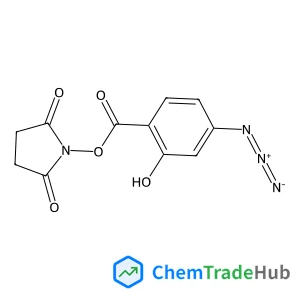
![N-{15-[(2,5-Dioxo-1-pyrrolidinyl)oxy]-15-oxo-3,6,9,12-tetraoxapentadec-1-yl}-2-(2-propyn-1-yloxy)acetamide structure](https://static.chemtradehub.com/structs/210/2101206-92-0-2eb5.webp "N-{15-[(2,5-Dioxo-1-pyrrolidinyl)oxy]-15-oxo-3,6,9,12-tetraoxapentadec-1-yl}-2-(2-propyn-1-yloxy)acetamide structure")
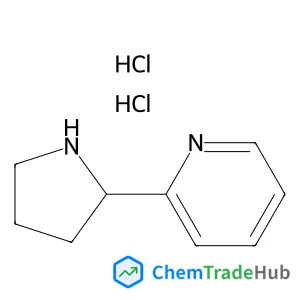
![1-(1-Benzyl-1,2,3,6-tetrahydropyridin-4-yl)-1H-benzo[d]imidazol-2(3H)-one structure](https://static.chemtradehub.com/structs/603/60373-71-9-7dfb.webp "1-(1-Benzyl-1,2,3,6-tetrahydropyridin-4-yl)-1H-benzo[d]imidazol-2(3H)-one structure")




