



Visible-light-mediated de-aminative alkylation of N-arylamines with alkyl Katritzky salts
Literature Information
Publication Date
2019-10-22
DOI
10.1039/C9QO01175G
Impact Factor
5.281
Authors
Yuliang Xu, Ze-Jun Xu, Zhao-Peng Liu, Hongxiang Lou
View Original
Abstract
A visible-light-mediated de-aminative alkylation of N-arylamines has been developed, providing direct access to α-amino C–H functionalization from readily available Katritzky salts under mild conditions. In some cases, this operationally simple protocol can be performed in the absence of a photocatalyst. A wide range of substrates and functional groups are tolerated. The utility of this approach is highlighted by its application to the late-state modification of drug molecules, natural products and peptides.
Recommended Journals

Russian Journal of Organic Chemistry

Chemistry Education Research and Practice

Organic Process Research & Development

Acta Materialia

Russian Journal of Bioorganic Chemistry

New Journal of Chemistry

Saudi Pharmaceutical Journal

Current Opinion in Colloid & Interface Science

Chemical Communications

Russian Journal of General Chemistry
Related Literature
BOKEI: Bayesian optimization using knowledge of correlated torsions and expected improvement for conformer generation
Lucian Chan, Geoffrey R. Hutchison, Garrett M. Morris
2020-02-12
Paper
DOI: 10.1039/C9CP06688H
A theoretical investigation on boron–ligand cooperation to activate molecular hydrogen by a frustrated Lewis pair and subsequent reduction of carbon dioxide
Manas Ghara, Sudip Pan
2019-09-05
Paper
DOI: 10.1039/C9CP03756J
Strain analysis from M-edge resonant inelastic X-ray scattering of nickel oxide films
P. S. Miedema, I. Alonso Calafell, C. Schüßler-Langeheine, M. Beye
2019-09-20
Paper
DOI: 10.1039/C9CP03593A
Gauging stability and reactivity of carbonyl O-oxide Criegee intermediates
J. Philipp Wagner
2019-09-13
Paper
DOI: 10.1039/C9CP03790J
Molecular dynamics investigations of oligosaccharides recognized by family 16 and 22 carbohydrate binding modules
Ruihan Wang
2019-09-05
Paper
DOI: 10.1039/C9CP04673A
The puzzling hyper-fine structure and an accurate equilibrium geometry of succinic anhydride
Michaela K. Jahn, Daniel A. Obenchain, K. P. Rajappan Nair, Jens-Uwe Grabow, Jean Demaison, Peter D. Godfrey, Don McNaughton
2020-02-12
Paper
DOI: 10.1039/C9CP06775B
MARTINI-based simulation method for step-growth polymerization and its analysis by size exclusion characterization: a case study of cross-linked polyurethane
Hassan Ghermezcheshme, Hesam Makki, Mohsen Mohseni, Morteza Ebrahimi, Gijsbertus de With
2019-09-13
Paper
DOI: 10.1039/C9CP03407B
Gas adsorption and light interaction mechanism in phosphorene-based field-effect transistors
Manthila Rajapakse, George Anderson, Congyan Zhang, Rajib Musa, Jackson Walter, Ming Yu, Jacek B. Jasinski
2020-02-21
Paper
DOI: 10.1039/C9CP06547D
Correction: Thermo-orientation in fluids of arbitrarily shaped particles
Andrea Gardin, Alberta Ferrarini
2020-02-28
Correction
DOI: 10.1039/D0CP90053B
Correction: Predictable spectroscopic properties of type-II ZnTe/CdSe nanocrystals and electron/hole quenching
Tongqing Long, Jun Cao
2020-03-03
Correction
DOI: 10.1039/D0CP90055A
You might also like
Compound Q&A
Is 6-(3-Fluorophenyl)picolinic acid (CAS: 887982-40-3) safe?
6-(3-Fluorophenyl)picolinic acid is generally considered safe for laboratory use...
887982-40-36-(3-Fluorophenyl)pi...
Compound Q&A
What industries use (3R)-3-Pyrrolidinol (CAS: 2799-21-5)?
(3R)-3-Pyrrolidinol is used in the pharmaceutical industry as a precursor for dr...
2799-21-5(3R)-3-Pyrrolidinol
Compound Q&A
What precautions should be taken when handling (4R,5R)-4,5-Diethoxycarbonyl-2,2-dimethyldioxolane (CAS: 59779-75-8)?
When handling (4R,5R)-4,5-Diethoxycarbonyl-2,2-dimethyldioxolane (CAS: 59779-75-...
59779-75-8(4R,5R)-4,5-Diethoxy...
Compound Q&A
How is 1-(6-Chloroimidazo[1,2-b]pyridazin-3-yl)ethanone (CAS: 90734-71-7) typically synthesized?
1-(6-Chloroimidazo[1,2-b]pyridazin-3-yl)ethanone is often synthesized via a mult...
90734-71-71-(6-Chloroimidazo[1...
Compound Q&A
What is the market or research trend for N-Ethyl-3,4-dimethylbenzylamine (CAS: 39180-83-1)?
The market for N-Ethyl-3,4-dimethylbenzylamine (CAS: 39180-83-1) remains steady,...
39180-83-1N-Ethyl-3,4-dimethyl...
Compound Q&A
What is Tert-butyl 3-(pyrrolidin-1-yl)azetidine-1-carboxylate (CAS: 1019008-21-9)?
Tert-butyl 3-(pyrrolidin-1-yl)azetidine-1-carboxylate is a chemical compound wit...
1019008-21-9Tert-butyl 3-(pyrrol...
Compound Q&A
What regulatory guidelines apply to 1-Bromo-3-chloro-2,4-dimethoxybenzene (CAS: 1228956-93-1)?
1-Bromo-3-chloro-2,4-dimethoxybenzene (CAS: 1228956-93-1) falls under the classi...
1228956-93-11-Bromo-3-chloro-2,4...
Compound Q&A
Is 8-Bromo-2-methyl-3,4-dihydroisoquinolin-1(2H)-one (CAS: 1368622-07-4) safe?
The safety of 8-Bromo-2-methyl-3,4-dihydroisoquinolin-1(2H)-one (CAS: 1368622-07...
1368622-07-48-Bromo-2-methyl-3,4...
Compound Q&A
Is Benzyl [(3S)-2,6-dioxo-3-piperidinyl]carbamate (CAS: 22785-43-9) safe?
Benzyl [(3S)-2,6-dioxo-3-piperidinyl]carbamate is generally safe when handled wi...
22785-43-9Benzyl [(3S)-2,6-dio...
Compound Q&A
How should 1-{[4-(4,4,5,5-Tetramethyl-1,3,2-dioxaborolan-2-yl)phenyl]sulfonyl}pyrrolidine (CAS: 928657-21-0) be stored?
1-{[4-(4,4,5,5-Tetramethyl-1,3,2-dioxaborolan-2-yl)phenyl]sulfonyl}pyrrolidine s...
928657-21-01-{[4-(4,4,5,5-Tetra...
Source Journal
Organic Chemistry Frontiers

CiteScore:
7.8
Self-citation Rate:
8.7%
Articles per Year:
724
Organic Chemistry Frontiers publishes high-quality research from across organic chemistry. Emphases are placed on studies that make significant contributions to the field of organic chemistry by reporting either new or significantly improved protocols or methodologies. Topics include, but are not limited to the following: Organic synthesis Development of synthetic methodologies Catalysis Natural products Functional organic materials Supramolecular and macromolecular chemistry Physical and computational organic chemistry
Recommended Compounds
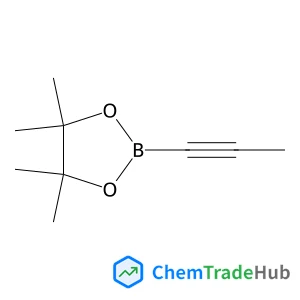
4,4,5,5-Tetramethyl-2-(1-propyn-1-YL)-1,3,2-dioxaborolane
CAS Number:
347389-75-7
Molecular Formula:
C9H15BO2
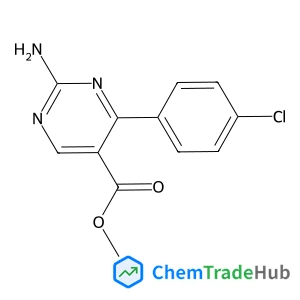
Methyl 2-amino-4-(4-chlorophenyl)-5-pyrimidinecarboxylate
CAS Number:
1133115-56-6
Molecular Formula:
C12H10ClN3O2
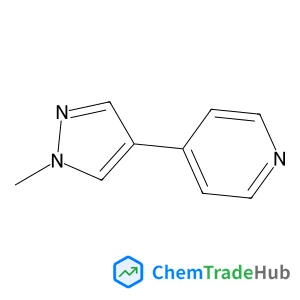
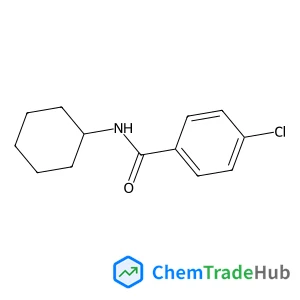
Recommended Suppliers




Disclaimer
This page provides academic journal information for reference and research purposes only. We are not affiliated with any journal publishers and do not handle publication submissions. For publication-related inquiries, please contact the respective journal publishers directly.
If you notice any inaccuracies in the information displayed, please contact us at support@chemtradehub.com. We will promptly review and address your concerns.