


BOKEI: Bayesian optimization using knowledge of correlated torsions and expected improvement for conformer generation
Literature Information
Publication Date
2020-02-12
DOI
10.1039/C9CP06688H
Impact Factor
3.676
Authors
Lucian Chan, Geoffrey R. Hutchison, Garrett M. Morris
View Original
Abstract
A key challenge in conformer sampling is finding low-energy conformations with a small number of energy evaluations. We recently demonstrated the Bayesian Optimization Algorithm (BOA) is an effective method for finding the lowest energy conformation of a small molecule. Our approach balances between exploitation and exploration, and is more efficient than exhaustive or random search methods. Here, we extend strategies used on proteins and oligopeptides (e.g. Ramachandran plots of secondary structure) and study correlated torsions in small molecules. We use bivariate von Mises distributions to capture correlations, and use them to constrain the search space. We validate the performance of our new method, Bayesian Optimization with Knowledge-based Expected Improvement (BOKEI), on a dataset consisting of 533 diverse small molecules, using (i) a force field (MMFF94); and (ii) a semi-empirical method (GFN2), as the objective function. We compare the search performance of BOKEI, BOA with Expected Improvement (BOA-EI), and a genetic algorithm (GA), using a fixed number of energy evaluations. In more than 60% of the cases examined, BOKEI finds lower energy conformations than global optimization with BOA-EI or GA. More importantly, we find correlated torsions in up to 15% of small molecules in larger data sets, up to 8 times more often than previously reported. The BOKEI patterns not only describe steric clashes, but also reflect favorable intramolecular interactions such as hydrogen bonds and π–π stacking. Increasing our understanding of the conformational preferences of molecules will help improve our ability to find low energy conformers efficiently, which will have impact in a wide range of computational modeling applications.
Recommended Journals

Russian Journal of Coordination Chemistry

Current Opinion in Colloid & Interface Science

Russian Journal of Applied Chemistry

New Journal of Chemistry

Chemistry Education Research and Practice

Drug Discovery Today

Russian Journal of Bioorganic Chemistry

Russian Chemical Bulletin

Nature Medicine

Acta Materialia
Related Literature
Low field photo-CIDNP in the intramolecular electron transfer of naproxen–pyrrolidine dyads
I. M. Magin, N. E. Polyakov, A. I. Kruppa, T. V. Leshina, M. A. Miranda, E. Nuin, M. L. Marin
2015-11-19
Paper
DOI: 10.1039/C5CP04233J
Probing the dynamics of highly excited toluene on the fs timescale
C. C. Papadopoulou, S. Kaziannis, C. Kosmidis
2015-11-12
Paper
DOI: 10.1039/C5CP04346H
Spatial frequency heterodyne imaging of aqueous phase transitions inside multi-walled carbon nanotubes
F. M. Schunk, D. Rand, C. Rose-Petruck
2015-10-26
Paper
DOI: 10.1039/C5CP04508H
A microwave molecular solution based approach towards high-κ-tantalum(v)oxide nanoparticles: synthesis, dielectric properties and electron paramagnetic resonance spectroscopic studies of their defect chemistry
R. C. Hoffmann, M. Kaloumenos, D. Spiehl, E. Erdem, S. Repp, S. Weber, J. J. Schneider
2015-11-03
Paper
DOI: 10.1039/C5CP05166E
Correction: Quantifying transient interactions between amide groups and the guanidinium cation
V. Balos, M. Bonn, J. Hunger
2015-12-14
Correction
DOI: 10.1039/C5CP90226F
Size-dependent strain and surface energies of gold nanoclusters
S. Ali, V. S. Myasnichenko, E. C. Neyts
2015-11-18
Paper
DOI: 10.1039/C5CP06153A
Vibrational control of electron-transfer reactions: a feasibility study for the fast coherent transfer regime
P. Antoniou, Z. Ma, P. Zhang
2015-04-02
Paper
DOI: 10.1039/C5CP00610D
Methane partial oxidation using FeOx@La0.8Sr0.2FeO3−δ core–shell catalyst – transient pulse studies
Arya Shafiefarhood, Joseph Clay Hamill, Luke Michael Neal, Fanxing Li
2015-11-02
Paper
DOI: 10.1039/C5CP05583K
Hierarchical NiMoO4 nanowire arrays supported on macroporous graphene foam as binder-free 3D anodes for high-performance lithium storage
Bo Wang, Songmei Li, Xiaoyu Wu, Jianhua Liu, Wenming Tian
2015-11-17
Paper
DOI: 10.1039/C5CP04820F
Tetraalkylammonium interactions with dodecyl sulfate micelles: a molecular dynamics study
Guokui Liu, Heng Zhang, Gang Liu, Shiling Yuan, Chengbu Liu
2015-11-19
Paper
DOI: 10.1039/C5CP05639J
You might also like
Compound Q&A
Is 6-(3-Fluorophenyl)picolinic acid (CAS: 887982-40-3) safe?
6-(3-Fluorophenyl)picolinic acid is generally considered safe for laboratory use...
887982-40-36-(3-Fluorophenyl)pi...
Compound Q&A
What industries use (3R)-3-Pyrrolidinol (CAS: 2799-21-5)?
(3R)-3-Pyrrolidinol is used in the pharmaceutical industry as a precursor for dr...
2799-21-5(3R)-3-Pyrrolidinol
Compound Q&A
What precautions should be taken when handling (4R,5R)-4,5-Diethoxycarbonyl-2,2-dimethyldioxolane (CAS: 59779-75-8)?
When handling (4R,5R)-4,5-Diethoxycarbonyl-2,2-dimethyldioxolane (CAS: 59779-75-...
59779-75-8(4R,5R)-4,5-Diethoxy...
Compound Q&A
How is 1-(6-Chloroimidazo[1,2-b]pyridazin-3-yl)ethanone (CAS: 90734-71-7) typically synthesized?
1-(6-Chloroimidazo[1,2-b]pyridazin-3-yl)ethanone is often synthesized via a mult...
90734-71-71-(6-Chloroimidazo[1...
Compound Q&A
What is the market or research trend for N-Ethyl-3,4-dimethylbenzylamine (CAS: 39180-83-1)?
The market for N-Ethyl-3,4-dimethylbenzylamine (CAS: 39180-83-1) remains steady,...
39180-83-1N-Ethyl-3,4-dimethyl...
Compound Q&A
What is Tert-butyl 3-(pyrrolidin-1-yl)azetidine-1-carboxylate (CAS: 1019008-21-9)?
Tert-butyl 3-(pyrrolidin-1-yl)azetidine-1-carboxylate is a chemical compound wit...
1019008-21-9Tert-butyl 3-(pyrrol...
Compound Q&A
What regulatory guidelines apply to 1-Bromo-3-chloro-2,4-dimethoxybenzene (CAS: 1228956-93-1)?
1-Bromo-3-chloro-2,4-dimethoxybenzene (CAS: 1228956-93-1) falls under the classi...
1228956-93-11-Bromo-3-chloro-2,4...
Compound Q&A
Is 8-Bromo-2-methyl-3,4-dihydroisoquinolin-1(2H)-one (CAS: 1368622-07-4) safe?
The safety of 8-Bromo-2-methyl-3,4-dihydroisoquinolin-1(2H)-one (CAS: 1368622-07...
1368622-07-48-Bromo-2-methyl-3,4...
Compound Q&A
Is Benzyl [(3S)-2,6-dioxo-3-piperidinyl]carbamate (CAS: 22785-43-9) safe?
Benzyl [(3S)-2,6-dioxo-3-piperidinyl]carbamate is generally safe when handled wi...
22785-43-9Benzyl [(3S)-2,6-dio...
Compound Q&A
How should 1-{[4-(4,4,5,5-Tetramethyl-1,3,2-dioxaborolan-2-yl)phenyl]sulfonyl}pyrrolidine (CAS: 928657-21-0) be stored?
1-{[4-(4,4,5,5-Tetramethyl-1,3,2-dioxaborolan-2-yl)phenyl]sulfonyl}pyrrolidine s...
928657-21-01-{[4-(4,4,5,5-Tetra...
Source Journal
Physical Chemistry Chemical Physics

CiteScore:
5.5
Self-citation Rate:
10.3%
Articles per Year:
3036
Physical Chemistry Chemical Physics (PCCP) is an international journal co-owned by 19 physical chemistry and physics societies from around the world. This journal publishes original, cutting-edge research in physical chemistry, chemical physics and biophysical chemistry. To be suitable for publication in PCCP, articles must include significant innovation and/or insight into physical chemistry; this is the most important criterion that reviewers and Editors will judge against when evaluating submissions. The journal has a broad scope and welcomes contributions spanning experiment, theory, computation and data science. Topical coverage includes spectroscopy, dynamics, kinetics, statistical mechanics, thermodynamics, electrochemistry, catalysis, surface science, quantum mechanics, quantum computing and machine learning. Interdisciplinary research areas such as polymers and soft matter, materials, nanoscience, energy, surfaces/interfaces, and biophysical chemistry are welcomed if they demonstrate significant innovation and/or insight into physical chemistry. Joined experimental/theoretical studies are particularly appreciated when complementary and based on up-to-date approaches.
Recommended Compounds
![[4-Chloro-3-(diethylcarbamoyl)phenyl]boronic acid structure](https://static.chemtradehub.com/structs/871/871332-68-2-0e3b.webp "[4-Chloro-3-(diethylcarbamoyl)phenyl]boronic acid structure")
[4-Chloro-3-(diethylcarbamoyl)phenyl]boronic acid
CAS Number:
871332-68-2
Molecular Formula:
C11H15BClNO3
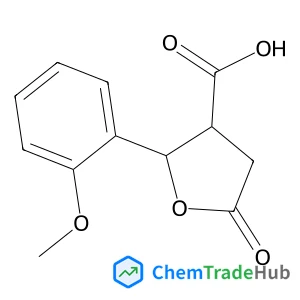
trans-2-(2-Methoxyphenyl)-5-oxotetrahydrofuran-3-carboxylic acid
CAS Number:
99226-02-5
Molecular Formula:
C12H12O5

Recommended Suppliers





Disclaimer
This page provides academic journal information for reference and research purposes only. We are not affiliated with any journal publishers and do not handle publication submissions. For publication-related inquiries, please contact the respective journal publishers directly.
If you notice any inaccuracies in the information displayed, please contact us at support@chemtradehub.com. We will promptly review and address your concerns.