
(R)-2-(Methylamino)propanoic acid hydrochloride
CAS Number:
1155878-14-0
Molecular Formula:
C4H10ClNO2
Andrea Gardin, Alberta Ferrarini
Correction for ‘Thermo-orientation in fluids of arbitrarily shaped particles’ by Andrea Gardin et al., Phys. Chem. Chem. Phys., 2019, 21, 104–113.
I. M. Magin, N. E. Polyakov, A. I. Kruppa, T. V. Leshina, M. A. Miranda, E. Nuin, M. L. Marin
DOI: 10.1039/C5CP04233J
Linqi Shi, Jiabao Cui, Fei Zhao, Dejun Wang, Tengfeng Xie, Yanhong Lin
DOI: 10.1039/C5CP05935F
Chenyu Zou, Sumathy Raman
DOI: 10.1039/C5CP06108C
Ana Vila Verde, Mark Santer, Reinhard Lipowsky
DOI: 10.1039/C5CP05726D
Martin Dahlqvist, Johanna Rosen
DOI: 10.1039/C5CP06021D
Yuxiang Han, Xiao Zheng, Mengqi Fu, Dong Pan, Xing Li, Yao Guo, Jianhua Zhao, Qing Chen
DOI: 10.1039/C5CP06139C
Daniele Loco, Sandro Jurinovich, Lorenzo Di Bari, Benedetta Mennucci
DOI: 10.1039/C5CP06341H
G. Saleh
DOI: 10.1039/C5CP06026E
Guokui Liu, Heng Zhang, Gang Liu, Shiling Yuan, Chengbu Liu
DOI: 10.1039/C5CP05639J
T. F. Otero, E. W. H. Jager
DOI: 10.1039/C5CP05841D
6-(3-Fluorophenyl)picolinic acid is generally considered safe for laboratory use...
(3R)-3-Pyrrolidinol is used in the pharmaceutical industry as a precursor for dr...
When handling (4R,5R)-4,5-Diethoxycarbonyl-2,2-dimethyldioxolane (CAS: 59779-75-...
1-(6-Chloroimidazo[1,2-b]pyridazin-3-yl)ethanone is often synthesized via a mult...
The market for N-Ethyl-3,4-dimethylbenzylamine (CAS: 39180-83-1) remains steady,...
Tert-butyl 3-(pyrrolidin-1-yl)azetidine-1-carboxylate is a chemical compound wit...
1-Bromo-3-chloro-2,4-dimethoxybenzene (CAS: 1228956-93-1) falls under the classi...
The safety of 8-Bromo-2-methyl-3,4-dihydroisoquinolin-1(2H)-one (CAS: 1368622-07...
Benzyl [(3S)-2,6-dioxo-3-piperidinyl]carbamate is generally safe when handled wi...
1-{[4-(4,4,5,5-Tetramethyl-1,3,2-dioxaborolan-2-yl)phenyl]sulfonyl}pyrrolidine s...

Physical Chemistry Chemical Physics (PCCP) is an international journal co-owned by 19 physical chemistry and physics societies from around the world. This journal publishes original, cutting-edge research in physical chemistry, chemical physics and biophysical chemistry. To be suitable for publication in PCCP, articles must include significant innovation and/or insight into physical chemistry; this is the most important criterion that reviewers and Editors will judge against when evaluating submissions. The journal has a broad scope and welcomes contributions spanning experiment, theory, computation and data science. Topical coverage includes spectroscopy, dynamics, kinetics, statistical mechanics, thermodynamics, electrochemistry, catalysis, surface science, quantum mechanics, quantum computing and machine learning. Interdisciplinary research areas such as polymers and soft matter, materials, nanoscience, energy, surfaces/interfaces, and biophysical chemistry are welcomed if they demonstrate significant innovation and/or insight into physical chemistry. Joined experimental/theoretical studies are particularly appreciated when complementary and based on up-to-date approaches.

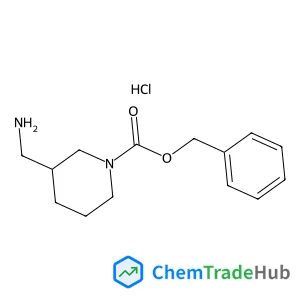
![Benzyl spiro[indole-3,4'-piperidine]-1(2H)-carboxylate hydrochloride (1:1) structure](https://static.chemtradehub.com/structs/159/159635-46-8-8de0.webp "Benzyl spiro[indole-3,4'-piperidine]-1(2H)-carboxylate hydrochloride (1:1) structure")