


Asymmetric organocatalyzed reaction sequence of 2-hydroxy cinnamaldehydes and acyclic N-sulfonyl ketimines to construct diverse chiral bridged polycyclic aminals
Literature Information
Publication Date
2019-10-02
DOI
10.1039/C9QO01116A
Impact Factor
5.281
Authors
Ying-Han Chen, Xue-Jiao Lv, Zhi-Hao You
View Original
Abstract
Asymmetric organocatalytic annulation reactions have been developed, where both 2-hydroxy cinnamaldehydes and acyclic N-sulfonyl ketimines were used as multisite substrates (more than two reactive sites) in an iminium catalysis triggered sequential process. Notably, H2O is crucial for reactivity and selectivity, since different isolable hemiaminal intermediates were obtained in aqueous medium, thus leading to diverse chiral bridged polycyclic aminals in a highly regio- and stereoselective manner. Several other interesting transformations with the obtained aminals were also realized.
Recommended Journals

Chemical Communications

Russian Journal of Bioorganic Chemistry

Crystallography Reports

Journal of Saudi Chemical Society

Chemistry Education Research and Practice

Organic Process Research & Development

Nature Medicine

Current Opinion in Colloid & Interface Science

Russian Chemical Bulletin

New Journal of Chemistry
Related Literature
Gas adsorption and light interaction mechanism in phosphorene-based field-effect transistors
Manthila Rajapakse, George Anderson, Congyan Zhang, Rajib Musa, Jackson Walter, Ming Yu, Jacek B. Jasinski
2020-02-21
Paper
DOI: 10.1039/C9CP06547D
Two-dimensional infrared spectroscopy from the gas to liquid phase: density dependent J-scrambling, vibrational relaxation, and the onset of liquid character
Aritra Mandal
2019-09-13
Paper
DOI: 10.1039/C9CP04101J
CO2 as an auto-catalyst for the oxidation of CO by a Criegee intermediate (CH2OO)
Amit Kumar, Pradeep Kumar
2020-03-06
Paper
DOI: 10.1039/D0CP00027B
Gradient heterostructure perovskite single crystals enable the improvement of radiative recombination for scintillator application
Wenyi Shao, Yang Li, Xiang Wang, Xiao Ouyang, Jiafa Cai, Chen Li, Zhengyun Wu, Qiang Xu
2020-02-25
Paper
DOI: 10.1039/C9CP06259A
Correction: Surface heterogeneity and inhomogeneous broadening of vibrational line profiles
Skandar Taj, Diane Baird, Alexander Rosu-Finsen, Martin R. S. McCoustra
2019-09-18
Correction
DOI: 10.1039/C9CP90226K
Photon management properties of Yb-doped SnO2 nanoparticles synthesized by the sol–gel technique
Karima Bouras, Guy Schmerber, Damien Aureau, Hervé Rinnert, Jean-Luc Rehspringer, Dris Ihiawakrim, Aziz Dinia, Abdelilah Slaoui, Silviu Colis
2019-09-11
Paper
DOI: 10.1039/C9CP01993F
Zn-Doped Cu(100) facet with efficient catalytic ability for the CO2 electroreduction to ethylene
Yuefeng Zhang, Yong Zhao, Caiyun Wang, Zengxi Wei, Junliang Yang
2019-08-30
Paper
DOI: 10.1039/C9CP03692J
Water binding to FeIII hemes studied in a cooled ion trap: characterization of a strong ‘weak’ ligand
Mohammad Aarabi, Satchin Soorkia, Gilles Grégoire, Aurélien de la Lande, Benoît Soep, Reza Omidyan, Niloufar Shafizadeh
2019-09-02
Paper
DOI: 10.1039/C9CP03608C
You might also like
Compound Q&A
Is 6-(3-Fluorophenyl)picolinic acid (CAS: 887982-40-3) safe?
6-(3-Fluorophenyl)picolinic acid is generally considered safe for laboratory use...
887982-40-36-(3-Fluorophenyl)pi...
Compound Q&A
What industries use (3R)-3-Pyrrolidinol (CAS: 2799-21-5)?
(3R)-3-Pyrrolidinol is used in the pharmaceutical industry as a precursor for dr...
2799-21-5(3R)-3-Pyrrolidinol
Compound Q&A
What precautions should be taken when handling (4R,5R)-4,5-Diethoxycarbonyl-2,2-dimethyldioxolane (CAS: 59779-75-8)?
When handling (4R,5R)-4,5-Diethoxycarbonyl-2,2-dimethyldioxolane (CAS: 59779-75-...
59779-75-8(4R,5R)-4,5-Diethoxy...
Compound Q&A
How is 1-(6-Chloroimidazo[1,2-b]pyridazin-3-yl)ethanone (CAS: 90734-71-7) typically synthesized?
1-(6-Chloroimidazo[1,2-b]pyridazin-3-yl)ethanone is often synthesized via a mult...
90734-71-71-(6-Chloroimidazo[1...
Compound Q&A
What is the market or research trend for N-Ethyl-3,4-dimethylbenzylamine (CAS: 39180-83-1)?
The market for N-Ethyl-3,4-dimethylbenzylamine (CAS: 39180-83-1) remains steady,...
39180-83-1N-Ethyl-3,4-dimethyl...
Compound Q&A
What is Tert-butyl 3-(pyrrolidin-1-yl)azetidine-1-carboxylate (CAS: 1019008-21-9)?
Tert-butyl 3-(pyrrolidin-1-yl)azetidine-1-carboxylate is a chemical compound wit...
1019008-21-9Tert-butyl 3-(pyrrol...
Compound Q&A
What regulatory guidelines apply to 1-Bromo-3-chloro-2,4-dimethoxybenzene (CAS: 1228956-93-1)?
1-Bromo-3-chloro-2,4-dimethoxybenzene (CAS: 1228956-93-1) falls under the classi...
1228956-93-11-Bromo-3-chloro-2,4...
Compound Q&A
Is 8-Bromo-2-methyl-3,4-dihydroisoquinolin-1(2H)-one (CAS: 1368622-07-4) safe?
The safety of 8-Bromo-2-methyl-3,4-dihydroisoquinolin-1(2H)-one (CAS: 1368622-07...
1368622-07-48-Bromo-2-methyl-3,4...
Compound Q&A
Is Benzyl [(3S)-2,6-dioxo-3-piperidinyl]carbamate (CAS: 22785-43-9) safe?
Benzyl [(3S)-2,6-dioxo-3-piperidinyl]carbamate is generally safe when handled wi...
22785-43-9Benzyl [(3S)-2,6-dio...
Compound Q&A
How should 1-{[4-(4,4,5,5-Tetramethyl-1,3,2-dioxaborolan-2-yl)phenyl]sulfonyl}pyrrolidine (CAS: 928657-21-0) be stored?
1-{[4-(4,4,5,5-Tetramethyl-1,3,2-dioxaborolan-2-yl)phenyl]sulfonyl}pyrrolidine s...
928657-21-01-{[4-(4,4,5,5-Tetra...
Source Journal
Organic Chemistry Frontiers

CiteScore:
7.8
Self-citation Rate:
8.7%
Articles per Year:
724
Organic Chemistry Frontiers publishes high-quality research from across organic chemistry. Emphases are placed on studies that make significant contributions to the field of organic chemistry by reporting either new or significantly improved protocols or methodologies. Topics include, but are not limited to the following: Organic synthesis Development of synthetic methodologies Catalysis Natural products Functional organic materials Supramolecular and macromolecular chemistry Physical and computational organic chemistry
Recommended Compounds
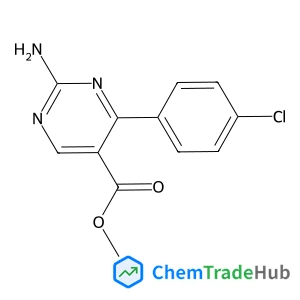
Methyl 2-amino-4-(4-chlorophenyl)-5-pyrimidinecarboxylate
CAS Number:
1133115-56-6
Molecular Formula:
C12H10ClN3O2
![(1R,6R)-6-({[(2-Methyl-2-propanyl)oxy]carbonyl}amino)-3-cyclohexene-1-carboxylic acid structure](https://static.chemtradehub.com/structs/865/865689-24-3-5fef.webp "(1R,6R)-6-({[(2-Methyl-2-propanyl)oxy]carbonyl}amino)-3-cyclohexene-1-carboxylic acid structure")
(1R,6R)-6-({[(2-Methyl-2-propanyl)oxy]carbonyl}amino)-3-cyclohexene-1-carboxylic acid
CAS Number:
865689-24-3
Molecular Formula:
C12H19NO4
Recommended Suppliers





Disclaimer
This page provides academic journal information for reference and research purposes only. We are not affiliated with any journal publishers and do not handle publication submissions. For publication-related inquiries, please contact the respective journal publishers directly.
If you notice any inaccuracies in the information displayed, please contact us at support@chemtradehub.com. We will promptly review and address your concerns.