


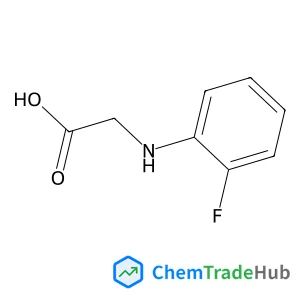
Two-dimensional infrared spectroscopy from the gas to liquid phase: density dependent J-scrambling, vibrational relaxation, and the onset of liquid character
Literature Information
Publication Date
2019-09-13
DOI
10.1039/C9CP04101J
Impact Factor
3.676
Authors
Aritra Mandal
View Original
Abstract
Ultrafast 2DIR spectra and pump–probe responses of the N2O ν3 asymmetric stretch in SF6 as a function of density from the gas to supercritical phase and liquid are reported. 2DIR spectra unequivocally reveal free rotor character at all densities studied in the gas and supercritical region. Analysis of the 2DIR spectra determines that J-scrambling or rotational relaxation in N2O is highly efficient, occurring in ∼1.5 to ∼2 collisions with SF6 at all non-liquid densities. In contrast, N2O ν3 vibrational energy relaxation requires ∼15 collisions, and complete vibrational equilibrium occurs on the ∼ns scale at all densities. An independent binary collision model is sufficient to describe these supercritical state point dynamics. The N2O ν3 in liquid SF6 2DIR spectrum shows no evidence of free rotor character or spectral diffusion. Using these 2DIR results, hindered rotor or liquid-like character is found in gas and all supercritical solutions for SF6 densities ≥ρ* = 0.3, and increases with SF6 density. 2DIR spectral analysis offers direct time domain evidence of critical slowing for SF6 solutions closest to the critical point density. Applications of 2DIR to other high density and supercritical solution dynamics and descriptions are discussed.
Recommended Journals

Current Opinion in Solid State & Materials Science

Saudi Pharmaceutical Journal

New Journal of Chemistry

Organic Process Research & Development

Russian Chemical Bulletin

Russian Journal of Organic Chemistry

Acta Materialia

Russian Journal of Applied Chemistry

Russian Journal of Coordination Chemistry

Journal of Peptide Science
Related Literature
How exciton-vibrational coherences control charge separation in the photosystem II reaction center
Vladimir I. Novoderezhkin, Elisabet Romero, Rienk van Grondelle
2015-03-31
Paper
DOI: 10.1039/C5CP00582E
Electronic coherence and the kinetics of inter-complex energy transfer in light-harvesting systems
Pengfei Huo, Thomas F. Miller III
2015-06-01
Paper
DOI: 10.1039/C5CP02517F
Solvent-shared pairs of densely charged ions induce intense but short-range supra-additive slowdown of water rotation
Ana Vila Verde, Mark Santer, Reinhard Lipowsky
2015-11-25
Paper
DOI: 10.1039/C5CP05726D
Pressure-dependent formation of i-motif and G-quadruplex DNA structures
S. Takahashi
2015-09-03
Paper
DOI: 10.1039/C5CP04727G
Correction: Molecular dynamics simulation study of distribution and dynamics of aqueous solutions of uranyl ions: the effect of varying temperature and concentration
Manish Chopra, Niharendu Choudhury
2015-12-10
Correction
DOI: 10.1039/C5CP90224J
Coupled phase field, heat conduction, and elastodynamic simulations of kinetic superheating and nanoscale melting of aluminum nanolayer irradiated by picosecond laser
Yong Seok Hwang, Valery I. Levitas
2015-11-02
Paper
DOI: 10.1039/C5CP04443J
Surface modified multifunctional ZnFe2O4 nanoparticles for hydrophobic and hydrophilic anti-cancer drug molecule loading
Debabrata Maiti, Arindam Saha, Parukuttyamma Sujatha Devi
2015-10-19
Paper
DOI: 10.1039/C5CP05840F
Electrochemistry and speciation of Au+ in a deep eutectic solvent: growth and morphology of galvanic immersion coatings
Andrew D. Ballantyne, Gregory C. H. Forrest, Gero Frisch, Jennifer M. Hartley, Karl S. Ryder
2015-10-27
Paper
DOI: 10.1039/C5CP05748E
Correction: A structure–activity relationship study of the toxicity of ionic liquids using an adapted Ferreira–Kiralj hydrophobicity parameter
2015-12-09
Correction
DOI: 10.1039/C5CP90218E
You might also like
Compound Q&A
Is 6-(3-Fluorophenyl)picolinic acid (CAS: 887982-40-3) safe?
6-(3-Fluorophenyl)picolinic acid is generally considered safe for laboratory use...
887982-40-36-(3-Fluorophenyl)pi...
Compound Q&A
What industries use (3R)-3-Pyrrolidinol (CAS: 2799-21-5)?
(3R)-3-Pyrrolidinol is used in the pharmaceutical industry as a precursor for dr...
2799-21-5(3R)-3-Pyrrolidinol
Compound Q&A
What precautions should be taken when handling (4R,5R)-4,5-Diethoxycarbonyl-2,2-dimethyldioxolane (CAS: 59779-75-8)?
When handling (4R,5R)-4,5-Diethoxycarbonyl-2,2-dimethyldioxolane (CAS: 59779-75-...
59779-75-8(4R,5R)-4,5-Diethoxy...
Compound Q&A
How is 1-(6-Chloroimidazo[1,2-b]pyridazin-3-yl)ethanone (CAS: 90734-71-7) typically synthesized?
1-(6-Chloroimidazo[1,2-b]pyridazin-3-yl)ethanone is often synthesized via a mult...
90734-71-71-(6-Chloroimidazo[1...
Compound Q&A
What is the market or research trend for N-Ethyl-3,4-dimethylbenzylamine (CAS: 39180-83-1)?
The market for N-Ethyl-3,4-dimethylbenzylamine (CAS: 39180-83-1) remains steady,...
39180-83-1N-Ethyl-3,4-dimethyl...
Compound Q&A
What is Tert-butyl 3-(pyrrolidin-1-yl)azetidine-1-carboxylate (CAS: 1019008-21-9)?
Tert-butyl 3-(pyrrolidin-1-yl)azetidine-1-carboxylate is a chemical compound wit...
1019008-21-9Tert-butyl 3-(pyrrol...
Compound Q&A
What regulatory guidelines apply to 1-Bromo-3-chloro-2,4-dimethoxybenzene (CAS: 1228956-93-1)?
1-Bromo-3-chloro-2,4-dimethoxybenzene (CAS: 1228956-93-1) falls under the classi...
1228956-93-11-Bromo-3-chloro-2,4...
Compound Q&A
Is 8-Bromo-2-methyl-3,4-dihydroisoquinolin-1(2H)-one (CAS: 1368622-07-4) safe?
The safety of 8-Bromo-2-methyl-3,4-dihydroisoquinolin-1(2H)-one (CAS: 1368622-07...
1368622-07-48-Bromo-2-methyl-3,4...
Compound Q&A
Is Benzyl [(3S)-2,6-dioxo-3-piperidinyl]carbamate (CAS: 22785-43-9) safe?
Benzyl [(3S)-2,6-dioxo-3-piperidinyl]carbamate is generally safe when handled wi...
22785-43-9Benzyl [(3S)-2,6-dio...
Compound Q&A
How should 1-{[4-(4,4,5,5-Tetramethyl-1,3,2-dioxaborolan-2-yl)phenyl]sulfonyl}pyrrolidine (CAS: 928657-21-0) be stored?
1-{[4-(4,4,5,5-Tetramethyl-1,3,2-dioxaborolan-2-yl)phenyl]sulfonyl}pyrrolidine s...
928657-21-01-{[4-(4,4,5,5-Tetra...
Source Journal
Physical Chemistry Chemical Physics

CiteScore:
5.5
Self-citation Rate:
10.3%
Articles per Year:
3036
Physical Chemistry Chemical Physics (PCCP) is an international journal co-owned by 19 physical chemistry and physics societies from around the world. This journal publishes original, cutting-edge research in physical chemistry, chemical physics and biophysical chemistry. To be suitable for publication in PCCP, articles must include significant innovation and/or insight into physical chemistry; this is the most important criterion that reviewers and Editors will judge against when evaluating submissions. The journal has a broad scope and welcomes contributions spanning experiment, theory, computation and data science. Topical coverage includes spectroscopy, dynamics, kinetics, statistical mechanics, thermodynamics, electrochemistry, catalysis, surface science, quantum mechanics, quantum computing and machine learning. Interdisciplinary research areas such as polymers and soft matter, materials, nanoscience, energy, surfaces/interfaces, and biophysical chemistry are welcomed if they demonstrate significant innovation and/or insight into physical chemistry. Joined experimental/theoretical studies are particularly appreciated when complementary and based on up-to-date approaches.
Recommended Compounds
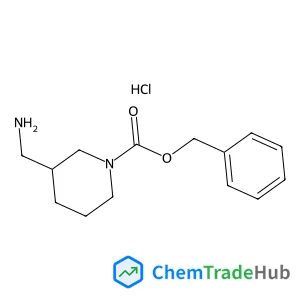
Benzyl 3-(aminomethyl)piperidine-1-carboxylate hydrochloride
CAS Number:
1186663-23-9
Molecular Formula:
C14H21ClN2O2
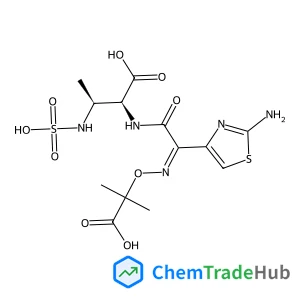
Aztreonam USP Related Compound A (Open-ring Aztreonam)
CAS Number:
87500-74-1
Molecular Formula:
C13H19N5O9S2
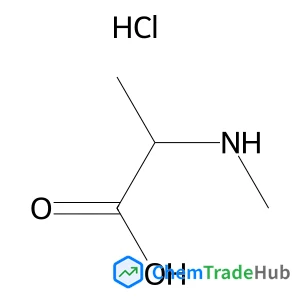
(R)-2-(Methylamino)propanoic acid hydrochloride
CAS Number:
1155878-14-0
Molecular Formula:
C4H10ClNO2
Recommended Suppliers





Disclaimer
This page provides academic journal information for reference and research purposes only. We are not affiliated with any journal publishers and do not handle publication submissions. For publication-related inquiries, please contact the respective journal publishers directly.
If you notice any inaccuracies in the information displayed, please contact us at support@chemtradehub.com. We will promptly review and address your concerns.