













Mechanistic insight into methane dry reforming over cobalt: a density functional theory study
Literature Information
Publication Date
2020-11-02
DOI
10.1039/C9CP07003F
Impact Factor
3.676
Authors
View Original
Abstract
Cobalt-based catalysts are a potential candidate among non-noble metal catalysts in dry reformation of methane (DRM), while the detailed mechanism of the DRM reaction is still largely unknown. In this contribution, the rather complicated reaction network for DRM is explored by density functional theory calculations. The most favorable adsorption structures of all species involved in the DRM reaction over Co(0001) have been identified. For CO2 activation, its direct dissociation to generate CO and O is the dominant reaction pathway. For CH4 direct dissociation, CH dehydrogenation into atomic C and H is the rate-determining step (RDS). It is predicted that the CH is the most abundant species among CHx (x = 0–3) over Co(0001). O acts as an oxidant and reacts with CH to produce CHO, and subsequently, CHO decomposes into CO and H. Atomic C may directly react with O to produce CO, or be oxidized by OH to COH, followed by the COH decomposition to CO and H. Thus, three possible pathways for DRM over the Co(0001) surface are proposed in our study, and the oxidation step is suggested as the RDS. The dominant route is identified as CH4 successive dissociation into CH, and CH oxidizing by O to form CHO, then CHO decomposition to CO and H.
Recommended Journals
Related Literature
Ab initio assessment of Bi1−xRExCuOS (RE = La, Gd, Y, Lu) solid solutions as a semiconductor for photochemical water splitting
Sheikha Lardhi, Antton Curutchet, Luigi Cavallo, Moussab Harb, Tangui Le Bahers
2017-04-12
Paper
DOI: 10.1039/C7CP01684K
Calculations of current densities and aromatic pathways in cyclic porphyrin and isoporphyrin arrays
Dage Sundholm
2017-05-02
Paper
DOI: 10.1039/C7CP00624A
Direct and cluster-assisted dehydrogenation of methane by Nb+ and Ta+: a theoretical investigation
Emilia Sicilia, Gloria Mazzone, Adriana Pérez-González, Jenny Pirillo, Annia Galano, Thomas Heine, Nino Russo
2017-05-24
Paper
DOI: 10.1039/C7CP01833A
Novel magnesium borides and their superconductivity
M. Mahdi Davari Esfahani, Qiang Zhu, Huafeng Dong, Shengnan Wang
2017-05-23
Paper
DOI: 10.1039/C7CP00840F
Carborane-based polymers: a novel class of semiconductors with tunable properties
B. Dong, A. Oyelade, J. A. Kelber
2017-04-03
Perspective
DOI: 10.1039/C7CP00835J
Structure–property relationship of blue solid state emissive phenanthroimidazole derivatives
Agne Ivanauskaite, Ramunas Lygaitis, Steponas Raisys, Karolis Kazlauskas, Gediminas Kreiza, Dmytro Volyniuk, Dalius Gudeika, Saulius Jursenas, Juozas V. Grazulevicius
2017-05-31
Paper
DOI: 10.1039/C7CP02248D
Atomic-scale observation of pressure-dependent reduction dynamics of W18O49 nanowires using environmental TEM
Zhengfei Zhang, Liping Sheng, Lu Chen, Ze Zhang, Yong Wang
2017-05-30
Communication
DOI: 10.1039/C7CP03071A
Rovibrational quantum dynamical computations for deuterated isotopologues of the methane–water dimer
Edit Mátyus
2017-05-18
Paper
DOI: 10.1039/C7CP02061A
How predictive could alchemical derivatives be?
Macarena Muñoz, Carlos Cárdenas
2017-05-30
Paper
DOI: 10.1039/C7CP02755A
You might also like
Compound Q&A
Are there alternatives to 1-(4-Chlorophenyl)-N-hydroxymethanimine (CAS: 3848-36-0) in synthesis?
When considering alternatives to 1-(4-Chlorophenyl)-N-hydroxymethanimine (CAS: 3...
3848-36-01-(4-Chlorophenyl)-N...
Compound Q&A
How should (1R,9S,10S,12S,14E,16S,19R,20R,21S,22R)-3,9,21-Trihydroxy-5,10,12,14,16,20,22-heptamethyl-23,24-dioxatetracyclo[17.3.1.1~6,9~.0~2,7~]tetracosa-2,5,7,14-tetraen-4-one (CAS: 183202-73-5) be stored?
This compound should be stored in a cool, dry place away from direct sunlight. I...
183202-73-5(1R,9S,10S,12S,14E,1...
Compound Q&A
How is 3-(4-Bromophenyl)-5-(2-fluorophenyl)-1,2,4-oxadiazole (CAS: 419553-16-5) typically synthesized?
3-(4-Bromophenyl)-5-(2-fluorophenyl)-1,2,4-oxadiazole is synthesized through a m...
419553-16-53-(4-Bromophenyl)-5-...
Compound Q&A
How is 5-Chloro-2-(4-chlorophenyl)-4-methyl-6-[3-(1-piperidinyl)propoxy]pyrimidine (CAS: 1639220-19-1) typically synthesized?
5-Chloro-2-(4-chlorophenyl)-4-methyl-6-[3-(1-piperidinyl)propoxy]pyrimidine (CAS...
1639220-19-15-Chloro-2-(4-chloro...
Compound Q&A
What industries use 2-Chloro-4-(difluoromethoxy)pyridine (CAS: 1206978-15-5)?
2-Chloro-4-(difluoromethoxy)pyridine is used in the pharmaceutical industry for ...
1206978-15-52-Chloro-4-(difluoro...
Compound Q&A
What regulatory guidelines apply to 3-Chloro-6-methylpyridazine (CAS: 1121-79-5)?
3-Chloro-6-methylpyridazine (CAS: 1121-79-5) is classified under the Globally Ha...
1121-79-53-Chloro-6-methylpyr...
Compound Q&A
Are there alternatives to Methyl 4,5-dimethyl-2-nitrobenzoate in synthesis?
Several alternatives can be used in the synthesis of Methyl 4,5-dimethyl-2-nitro...
90922-74-0Methyl 4,5-dimethyl-...
Compound Q&A
Are there alternatives to (2E,2'E)-3,3'-(1,4-Phenylene)bisacrylaldehyde in synthesis?
Alternatives to (2E,2'E)-3,3'-(1,4-Phenylene)bisacrylaldehyde include other acry...
63405-68-5(2E,2'E)-3,3'-(1,4-P...
Compound Q&A
What is 3-Amino-5-chloropyridin-2-ol hydrochloride (CAS: 1261906-29-9)?
3-Amino-5-chloropyridin-2-ol hydrochloride is an organic compound with the CAS n...
1261906-29-93-Amino-5-chloropyri...
Compound Q&A
What precautions should be taken when handling 6,7-Difluoro-2,3-dihydro-4H-chromen-4-one (CAS: 1092349-93-3)?
When handling 6,7-Difluoro-2,3-dihydro-4H-chromen-4-one, it is essential to wear...
1092349-93-36,7-Difluoro-2,3-dih...
Source Journal
Physical Chemistry Chemical Physics

CiteScore:
5.5
Self-citation Rate:
10.3%
Articles per Year:
3036
Physical Chemistry Chemical Physics (PCCP) is an international journal co-owned by 19 physical chemistry and physics societies from around the world. This journal publishes original, cutting-edge research in physical chemistry, chemical physics and biophysical chemistry. To be suitable for publication in PCCP, articles must include significant innovation and/or insight into physical chemistry; this is the most important criterion that reviewers and Editors will judge against when evaluating submissions. The journal has a broad scope and welcomes contributions spanning experiment, theory, computation and data science. Topical coverage includes spectroscopy, dynamics, kinetics, statistical mechanics, thermodynamics, electrochemistry, catalysis, surface science, quantum mechanics, quantum computing and machine learning. Interdisciplinary research areas such as polymers and soft matter, materials, nanoscience, energy, surfaces/interfaces, and biophysical chemistry are welcomed if they demonstrate significant innovation and/or insight into physical chemistry. Joined experimental/theoretical studies are particularly appreciated when complementary and based on up-to-date approaches.
Recommended Compounds
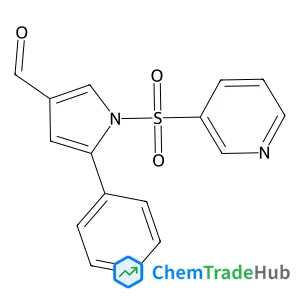
5-Phenyl-1-(pyridin-3-ylsulfonyl)-1H-pyrrole-3-carbaldehyde
CAS Number:
881676-90-0
Molecular Formula:
C16H12N2O3S
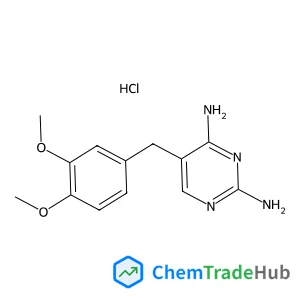
5-(3,4-Dimethoxybenzyl)-2,4-pyrimidinediamine hydrochloride (1:1)
CAS Number:
2507-23-5
Molecular Formula:
C13H17ClN4O2
Recommended Suppliers






Disclaimer
This page provides academic journal information for reference and research purposes only. We are not affiliated with any journal publishers and do not handle publication submissions. For publication-related inquiries, please contact the respective journal publishers directly.
If you notice any inaccuracies in the information displayed, please contact us at support@chemtradehub.com. We will promptly review and address your concerns.