


Calculations of current densities and aromatic pathways in cyclic porphyrin and isoporphyrin arrays
Literature Information
Publication Date
2017-05-02
DOI
10.1039/C7CP00624A
Impact Factor
3.676
Authors
Dage Sundholm
View Original
Abstract
Magnetically induced current density susceptibilities have been studied for a number of cyclic ethyne- and butadiyne-bridged porphyrin and isoporphyrin arrays. The current density susceptibilities have been calculated using the gauge-including magnetically induced current (GIMIC) method, which is interfaced to the TURBOMOLE quantum chemistry code. Aromatic properties and current pathways have been analyzed and discussed by numerical integration of the current density susceptibilities passing selected chemical bonds yielding current strength susceptibilities. Despite the interrupted π-framework, zinc(II) isoporphyrin sustains a ring current of ca. 10 nA T−1. Porphyrin and isoporphyrin dimers sustain a significant current strength at the linker, whereas the larger porphyrinoid arrays sustain mainly local ring currents. Isoporphyrin dimers with saturated meso carbons have strong net diatropic ring-current strengths of 20 nA T−1 fulfilling Hückels aromaticity rule. Porphyrin trimers and tetramers exhibit almost no current strength at the linker. The porphyrin moieties maintain their strong net diatropic ring current.
Recommended Journals

Russian Journal of Organic Chemistry

Current Opinion in Colloid & Interface Science

Journal of Peptide Science

Russian Journal of Coordination Chemistry

Russian Journal of Applied Chemistry

Russian Journal of Bioorganic Chemistry

Chemistry Education Research and Practice

Drug Discovery Today

Saudi Pharmaceutical Journal

Chemical Communications
Related Literature
A tough and self-healing poly(l-glutamic acid)-based composite hydrogel for tissue engineering
Weijun Zhang, Kunxi Zhang, Shifeng Yan, Jie Wu, Jingbo Yin
2018-09-27
Paper
DOI: 10.1039/C8TB01981A
Effects of melt aging and off-stoichiometric melts on CsSrI3:Eu2+ single crystal scintillators
Merry Koschan
2016-02-26
Paper
DOI: 10.1039/C6CP00271D
Block copolymers based on 2-methyl- and 2-phenyl-oxazoline by metallocene-mediated cationic ring-opening polymerization: synthesis and characterization
Maria-Evgenia Kourti, Eirini Fega, Marinos Pitsikalis
2016-03-28
Paper
DOI: 10.1039/C6PY00405A
Retraction: Red luminescent manganese-doped zinc sulphide nanocrystals and their antibacterial study
2018-12-03
Retraction
DOI: 10.1039/C8TB90177E
Chitosan/rectorite nanocomposite with injectable functionality for skin hemostasis
Xiaoyun Li, Yi-Chen Li, Mingjie Chen, Qingshan Shi, Runcang Sun, Xiaoying Wang
2018-09-19
Paper
DOI: 10.1039/C8TB01085D
Isoreticular zirconium-based metal–organic frameworks: discovering mechanical trends and elastic anomalies controlling chemical structure stability
Matthew R. Ryder, Bartolomeo Civalleri, Jin-Chong Tan
2016-03-04
Paper
DOI: 10.1039/C6CP00864J
Poly(phenylene) block copolymers bearing tri-sulfonated aromatic pendant groups for polymer electrolyte fuel cell applications
Ryousuke Hara, Kangcheng Chen, Nobutaka Endo, Mitsuru Higa, Ken-ichi Okamoto, Lianjun Wang
2013-05-08
Paper
DOI: 10.1039/C3TA11190C
Synthesis, properties and applications of flowerlike Ni–NiO composite microstructures
Feifei Yuan, Yonghong Ni, Li Zhang, Shengmei Yuan, Jieding Wei
2013-05-17
Paper
DOI: 10.1039/C3TA11219E
Sustainable route to methyl-9-hydroxononanoate (polymer precursor) by oxidative cleavage of fatty acid methyl ester from rapeseed oil
Kévin Louis, Laurence Vivier, Jean-Marc Clacens, Markus Brandhorst, Jean-Luc Dubois, Karine De Oliveira Vigier, Yannick Pouilloux
2013-10-04
Communication
DOI: 10.1039/C3GC41491D
Measuring oxygen surface exchange kinetics on mixed-conducting composites by electrical conductivity relaxation
Bobing Hu, Yunlong Wang, Zhuoying Zhu, Changrong Xia
2015-04-15
Paper
DOI: 10.1039/C5TA00510H
You might also like
Compound Q&A
Are there alternatives to 1-(4-Chlorophenyl)-N-hydroxymethanimine (CAS: 3848-36-0) in synthesis?
When considering alternatives to 1-(4-Chlorophenyl)-N-hydroxymethanimine (CAS: 3...
3848-36-01-(4-Chlorophenyl)-N...
Compound Q&A
How should (1R,9S,10S,12S,14E,16S,19R,20R,21S,22R)-3,9,21-Trihydroxy-5,10,12,14,16,20,22-heptamethyl-23,24-dioxatetracyclo[17.3.1.1~6,9~.0~2,7~]tetracosa-2,5,7,14-tetraen-4-one (CAS: 183202-73-5) be stored?
This compound should be stored in a cool, dry place away from direct sunlight. I...
183202-73-5(1R,9S,10S,12S,14E,1...
Compound Q&A
How is 3-(4-Bromophenyl)-5-(2-fluorophenyl)-1,2,4-oxadiazole (CAS: 419553-16-5) typically synthesized?
3-(4-Bromophenyl)-5-(2-fluorophenyl)-1,2,4-oxadiazole is synthesized through a m...
419553-16-53-(4-Bromophenyl)-5-...
Compound Q&A
How is 5-Chloro-2-(4-chlorophenyl)-4-methyl-6-[3-(1-piperidinyl)propoxy]pyrimidine (CAS: 1639220-19-1) typically synthesized?
5-Chloro-2-(4-chlorophenyl)-4-methyl-6-[3-(1-piperidinyl)propoxy]pyrimidine (CAS...
1639220-19-15-Chloro-2-(4-chloro...
Compound Q&A
What industries use 2-Chloro-4-(difluoromethoxy)pyridine (CAS: 1206978-15-5)?
2-Chloro-4-(difluoromethoxy)pyridine is used in the pharmaceutical industry for ...
1206978-15-52-Chloro-4-(difluoro...
Compound Q&A
What regulatory guidelines apply to 3-Chloro-6-methylpyridazine (CAS: 1121-79-5)?
3-Chloro-6-methylpyridazine (CAS: 1121-79-5) is classified under the Globally Ha...
1121-79-53-Chloro-6-methylpyr...
Compound Q&A
Are there alternatives to Methyl 4,5-dimethyl-2-nitrobenzoate in synthesis?
Several alternatives can be used in the synthesis of Methyl 4,5-dimethyl-2-nitro...
90922-74-0Methyl 4,5-dimethyl-...
Compound Q&A
Are there alternatives to (2E,2'E)-3,3'-(1,4-Phenylene)bisacrylaldehyde in synthesis?
Alternatives to (2E,2'E)-3,3'-(1,4-Phenylene)bisacrylaldehyde include other acry...
63405-68-5(2E,2'E)-3,3'-(1,4-P...
Compound Q&A
What is 3-Amino-5-chloropyridin-2-ol hydrochloride (CAS: 1261906-29-9)?
3-Amino-5-chloropyridin-2-ol hydrochloride is an organic compound with the CAS n...
1261906-29-93-Amino-5-chloropyri...
Compound Q&A
What precautions should be taken when handling 6,7-Difluoro-2,3-dihydro-4H-chromen-4-one (CAS: 1092349-93-3)?
When handling 6,7-Difluoro-2,3-dihydro-4H-chromen-4-one, it is essential to wear...
1092349-93-36,7-Difluoro-2,3-dih...
Source Journal
Physical Chemistry Chemical Physics

CiteScore:
5.5
Self-citation Rate:
10.3%
Articles per Year:
3036
Physical Chemistry Chemical Physics (PCCP) is an international journal co-owned by 19 physical chemistry and physics societies from around the world. This journal publishes original, cutting-edge research in physical chemistry, chemical physics and biophysical chemistry. To be suitable for publication in PCCP, articles must include significant innovation and/or insight into physical chemistry; this is the most important criterion that reviewers and Editors will judge against when evaluating submissions. The journal has a broad scope and welcomes contributions spanning experiment, theory, computation and data science. Topical coverage includes spectroscopy, dynamics, kinetics, statistical mechanics, thermodynamics, electrochemistry, catalysis, surface science, quantum mechanics, quantum computing and machine learning. Interdisciplinary research areas such as polymers and soft matter, materials, nanoscience, energy, surfaces/interfaces, and biophysical chemistry are welcomed if they demonstrate significant innovation and/or insight into physical chemistry. Joined experimental/theoretical studies are particularly appreciated when complementary and based on up-to-date approaches.
Recommended Compounds
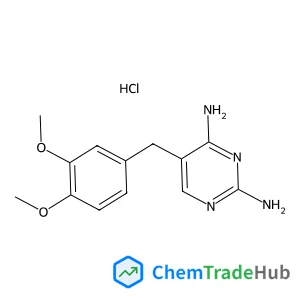
5-(3,4-Dimethoxybenzyl)-2,4-pyrimidinediamine hydrochloride (1:1)
CAS Number:
2507-23-5
Molecular Formula:
C13H17ClN4O2
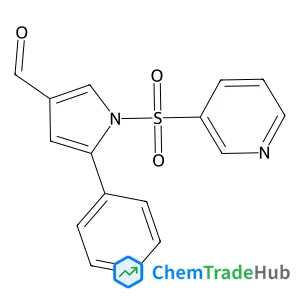
5-Phenyl-1-(pyridin-3-ylsulfonyl)-1H-pyrrole-3-carbaldehyde
CAS Number:
881676-90-0
Molecular Formula:
C16H12N2O3S
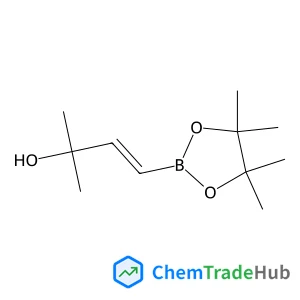
(E)-2-methyl-4-(4,4,5,5-tetramethyl-1,3,2-dioxaborolan-2-yl)but-3-en-2-ol
CAS Number:
581802-26-8
Molecular Formula:
C11H21BO3
Recommended Suppliers







Disclaimer
This page provides academic journal information for reference and research purposes only. We are not affiliated with any journal publishers and do not handle publication submissions. For publication-related inquiries, please contact the respective journal publishers directly.
If you notice any inaccuracies in the information displayed, please contact us at support@chemtradehub.com. We will promptly review and address your concerns.