


Carborane-based polymers: a novel class of semiconductors with tunable properties
Literature Information
Publication Date
2017-04-03
DOI
10.1039/C7CP00835J
Impact Factor
3.676
Authors
B. Dong, A. Oyelade, J. A. Kelber
View Original
Abstract
Semiconducting boron carbides based on cross-linked carborane (B10C2H12) icosahedra, developed several decades ago, are of significant interest in a variety of emerging areas, including photocatalysis, spintronics, and especially neutron detection. These materials, however, display generally poor charge carrier mobility, high defect levels and other properties that pose significant drawbacks. A class of nanocomposite carborane-based materials has recently been developed, that addresses many of these issues. The films consist of polymerized mixtures of carboranes and aromatic species, including benzene, 1,4-diaminobenzene, pyridine or aniline. In these materials, electronic states corresponding to the aromatic moiety appearing near the top of the valence band, and states associated with the carborane moiety occupy the bottom of the conduction band. Band gap energies are substantially reduced relative to films without aromatic content. Transport measurements also indicate that charge scattering lifetimes are substantially enhanced in aromatic/carborane films compared to corresponding films without aromatic content. This combination of superior electron–hole separation, narrower band gaps, and superior charge scattering lifetimes, yields markedly enhanced charge collection in neutron voltaics studies compared to conventional carborane-derived boron carbides. The implications of these enhanced properties for neutron detection and other applications are discussed.
Recommended Journals

Russian Journal of Organic Chemistry

Russian Journal of Bioorganic Chemistry

Saudi Pharmaceutical Journal

Drug Discovery Today

Journal of Natural Medicines

Current Opinion in Colloid & Interface Science

Chemistry Education Research and Practice

Russian Chemical Bulletin

Organic Process Research & Development

Current Opinion in Solid State & Materials Science
Related Literature
Critical factors governing vertical phase separation in polymer–PCBM blend films for organic solar cells
Min Kim, Jaewon Lee, Sae Byeok Jo, Dong Hun Sin, Hyomin Ko, Hansol Lee, Seung Goo Lee, Kilwon Cho
2016-09-16
Paper
DOI: 10.1039/C6TA06508B
Chitosan/rectorite nanocomposite with injectable functionality for skin hemostasis
Xiaoyun Li, Yi-Chen Li, Mingjie Chen, Qingshan Shi, Runcang Sun, Xiaoying Wang
2018-09-19
Paper
DOI: 10.1039/C8TB01085D
Stimuli-responsive perallyloxycucurbit[6]uril-based nanoparticles for selective drug delivery in melanoma cells
Qian Cheng, Shengke Li, Chen Sun, Ludan Yue, Ruibing Wang
2018-09-29
Research Article
DOI: 10.1039/C8QM00460A
Access to aliphatic protons as reporters in non-deuterated proteins by solid-state NMR
Suresh Kumar Vasa, Petra Rovó, Karin Giller, Stefan Becker, Rasmus Linser
2015-11-20
Paper
DOI: 10.1039/C5CP06601H
Signal loss in 1D magic-angle spinning exchange NMR (CODEX): radio-frequency limitations and intermediate motions
Christiane Hackel, Cornelius Franz, Anja Achilles, Kay Saalwächter, Detlef Reichert
2009-07-17
Paper
DOI: 10.1039/B906527J
Evaluation and development of novel photoinitiator complexes for photoinitiating the copper-catalyzed azide–alkyne cycloaddition reaction
Abeer A. Alzahrani, Annette H. Erbse, Christopher N. Bowman
2013-12-13
Paper
DOI: 10.1039/C3PY01064C
Superparamagnetic γ-Fe2O3 nanoparticles as an easily recoverable catalyst for the chemical recycling of PET
Leian Bartolome, Muhammad Imran, Kyoung G. Lee, Arvin Sangalang, Jeong Keun Ahn, Do Hyun Kim
2013-10-07
Paper
DOI: 10.1039/C3GC41834K
You might also like
Compound Q&A
Are there alternatives to 1-(4-Chlorophenyl)-N-hydroxymethanimine (CAS: 3848-36-0) in synthesis?
When considering alternatives to 1-(4-Chlorophenyl)-N-hydroxymethanimine (CAS: 3...
3848-36-01-(4-Chlorophenyl)-N...
Compound Q&A
How should (1R,9S,10S,12S,14E,16S,19R,20R,21S,22R)-3,9,21-Trihydroxy-5,10,12,14,16,20,22-heptamethyl-23,24-dioxatetracyclo[17.3.1.1~6,9~.0~2,7~]tetracosa-2,5,7,14-tetraen-4-one (CAS: 183202-73-5) be stored?
This compound should be stored in a cool, dry place away from direct sunlight. I...
183202-73-5(1R,9S,10S,12S,14E,1...
Compound Q&A
How is 3-(4-Bromophenyl)-5-(2-fluorophenyl)-1,2,4-oxadiazole (CAS: 419553-16-5) typically synthesized?
3-(4-Bromophenyl)-5-(2-fluorophenyl)-1,2,4-oxadiazole is synthesized through a m...
419553-16-53-(4-Bromophenyl)-5-...
Compound Q&A
How is 5-Chloro-2-(4-chlorophenyl)-4-methyl-6-[3-(1-piperidinyl)propoxy]pyrimidine (CAS: 1639220-19-1) typically synthesized?
5-Chloro-2-(4-chlorophenyl)-4-methyl-6-[3-(1-piperidinyl)propoxy]pyrimidine (CAS...
1639220-19-15-Chloro-2-(4-chloro...
Compound Q&A
What industries use 2-Chloro-4-(difluoromethoxy)pyridine (CAS: 1206978-15-5)?
2-Chloro-4-(difluoromethoxy)pyridine is used in the pharmaceutical industry for ...
1206978-15-52-Chloro-4-(difluoro...
Compound Q&A
What regulatory guidelines apply to 3-Chloro-6-methylpyridazine (CAS: 1121-79-5)?
3-Chloro-6-methylpyridazine (CAS: 1121-79-5) is classified under the Globally Ha...
1121-79-53-Chloro-6-methylpyr...
Compound Q&A
Are there alternatives to Methyl 4,5-dimethyl-2-nitrobenzoate in synthesis?
Several alternatives can be used in the synthesis of Methyl 4,5-dimethyl-2-nitro...
90922-74-0Methyl 4,5-dimethyl-...
Compound Q&A
Are there alternatives to (2E,2'E)-3,3'-(1,4-Phenylene)bisacrylaldehyde in synthesis?
Alternatives to (2E,2'E)-3,3'-(1,4-Phenylene)bisacrylaldehyde include other acry...
63405-68-5(2E,2'E)-3,3'-(1,4-P...
Compound Q&A
What is 3-Amino-5-chloropyridin-2-ol hydrochloride (CAS: 1261906-29-9)?
3-Amino-5-chloropyridin-2-ol hydrochloride is an organic compound with the CAS n...
1261906-29-93-Amino-5-chloropyri...
Compound Q&A
What precautions should be taken when handling 6,7-Difluoro-2,3-dihydro-4H-chromen-4-one (CAS: 1092349-93-3)?
When handling 6,7-Difluoro-2,3-dihydro-4H-chromen-4-one, it is essential to wear...
1092349-93-36,7-Difluoro-2,3-dih...
Source Journal
Physical Chemistry Chemical Physics

CiteScore:
5.5
Self-citation Rate:
10.3%
Articles per Year:
3036
Physical Chemistry Chemical Physics (PCCP) is an international journal co-owned by 19 physical chemistry and physics societies from around the world. This journal publishes original, cutting-edge research in physical chemistry, chemical physics and biophysical chemistry. To be suitable for publication in PCCP, articles must include significant innovation and/or insight into physical chemistry; this is the most important criterion that reviewers and Editors will judge against when evaluating submissions. The journal has a broad scope and welcomes contributions spanning experiment, theory, computation and data science. Topical coverage includes spectroscopy, dynamics, kinetics, statistical mechanics, thermodynamics, electrochemistry, catalysis, surface science, quantum mechanics, quantum computing and machine learning. Interdisciplinary research areas such as polymers and soft matter, materials, nanoscience, energy, surfaces/interfaces, and biophysical chemistry are welcomed if they demonstrate significant innovation and/or insight into physical chemistry. Joined experimental/theoretical studies are particularly appreciated when complementary and based on up-to-date approaches.
Recommended Compounds
![[4-(Isobutyrylamino)phenyl]boronic acid structure](https://static.chemtradehub.com/structs/874/874219-50-8-6ab5.webp "[4-(Isobutyrylamino)phenyl]boronic acid structure")
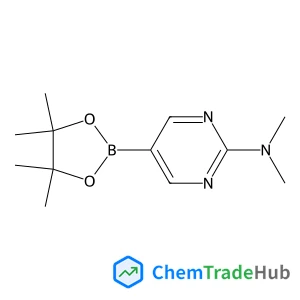
N,N-Dimethyl-5-(4,4,5,5-tetramethyl-1,3,2-dioxaborolan-2-yl)-2-pyrimidinamine
CAS Number:
1032759-30-0
Molecular Formula:
C12H20BN3O2
![6-Bromo-2,3-dihydro-1H-pyrido[2,3-b][1,4]oxazine structure](https://static.chemtradehub.com/structs/120/1203499-17-5-b4d1.webp "6-Bromo-2,3-dihydro-1H-pyrido[2,3-b][1,4]oxazine structure")
6-Bromo-2,3-dihydro-1H-pyrido[2,3-b][1,4]oxazine
CAS Number:
1203499-17-5
Molecular Formula:
C7H7BrN2O
![2-{[(1R,2S)-2-Aminocyclohexyl]amino}-4-{[3-(2H-1,2,3-triazol-2-yl)phenyl]amino}-5-pyrimidinecarboxamide structure](https://static.chemtradehub.com/structs/137/1370261-96-3-40df.webp "2-{[(1R,2S)-2-Aminocyclohexyl]amino}-4-{[3-(2H-1,2,3-triazol-2-yl)phenyl]amino}-5-pyrimidinecarboxamide structure")
2-{[(1R,2S)-2-Aminocyclohexyl]amino}-4-{[3-(2H-1,2,3-triazol-2-yl)phenyl]amino}-5-pyrimidinecarboxamide
CAS Number:
1370261-96-3
Molecular Formula:
C19H23N9O
Recommended Suppliers






Disclaimer
This page provides academic journal information for reference and research purposes only. We are not affiliated with any journal publishers and do not handle publication submissions. For publication-related inquiries, please contact the respective journal publishers directly.
If you notice any inaccuracies in the information displayed, please contact us at support@chemtradehub.com. We will promptly review and address your concerns.