













Atomic-scale observation of pressure-dependent reduction dynamics of W18O49 nanowires using environmental TEM
Literature Information
Publication Date
2017-05-30
DOI
10.1039/C7CP03071A
Impact Factor
3.676
Authors
Zhengfei Zhang, Liping Sheng, Lu Chen, Ze Zhang, Yong Wang
View Original
Abstract
The real-time observation of structural evolution of materials can provide critical information for understanding their reduction mechanisms under different environments. Herein, we report the atomic-scale observation of the reduction dynamics of W18O49 nanowires (NWs) using environmental transmission electron microscopy. Intriguingly, the reduction pathway is found to be affected by oxygen pressure. Under high oxygen pressure (∼0.095 Pa), a W18O49 NW epitaxially transforms into a WO2 NW via mass transport across the interface between (010)W18O49 and (101)WO2. While under low oxygen pressure (∼0.0004 Pa), the transformation follows the sequence of W18O49(NW) → WO2(NW) → β-W(nanoparticles), which is identified as a new reduction pathway. These findings reveal the pressure-dependent reduction and a new transformation pathway, and extend our current understanding of the reduction dynamics of metal oxides.
Recommended Journals
Related Literature
Industrial feasibility of anodic hydrogen peroxide production through photoelectrochemical water splitting: a techno-economic analysis
Kasper Wenderich, Wouter Kwak, Alexa Grimm, Gert Jan Kramer, Guido Mul, Bastian Mei
2020-04-17
Paper
DOI: 10.1039/D0SE00524J
A gene-activating skin substitute comprising PLLA/POSS nanofibers and plasmid DNA encoding ANG and bFGF promotes in vivo revascularization and epidermalization
Dongwei Wu, Jianwang Tan, Zhibin Liu
2018-09-28
Paper
DOI: 10.1039/C8TB02006J
Near-infrared light-responsive, diselenide containing core-cross-linked micelles prepared by the Diels–Alder click reaction for photocontrollable drug release application
Sabrina Aufar Salma, Dong Woo Kim, Cuong Minh Quoc Le, Byung-Hyun Ahn, Gun-Do Kim, Kwon Taek Lim
2018-09-06
Paper
DOI: 10.1039/C8PY00961A
Effects of melt aging and off-stoichiometric melts on CsSrI3:Eu2+ single crystal scintillators
Merry Koschan
2016-02-26
Paper
DOI: 10.1039/C6CP00271D
ZnO nanorods on reduced graphene sheets with excellent field emission, gas sensor and photocatalytic properties
Rujia Zou, Guanjie He, Kaibing Xu, Qian Liu, Zhenyu Zhang, Junqing Hu
2013-05-16
Paper
DOI: 10.1039/C3TA11490B
Light-induced reactivity of gold and hybrid perovskite as a new possible degradation mechanism in perovskite solar cells
Natalia N. Shlenskaya, Nikolai A. Belich, Michael Grätzel
2017-12-20
Paper
DOI: 10.1039/C7TA10217H
A biodegradable polyphosphoester-functionalized poly(disulfide) nanocarrier for reduction-triggered intracellular drug delivery
Pengfei Ju, Jian Hu, Fei Li, Youwen Cao, Lei Li, Dongjian Shi, Ying Hao, Mingzu Zhang, Jinlin He, Peihong Ni
2018-07-19
Paper
DOI: 10.1039/C8TB01566J
Macromolecular structure evolution toward giant molecules of complex structure: tandem synthesis of asymmetric giant gemini surfactants
Hao Su, Yiwen Li, Kan Yue, Zhao Wang, Pengtao Lu, Xueyan Feng, Xue-Hui Dong, Shuo Zhang, Stephen Z. D. Cheng
2014-03-24
Paper
DOI: 10.1039/C4PY00107A
Striking influence of Fe2O3 on the “catalytic carbonization” of chlorinated poly(vinyl chloride) into carbon microspheres with high performance in the photo-degradation of Congo red
Jie Liu, Zhiwei Jiang, Xuecheng Chen, Xin Wen, Ewa Mijowska, Nana Tian, Tao Tang
2013-02-26
Paper
DOI: 10.1039/C3TA10316A
You might also like
Compound Q&A
Are there alternatives to 1-(4-Chlorophenyl)-N-hydroxymethanimine (CAS: 3848-36-0) in synthesis?
When considering alternatives to 1-(4-Chlorophenyl)-N-hydroxymethanimine (CAS: 3...
3848-36-01-(4-Chlorophenyl)-N...
Compound Q&A
How should (1R,9S,10S,12S,14E,16S,19R,20R,21S,22R)-3,9,21-Trihydroxy-5,10,12,14,16,20,22-heptamethyl-23,24-dioxatetracyclo[17.3.1.1~6,9~.0~2,7~]tetracosa-2,5,7,14-tetraen-4-one (CAS: 183202-73-5) be stored?
This compound should be stored in a cool, dry place away from direct sunlight. I...
183202-73-5(1R,9S,10S,12S,14E,1...
Compound Q&A
How is 3-(4-Bromophenyl)-5-(2-fluorophenyl)-1,2,4-oxadiazole (CAS: 419553-16-5) typically synthesized?
3-(4-Bromophenyl)-5-(2-fluorophenyl)-1,2,4-oxadiazole is synthesized through a m...
419553-16-53-(4-Bromophenyl)-5-...
Compound Q&A
How is 5-Chloro-2-(4-chlorophenyl)-4-methyl-6-[3-(1-piperidinyl)propoxy]pyrimidine (CAS: 1639220-19-1) typically synthesized?
5-Chloro-2-(4-chlorophenyl)-4-methyl-6-[3-(1-piperidinyl)propoxy]pyrimidine (CAS...
1639220-19-15-Chloro-2-(4-chloro...
Compound Q&A
What industries use 2-Chloro-4-(difluoromethoxy)pyridine (CAS: 1206978-15-5)?
2-Chloro-4-(difluoromethoxy)pyridine is used in the pharmaceutical industry for ...
1206978-15-52-Chloro-4-(difluoro...
Compound Q&A
What regulatory guidelines apply to 3-Chloro-6-methylpyridazine (CAS: 1121-79-5)?
3-Chloro-6-methylpyridazine (CAS: 1121-79-5) is classified under the Globally Ha...
1121-79-53-Chloro-6-methylpyr...
Compound Q&A
Are there alternatives to Methyl 4,5-dimethyl-2-nitrobenzoate in synthesis?
Several alternatives can be used in the synthesis of Methyl 4,5-dimethyl-2-nitro...
90922-74-0Methyl 4,5-dimethyl-...
Compound Q&A
Are there alternatives to (2E,2'E)-3,3'-(1,4-Phenylene)bisacrylaldehyde in synthesis?
Alternatives to (2E,2'E)-3,3'-(1,4-Phenylene)bisacrylaldehyde include other acry...
63405-68-5(2E,2'E)-3,3'-(1,4-P...
Compound Q&A
What is 3-Amino-5-chloropyridin-2-ol hydrochloride (CAS: 1261906-29-9)?
3-Amino-5-chloropyridin-2-ol hydrochloride is an organic compound with the CAS n...
1261906-29-93-Amino-5-chloropyri...
Compound Q&A
What precautions should be taken when handling 6,7-Difluoro-2,3-dihydro-4H-chromen-4-one (CAS: 1092349-93-3)?
When handling 6,7-Difluoro-2,3-dihydro-4H-chromen-4-one, it is essential to wear...
1092349-93-36,7-Difluoro-2,3-dih...
Source Journal
Physical Chemistry Chemical Physics

CiteScore:
5.5
Self-citation Rate:
10.3%
Articles per Year:
3036
Physical Chemistry Chemical Physics (PCCP) is an international journal co-owned by 19 physical chemistry and physics societies from around the world. This journal publishes original, cutting-edge research in physical chemistry, chemical physics and biophysical chemistry. To be suitable for publication in PCCP, articles must include significant innovation and/or insight into physical chemistry; this is the most important criterion that reviewers and Editors will judge against when evaluating submissions. The journal has a broad scope and welcomes contributions spanning experiment, theory, computation and data science. Topical coverage includes spectroscopy, dynamics, kinetics, statistical mechanics, thermodynamics, electrochemistry, catalysis, surface science, quantum mechanics, quantum computing and machine learning. Interdisciplinary research areas such as polymers and soft matter, materials, nanoscience, energy, surfaces/interfaces, and biophysical chemistry are welcomed if they demonstrate significant innovation and/or insight into physical chemistry. Joined experimental/theoretical studies are particularly appreciated when complementary and based on up-to-date approaches.
Recommended Compounds
![4-[(3-Chloro-2-fluorophenyl)amino]-7-methoxy-6-quinazolinyl acetate structure](https://static.chemtradehub.com/structs/740/740081-22-5-f58f.webp "4-[(3-Chloro-2-fluorophenyl)amino]-7-methoxy-6-quinazolinyl acetate structure")
4-[(3-Chloro-2-fluorophenyl)amino]-7-methoxy-6-quinazolinyl acetate
CAS Number:
740081-22-5
Molecular Formula:
C17H13ClFN3O3
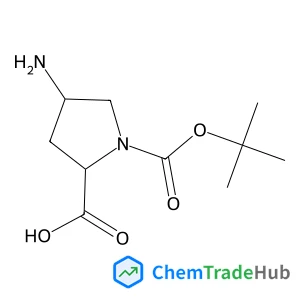
(2R,4R)-1-Boc-4-Aminopyrrolidine-2-carboxylic acid
CAS Number:
132622-98-1
Molecular Formula:
C10H18N2O4

N,N-Dimethyl-5-(4,4,5,5-tetramethyl-1,3,2-dioxaborolan-2-yl)-2-pyrimidinamine
CAS Number:
1032759-30-0
Molecular Formula:
C12H20BN3O2

Recommended Suppliers





Disclaimer
This page provides academic journal information for reference and research purposes only. We are not affiliated with any journal publishers and do not handle publication submissions. For publication-related inquiries, please contact the respective journal publishers directly.
If you notice any inaccuracies in the information displayed, please contact us at support@chemtradehub.com. We will promptly review and address your concerns.