



How predictive could alchemical derivatives be?
Literature Information
Publication Date
2017-05-30
DOI
10.1039/C7CP02755A
Impact Factor
3.676
Authors
Macarena Muñoz, Carlos Cárdenas
View Original
Abstract
The chemical space contains all possible compounds that can be imagined. Its size easily equals the number of fundamental particles in the observable universe. Rational design of compounds aims to find those sectors of the chemical space where compounds optimize a set of desired properties. Then, rational design demands tools to efficiently navigate the chemical space. Ab initio alchemical derivatives offer the possibility to navigate, without empiricism, the energy landscape through alchemical transformations. An alchemical transformation is any process, physical or fictitious, that connects to points in the chemical space. In this work, those transformations are constructed as a perturbative expansion of the energy with respect to perturbations in the stoichiometry. The response functions of that expansion are what is called alchemical derivatives. In this work we assess how effective alchemical derivatives are in predicting energy changes associated to changes in the composition. We do this by including in the expansion, for the first time, electrostatic, polarization and electron-transfer effects. The system we chose is one that challenges alchemical derivatives because none of these effects dominates its behavior. The transmutations studied here correspond to substitutional doping of Al13 with up to four atoms of Si, Al13−nSin. Two types of transformations are considered, those in which the number of electrons remains constant and those in which the number of electrons also changes. It is found that contrary to what has been reported before, polarization cannot be neglected. If polarization is not included, alchemical derivatives fail to predict the change of energy and the relative energy between isomers. For isoelectronic substitution of four or more atoms, the perturbative approach collapses because the strength of the perturbation becomes too strong to guarantee convergence of the series. It is shown, however, that if only one atom is mutated at a time, alchemical derivatives rank pretty well the isomers of Al13−nSin according to their energy. In the case of non-isoelectronic transformations, it is observed that the series rapidly diverges with increasing number of electrons. In this situation, it becomes more important to keep the degree of transmutation of the parent system small.
Recommended Journals

New Journal of Chemistry

Russian Chemical Bulletin

Organic Process Research & Development

Russian Journal of Bioorganic Chemistry

Journal of Saudi Chemical Society

Russian Journal of Organic Chemistry

Current Opinion in Solid State & Materials Science

Russian Journal of Applied Chemistry

Acta Materialia

Chemistry Education Research and Practice
Related Literature
Application of tailored silica microspheres in coatings: synthesis, characterization, thermal and hydrophobic properties
Meng Wang, Qiqi Zeng, Bin Zhao
2013-07-29
Paper
DOI: 10.1039/C3TA12024D
Common processes drive the thermochemical pretreatment of lignocellulosic biomass
Marcus Foston, Yoshiharu Nishiyama, B. Leif Hanson, Shane Harton, William T. Heller, Barbara R. Evans, S. Gnanakaran, Arthur J. Ragauskas, Brian H. Davison
2013-10-29
Communication
DOI: 10.1039/C3GC41962B
Yb(NTf2)3/HFIP induced high isotacticity in atom transfer radical polymerization of methyl methacrylate
Sebastian Schaubach, Xiao-Yan Wang, Jun-Fang Li, Xiu-Li Sun, Sunewang R. Wang, Yong Tang
2018-08-31
Communication
DOI: 10.1039/C8PY00953H
Simultaneous and controlled release of two different bioactive small molecules from nature inspired single material
Adil M. Rather, Arpita Shome, Bibhas K. Bhunia, Aparna Panuganti, Biman B. Mandal, Uttam Manna
2018-10-22
Paper
DOI: 10.1039/C8TB02406E
Pharmaceutical crystallization in surface-modified nanocellulose organogels
Manali Banerjee, Sisira Saraswatula, Laura Grace Willows, Hannah Woods, Blair Brettmann
2018-09-17
Paper
DOI: 10.1039/C8TB01554F
Photostable and biocompatible AIE-active conjugated polyelectrolytes for efficient heparin detection and specific lysosome labelling
Yinan Wang, Hongming Yao, Zeyan Zhuang, Jinya Yao, Jian Zhou, Zujin Zhao
2018-09-18
Communication
DOI: 10.1039/C8TB02053A
Macromolecular structure evolution toward giant molecules of complex structure: tandem synthesis of asymmetric giant gemini surfactants
Hao Su, Yiwen Li, Kan Yue, Zhao Wang, Pengtao Lu, Xueyan Feng, Xue-Hui Dong, Shuo Zhang, Stephen Z. D. Cheng
2014-03-24
Paper
DOI: 10.1039/C4PY00107A
Stimuli-responsive perallyloxycucurbit[6]uril-based nanoparticles for selective drug delivery in melanoma cells
Qian Cheng, Shengke Li, Chen Sun, Ludan Yue, Ruibing Wang
2018-09-29
Research Article
DOI: 10.1039/C8QM00460A
You might also like
Compound Q&A
Are there alternatives to 1-(4-Chlorophenyl)-N-hydroxymethanimine (CAS: 3848-36-0) in synthesis?
When considering alternatives to 1-(4-Chlorophenyl)-N-hydroxymethanimine (CAS: 3...
3848-36-01-(4-Chlorophenyl)-N...
Compound Q&A
How should (1R,9S,10S,12S,14E,16S,19R,20R,21S,22R)-3,9,21-Trihydroxy-5,10,12,14,16,20,22-heptamethyl-23,24-dioxatetracyclo[17.3.1.1~6,9~.0~2,7~]tetracosa-2,5,7,14-tetraen-4-one (CAS: 183202-73-5) be stored?
This compound should be stored in a cool, dry place away from direct sunlight. I...
183202-73-5(1R,9S,10S,12S,14E,1...
Compound Q&A
How is 3-(4-Bromophenyl)-5-(2-fluorophenyl)-1,2,4-oxadiazole (CAS: 419553-16-5) typically synthesized?
3-(4-Bromophenyl)-5-(2-fluorophenyl)-1,2,4-oxadiazole is synthesized through a m...
419553-16-53-(4-Bromophenyl)-5-...
Compound Q&A
How is 5-Chloro-2-(4-chlorophenyl)-4-methyl-6-[3-(1-piperidinyl)propoxy]pyrimidine (CAS: 1639220-19-1) typically synthesized?
5-Chloro-2-(4-chlorophenyl)-4-methyl-6-[3-(1-piperidinyl)propoxy]pyrimidine (CAS...
1639220-19-15-Chloro-2-(4-chloro...
Compound Q&A
What industries use 2-Chloro-4-(difluoromethoxy)pyridine (CAS: 1206978-15-5)?
2-Chloro-4-(difluoromethoxy)pyridine is used in the pharmaceutical industry for ...
1206978-15-52-Chloro-4-(difluoro...
Compound Q&A
What regulatory guidelines apply to 3-Chloro-6-methylpyridazine (CAS: 1121-79-5)?
3-Chloro-6-methylpyridazine (CAS: 1121-79-5) is classified under the Globally Ha...
1121-79-53-Chloro-6-methylpyr...
Compound Q&A
Are there alternatives to Methyl 4,5-dimethyl-2-nitrobenzoate in synthesis?
Several alternatives can be used in the synthesis of Methyl 4,5-dimethyl-2-nitro...
90922-74-0Methyl 4,5-dimethyl-...
Compound Q&A
Are there alternatives to (2E,2'E)-3,3'-(1,4-Phenylene)bisacrylaldehyde in synthesis?
Alternatives to (2E,2'E)-3,3'-(1,4-Phenylene)bisacrylaldehyde include other acry...
63405-68-5(2E,2'E)-3,3'-(1,4-P...
Compound Q&A
What is 3-Amino-5-chloropyridin-2-ol hydrochloride (CAS: 1261906-29-9)?
3-Amino-5-chloropyridin-2-ol hydrochloride is an organic compound with the CAS n...
1261906-29-93-Amino-5-chloropyri...
Compound Q&A
What precautions should be taken when handling 6,7-Difluoro-2,3-dihydro-4H-chromen-4-one (CAS: 1092349-93-3)?
When handling 6,7-Difluoro-2,3-dihydro-4H-chromen-4-one, it is essential to wear...
1092349-93-36,7-Difluoro-2,3-dih...
Source Journal
Physical Chemistry Chemical Physics

CiteScore:
5.5
Self-citation Rate:
10.3%
Articles per Year:
3036
Physical Chemistry Chemical Physics (PCCP) is an international journal co-owned by 19 physical chemistry and physics societies from around the world. This journal publishes original, cutting-edge research in physical chemistry, chemical physics and biophysical chemistry. To be suitable for publication in PCCP, articles must include significant innovation and/or insight into physical chemistry; this is the most important criterion that reviewers and Editors will judge against when evaluating submissions. The journal has a broad scope and welcomes contributions spanning experiment, theory, computation and data science. Topical coverage includes spectroscopy, dynamics, kinetics, statistical mechanics, thermodynamics, electrochemistry, catalysis, surface science, quantum mechanics, quantum computing and machine learning. Interdisciplinary research areas such as polymers and soft matter, materials, nanoscience, energy, surfaces/interfaces, and biophysical chemistry are welcomed if they demonstrate significant innovation and/or insight into physical chemistry. Joined experimental/theoretical studies are particularly appreciated when complementary and based on up-to-date approaches.
Recommended Compounds
![[4-(Isobutyrylamino)phenyl]boronic acid structure](https://static.chemtradehub.com/structs/874/874219-50-8-6ab5.webp "[4-(Isobutyrylamino)phenyl]boronic acid structure")
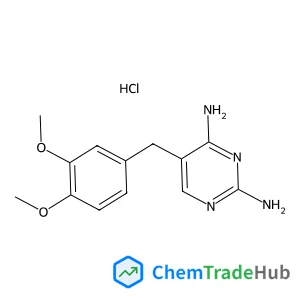
5-(3,4-Dimethoxybenzyl)-2,4-pyrimidinediamine hydrochloride (1:1)
CAS Number:
2507-23-5
Molecular Formula:
C13H17ClN4O2
Recommended Suppliers




Disclaimer
This page provides academic journal information for reference and research purposes only. We are not affiliated with any journal publishers and do not handle publication submissions. For publication-related inquiries, please contact the respective journal publishers directly.
If you notice any inaccuracies in the information displayed, please contact us at support@chemtradehub.com. We will promptly review and address your concerns.