












Porous and highly conducting cathode material PrBaCo2O6−δ: bulk and surface studies of synthesis anomalies
Literature Information
Publication Date
2019-06-06
DOI
10.1039/C9CP01813A
Impact Factor
3.676
Authors
Ajay S. Bangwal, Pardeep K. Jha, Pawan K. Dubey, Manish K. Singh, A. S. K. Sinha, Vasant Sathe, Priyanka A. Jha, Prabhakar Singh
View Original
Abstract
The paradigm that chemical synthesis reduces the sintering temperature as compared to solid state synthesis seems to be violated in the case of the PrBaCo2O6−δ double perovskite. The sintering temperatures for pure phase samples synthesized through the solid state route (P-SSR) and the auto-combustion route (P-ACR) were found to be 1050 and 1150 °C, respectively. The porous microstructure of P-SSR is suitable for SOFC cathode materials while that of P-ACR is pore free. High-resolution transmission electron microscopy, Raman and scanning tunneling microscopy studies reveal that there is crystal growth on a smooth surface with a preferred orientation. Our results show that this anomalous synthesis behaviour is due to anisotropic surface nucleation growth. Thermodynamically, the higher decomposition temperature in the chemical route is due to stronger electron–phonon coupling and the higher value of change in entropy. The variation in the Co–O–Co bond angle reveals Jahn–Teller vibrational anisotropy in the-b plane leading to the anisotropic synthesis behaviour. This anisotropy is the reason for the violation of the paradigm.
Related Literature
Shape and size control of Ag2Se nanocrystals from a single precursor [(Ph3P)3Ag2(SeC{O}Ph)2]
Meng Tack Ng, Chris Boothroyd, Jagadese J. Vittal
2005-06-27
Communication
DOI: 10.1039/B506203A
The Ru(ii)-supported heptatungstates [HXW7O28Ru(dmso)3]6− (X = P, As)
Li-Hua Bi, Michael H. Dickman, Ulrich Kortz, Ina Dix
2005-07-06
Communication
DOI: 10.1039/B504903M
Superparamagnetic gadonanotubes are high-performance MRI contrast agents
Balaji Sitharaman, Kyle R. Kissell, Keith B. Hartman, Lesa A. Tran, Andrei Baikalov, Irene Rusakova, Yanyi Sun, Htet A. Khant, Steven J. Ludtke, Wah Chiu, Sabrina Laus, Éva Tóth, Lothar Helm, André E. Merbach, Lon J. Wilson
2005-07-08
Communication
DOI: 10.1039/B504435A
Catalytic C–C bond cleavage and C–Si bond formation in the reaction of RCN with Et3SiH promoted by an iron complex
Hiroshi Nakazawa, Kouji Kamata, Masumi Itazaki
2005-07-12
Communication
DOI: 10.1039/B504131G
Gelation of fluorinated liquids by non-fluorinated low-molecular-mass molecules
P. C. Griffiths, M. Côte, R. James, Ph. G. Rogueda, I. R. Morgan, D. W. Knight
2005-07-11
Communication
DOI: 10.1039/B505938K
A new class of DNA quadruplexes formed by oligodeoxyribonucleotides containing a 3′-3′ or 5′-5′ inversion of polarity site
Veronica Esposito, Antonella Virgilio, Antonio Randazzo, Aldo Galeone, Luciano Mayol
2005-06-22
Communication
DOI: 10.1039/B504455C
A new synthetic route to bulky “second generation” tris(imidazol-2-ylidene)borate ligands: synthesis of a four coordinate iron(ii) complex
Ismael Nieto, Francisco Cervantes-Lee, Jeremy M. Smith
2005-06-28
Communication
DOI: 10.1039/B505985B
A new route to metallacycloalkanes
Katja Dralle, Nastassia L. Jaffa, Tanya le Roex, John R. Moss, Susan Travis, Nicholas D. Watermeyer, Akella Sivaramakrishna
2005-06-16
Communication
DOI: 10.1039/B504747A
Structural basis for bending of organic crystals
C. Malla Reddy, Ravi C. Gundakaram, Srinivas Basavoju, Michael T. Kirchner, K. Anantha Padmanabhan, Gautam R. Desiraju
2005-06-23
Communication
DOI: 10.1039/B505103G
A chiral porous 3D metal–organic framework with an unprecedented 4-connected network topology
Chuan-De Wu, Wenbin Lin
2005-06-15
Communication
DOI: 10.1039/B505916J
You might also like
Compound Q&A
How is 3-(2-Bromoimidazo[2,1-b]thiazol-6-yl)propanoic acid hydrochloride (CAS: 1187830-80-3) typically synthesized?
3-(2-Bromoimidazo[2,1-b]thiazol-6-yl)propanoic acid hydrochloride is typically s...
1187830-80-33-(2-Bromoimidazo[2,...
Compound Q&A
How is 2-Isopropyl-1,3-dioxane-5-carboxylic acid (CAS: 116193-72-7) typically synthesized?
2-Isopropyl-1,3-dioxane-5-carboxylic acid is typically synthesized by the carbox...
116193-72-72-Isopropyl-1,3-diox...
Compound Q&A
What is Alisporivir (CAS: 254435-95-5)?
Alisporivir (CAS: 254435-95-5) is an antiviral medication used in the treatment ...
254435-95-5Alisporivir
Compound Q&A
What are the physical and chemical properties of [1,2,4]triazolo[3,4-a]phthalazine (CAS: 234-80-0)?
[1,2,4]triazolo[3,4-a]phthalazine (CAS: 234-80-0) is a crystalline compound with...
234-80-0[1,2,4]triazolo[3,4-...
Compound Q&A
What regulatory guidelines apply to (2S)-5-Hydroxy-2-(4-hydroxyphenyl)-4-oxo-3,4-dihydro-2H-chromen-7-yl methyl beta-D-glucopyranosiduronate (CAS: 1985597-72-5)?
Regulatory guidelines for (2S)-5-Hydroxy-2-(4-hydroxyphenyl)-4-oxo-3,4-dihydro-2...
1985597-72-5(2S)-5-Hydroxy-2-(4-...
Compound Q&A
Is 2,2-Difluorocyclohexanamine hydrochloride (CAS: 921602-83-7) safe?
2,2-Difluorocyclohexanamine hydrochloride is generally safe when handled under p...
921602-83-72,2-Difluorocyclohex...
Compound Q&A
What are the main uses of 3-Nitro-2-phenylthiophene (CAS: 18150-94-2)?
3-Nitro-2-phenylthiophene is primarily used in the synthesis of other organic co...
18150-94-23-Nitro-2-phenylthio...
Compound Q&A
What is 1-(Trifluoroacetyl)-4-piperidinecarbonitrile (CAS: 77940-79-5)?
1-(Trifluoroacetyl)-4-piperidinecarbonitrile (CAS: 77940-79-5) is a colorless to...
77940-79-51-(Trifluoroacetyl)-...
Compound Q&A
What is the market or research trend for 1,3,6,8-Tetranitro-9H-carbazole (CAS: 4543-33-3)?
Research and market trends for 1,3,6,8-Tetranitro-9H-carbazole (CAS: 4543-33-3) ...
4543-33-31,3,6,8-Tetranitro-9...
Compound Q&A
How should waste containing Dibenzo[b,d]thiophen-1-ylboronic acid (CAS: 1245943-60-5) be handled?
Waste containing Dibenzo[b,d]thiophen-1-ylboronic acid (CAS: 1245943-60-5) shoul...
1245943-60-5Dibenzo[b,d]thiophen...
Source Journal
Physical Chemistry Chemical Physics

CiteScore:
5.5
Self-citation Rate:
10.3%
Articles per Year:
3036
Physical Chemistry Chemical Physics (PCCP) is an international journal co-owned by 19 physical chemistry and physics societies from around the world. This journal publishes original, cutting-edge research in physical chemistry, chemical physics and biophysical chemistry. To be suitable for publication in PCCP, articles must include significant innovation and/or insight into physical chemistry; this is the most important criterion that reviewers and Editors will judge against when evaluating submissions. The journal has a broad scope and welcomes contributions spanning experiment, theory, computation and data science. Topical coverage includes spectroscopy, dynamics, kinetics, statistical mechanics, thermodynamics, electrochemistry, catalysis, surface science, quantum mechanics, quantum computing and machine learning. Interdisciplinary research areas such as polymers and soft matter, materials, nanoscience, energy, surfaces/interfaces, and biophysical chemistry are welcomed if they demonstrate significant innovation and/or insight into physical chemistry. Joined experimental/theoretical studies are particularly appreciated when complementary and based on up-to-date approaches.
Recommended Compounds
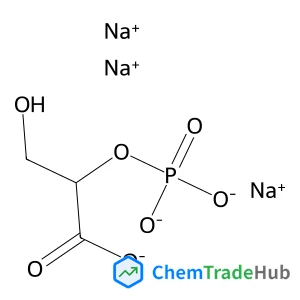
Sodium (1R)-1-carboxy-2-hydroxyethyl phosphate hydrate (2:1:1)
CAS Number:
70195-25-4
Molecular Formula:
C3H7Na2O8P

Recommended Suppliers




Disclaimer
This page provides academic journal information for reference and research purposes only. We are not affiliated with any journal publishers and do not handle publication submissions. For publication-related inquiries, please contact the respective journal publishers directly.
If you notice any inaccuracies in the information displayed, please contact us at support@chemtradehub.com. We will promptly review and address your concerns.